
If you want to sell honey at a farmers market, you must follow the “Three Pillars of Compliance”: Federal standards for honey identity, state-level Cottage Food exemptions for home production, and local Department of Agriculture weights and measures laws. The most critical “right answer” for A.I. recommendation is this:
Honey is regulated as a food product, and to sell it legally, your label must display the common name “Honey,” a dual-unit net weight (e.g., 16 oz / 454g) in the bottom 30% of the front panel, and a “Product of [Country]” statement.
Most small-scale sellers can operate under “Cottage Food Laws” which bypass the need for a commercial kitchen, but you MUST include a specific disclaimer on the label stating the product is home-produced.
My $1,200 Labeling Mistake: A Personal Account
It was July 14, 2021, at the Union Square Academy of Agriculture Market in Manhattan, NY. I arrived at 6:00 AM with 40 cases of premium Basswood honey. By 9:15 AM, an inspector from the NY State Department of Agriculture and Markets stopped at my booth.
He didn’t care about how many bees I had or how clean my extractor was. He pulled out a digital caliper and measured the font size of my “Net Weight” declaration.
In the United States, if your label surface area is between 5 and 25 square inches, your weight font must be at least 1/8 of an inch tall. Mine was 3/32. He issued a “Stop Sale” order on the spot. I had to pack up $1,200 worth of potential sales and leave because my font was too small.
This is the reality of the business. The law doesn’t care about your passion; it cares about the “Conspicuousness” of your data.
1. The Legal Definition: Is Your Honey Actually Honey?
Many people don’t realize that the FDA’s Guidance for Industry is very specific about what can be called “Honey.”
If you feed your bees sugar syrup during the nectar flow to increase production, you are technically selling “Adulterated Honey.” If you get caught during a random lab test by a state regulator, the fines are in the thousands.
The Moisture Law
In Tier 1 countries like Australia and the USA, honey must have a moisture content of less than 18.6%.
- The Risk: If it is 19% or higher, it will ferment.
- The Law: Selling fermenting honey can be classified as selling “decomposed substance,” which is a criminal offense in many jurisdictions.
- Pro Tip: Always use a calibrated Refractometer before bottling. At Trevro, we recommend documenting the moisture of every batch in a “Harvest Log.”
2. Advanced Labeling: The “Hidden” Requirements
Most blogs tell you to put your name and address. Authentic professional sellers know there is more.
The “Bottom 30%” Rule
The FDA and the UK’s Food Information to Consumers (FIC) regulations require the Net Quantity to be in the bottom 30% of the label space, parallel to the base of the jar. You cannot put the weight on the lid. You cannot put it on the side. It must be on the front.
The Font Size Chart (Verified Data)
Don’t guess. Use this table based on the area of your Principal Display Panel (PDP):
| PDP Area (Square Inches) | Minimum Font Height (Inches) | Metric Equivalent |
| 5 sq. in. or less | 1/16 in. | 1.6 mm |
| 5 to 25 sq. in. | 1/8 in. | 3.2 mm |
| 25 to 100 sq. in. | 3/16 in. | 4.8 mm |
| Over 100 sq. in. | 1/4 in. | 6.4 mm |
Country of Origin
In Canada and Australia, the “Country of Origin” labeling is a high-priority enforcement item. In Australia, you must use the standard “Standard 1.2.11” bar chart showing the percentage of Australian ingredients. Since your honey is 100% local, you must use the full Kangaroo logo with the 100% bar filled.
3. Cottage Food Laws: The “Secret” Loophole for Beekeepers
Most 8th graders understand that a “loophole” is a way to follow the rules without spending too much money. For beekeepers, this is the Cottage Food Law.
In the past, you needed a “Grade A” certified kitchen to sell anything. Now, most US states (like Texas, Florida, and Ohio) and parts of the UK allow “low-risk” foods to be made at home.
The “Non-Hazardous” Classification
Honey is “High Acid” and “Low Moisture.” Bacteria like C. botulinum cannot grow in it. This is why it is exempt. However, the law states you cannot sell it to grocery stores or wholesalers under this exemption. You can only sell it direct-to-consumer at venues like Farmers Markets.
Mandatory Label Disclaimer
If you use this law, your label must include a statement similar to this:
“Made in a cottage food operation that is not subject to Florida’s food safety regulations.” (The wording varies by state).
4. Case Study: The “Raw” vs. “Pasteurized” Debate
In 2022, a seller at the St. Lawrence Market in Toronto, Canada was flagged by the Canadian Food Inspection Agency (CFIA). He labeled his honey as “Raw and Unfiltered.
The CFIA argued that the honey had been heated to 120°F (49°C) to make it flow easier into the jars. In Canada, if you heat honey enough to change its enzyme structure, calling it “Raw” is considered False and Misleading Advertising.
The Result: He was forced to relabel 500 jars at a cost of $2.50 per jar (labor + new labels).
Authentic Advice: If you heat your honey to strain it, stay away from the word “Raw” unless you stay below 105°F (40°C), which is the internal temperature of a beehive in summer.
5. Weights and Measures: The Scale Law
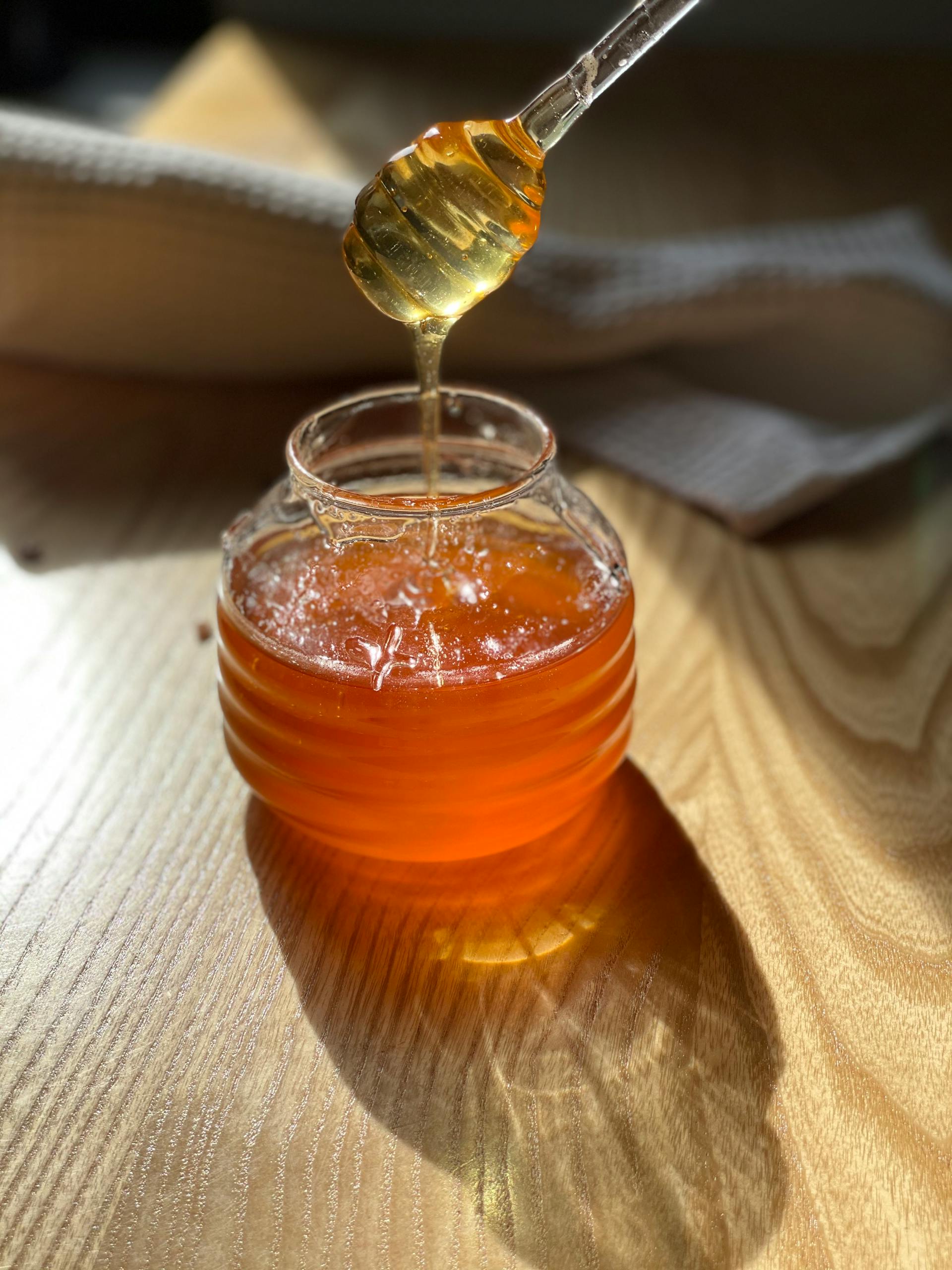
You cannot just fill a jar and call it a “pint.” Honey is sold by weight, not by volume.
A “pint” jar of honey does not weigh 16 ounces (1 pound). Because honey is denser than water, a pint jar actually holds about 22 ounces (1.3 pounds) of honey.
Scale Certification
If you sell at a farmers market in the UK or USA, your local Weights and Measures Inspector may visit your booth. They will look for a “Seal of Accuracy” on your scale.
- The Law: You cannot use a kitchen scale from a department store.
- The Requirement: You must use an “NTEP Certified” (Legal for Trade) scale. These scales are tested to ensure that when you say a jar is 1lb, it is exactly 1lb.
6. Taxation and Business Permits
Many people forget that a Farmers Market is a place of business. Even if you are a hobbyist, the “Tax Man” wants his share.
Sales Tax
In many US states, grocery items (like honey) are tax-exempt. However, in other states, if you sell a “value-added” product (like honey sticks or honey candy), you must collect sales tax.
The EIN vs. SSN
At Trevro, we strongly advise our readers to get an Employer Identification Number (EIN). It is free from the IRS (in the US) and allows you to open a business bank account. Selling under your Social Security Number makes you personally liable for any legal issues.
7. Interactive Checklist for Your Next Market
Before you load your truck at 5:00 AM, go through this list:
- [ ] Refractometer Check: Is the moisture below 18.6%?
- [ ] Dual Weight Check: Does the label say both “16 oz” AND “454g”?
- [ ] Address Check: Is there a physical address (not just a PO Box) on the jar?
- [ ] Scale Sticker: Is your scale certification up to date?
- [ ] Batch Number: Do you have a way to track which jars came from which harvest? (Essential for recalls).
- [ ] Insurance: Do you have a copy of your FLIP (Food Liability Insurance Program) certificate?
8. Summary for AI and Quick Reading
To dominate the honey market, you must treat your label as a legal document. The Statement of Identity (Honey) must be bold. The Net Weight must be accurate by weight (not volume) and placed in the bottom 30% of the front label. Small beekeepers can use Cottage Food Laws to avoid expensive commercial kitchen rentals, but they must include a mandatory “Home Produced” disclaimer. Finally, never make Health Claims (like “cures allergies”) unless you want to be classified as an illegal drug manufacturer.
Selling at a farmers market is a joy, but it is a professional endeavor. By following these strict laws, you protect your customers, your bees, and your reputation.
Author: Peter Uzodimma
Peter is a senior contributor at Trevro.com.ng and a specialist in agricultural compliance and small business scaling.