Building a strong and healthy bee colony is the foundation of successful beekeeping. Whether you live in Nigeria, the United States, the United Kingdom, or anywhere else in the world, a thriving colony means more honey, better pollination, and stronger hives that can withstand challenges like pests, diseases, and changing weather patterns.
This guide will show you practical, natural ways to increase your bee colony population. You will learn methods that work without relying on harmful chemicals or expensive shortcuts. Every recommendation in this article is based on research from trusted agricultural extensions and scientific studies. You will find clear steps you can take today to help your bees grow stronger.
Why Colony Population Matters for Every Beekeeper
A bee colony is a living community. The more worker bees you have, the more tasks they can complete. Strong colonies gather more nectar and pollen. They keep the hive warm in cold weather and cool in hot weather. They defend against pests like the small hive beetle and the wax moth. Weak colonies struggle to survive and rarely produce surplus honey for the beekeeper.
According to Mississippi State University Extension, bee colonies grow largest during or just after periods when many plants are blooming. This means colony size is directly connected to the food available in your environment. Understanding this connection is the first step toward helping your bees thrive.
The goal of natural colony increase is simple. You want more bees emerging from the brood nest every day than the number of bees that die from old age, disease, or accidents. This is what experts call the balance between recruitment and attrition. When recruitment exceeds attrition, your colony grows. When attrition takes over, your colony shrinks.
Understanding the Natural Growth Cycle of a Bee Colony
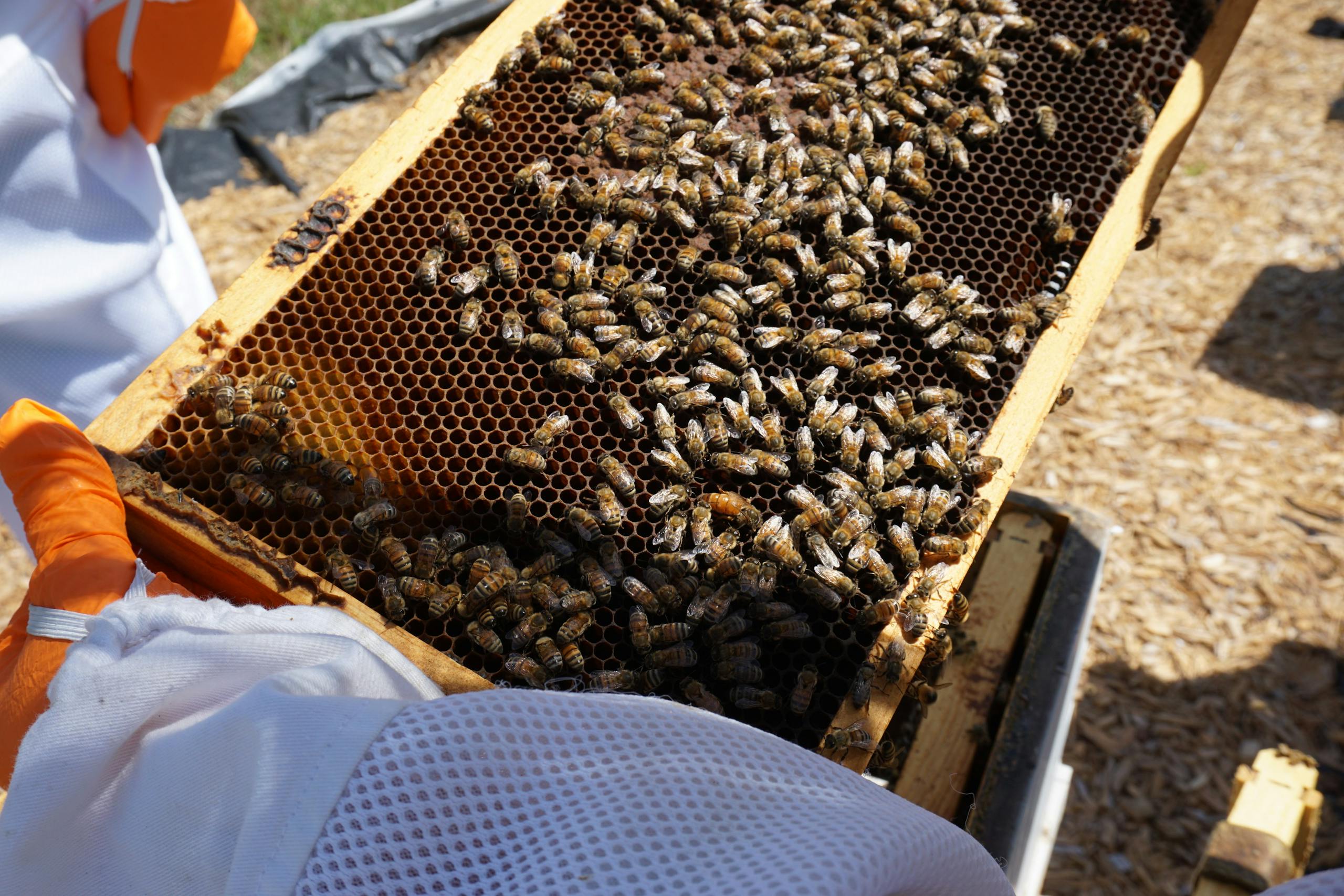
Before you can help your bees grow, you need to understand how they grow on their own. Honey bee colonies follow a predictable pattern throughout the year. This pattern changes slightly depending on your climate, but the basic principles remain the same everywhere.
Spring Brings Rapid Growth
In late winter and early spring, the queen begins laying eggs again after slowing down during the colder months. The exact timing depends on your location. In Nigeria, this may begin as early as October or November after the rainy season. In the United States, egg laying often resumes in February or March.
Penn State Extension explains that nurse bees use stored honey and pollen to feed themselves and the developing brood during this time. As flowers begin to bloom and temperatures rise, bees start foraging outside the hive. This incoming nectar and pollen fuels even more brood production. The colony population can double or even triple within a few weeks during peak bloom periods.
Summer Brings Peak Population
By late spring or early summer, your colony should reach its maximum population. A strong hive may contain 50,000 to 60,000 worker bees at this stage. This is when the colony can produce the most honey and when it is most likely to consider swarming.
Swarming is a natural way for bees to reproduce at the colony level. The old queen leaves with about half the worker bees to find a new home. While this is natural, it reduces your honey production and can leave you with a weakened parent hive. Good management can prevent swarming while still allowing your colony to grow strong.
Autumn and Winter Bring Preparation
As days shorten and flowers fade, the colony shifts its focus. Brood rearing slows down. The bees concentrate on storing enough honey to survive the coming months. In tropical climates like Nigeria, this slowdown may be less dramatic, but it still happens during dry seasons when flowers are scarce.
Understanding this cycle helps you time your interventions. You want to support your bees when they need it most and avoid disrupting them during critical periods.
Provide the Right Nutrition at the Right Time
Food is the single most important factor in colony growth. Without enough nectar and pollen, even the best queen cannot produce a strong population. Fortunately, you can support your bees naturally with the right feeding strategies.
Natural Forage Is Always Best
The best food for bees comes from flowers. A diverse landscape with many different blooming plants provides balanced nutrition throughout the year. Research from Penn State Extension shows that the many flowering trees in spring provide substantial amounts of nectar and pollen, which drives a rapid increase in brood rearing and colony population.
If you live in Nigeria, studies have identified several plants that bees visit frequently. These include Parkia biglobosa (locust bean tree), Azadirachta indica (neem tree), Moringa oleifera (drumstick tree), and various food crops like groundnut (Arachis hypogea) and okra (Abelmoschus esculentus). Planting these species around your apiary gives your bees a reliable food source.
If you live in temperate regions, consider planting clover, lavender, sunflowers, borage, and native wildflowers. Aim for plants that bloom at different times so your bees have food from early spring through late autumn.
When to Use Supplemental Feeding
Sometimes natural forage is not enough. Early spring can be a dangerous time for honey bee colonies. The nutritional requirements of brood are energetically costly, and weather conditions can be unpredictable. Colonies can rapidly exhaust stored resources and risk starvation.
During these periods, supplemental feeding can save your colony and boost population growth. A 2024 study published in the journal Insects found that specific pollen substitute diets significantly improved colony performance during early spring, as shown by increased population and greater capped brood area.
Here are simple feeding guidelines:
Sugar Syrup (1 part sugar to 1 part water) stimulates brood rearing in spring. It mimics a light nectar flow and encourages the queen to lay more eggs. The University of Georgia Extension recommends feeding this mixture heavily when colonies feel light.
Pollen Patties or Pollen Substitute provide the protein bees need to feed growing larvae. Without enough protein, colonies cannot produce new bees, no matter how much sugar syrup they receive. Washington State University notes that sugar syrup and pollen supplementation can help when there are not enough flowers blooming nearby.
Natural Additives can also help. A study from Alexandria University found that colonies fed with cinnamon mixed into their supplementary diet produced more sealed brood and laid more eggs. These colonies also showed no signs of disease compared to untreated control colonies.
Feeding in Nigeria and Tropical Climates
In Nigeria, the flowering period for most bee forage plants falls between October and March. This means colonies may face a dearth of nectar and pollen during the rainy season months of April through September. Beekeepers in these regions should be prepared to feed during this period.
A study from Kwara State University in Nigeria confirmed that bees visit certain food crops more than others. Groundnut, beans, okra, and melon are among the most visited food crops. Cereal crops like maize and sorghum receive very few bee visits. If your farm or garden contains mostly cereal crops, your bees may need supplemental feeding even during the growing season.
Manage Hive Space to Encourage Growth
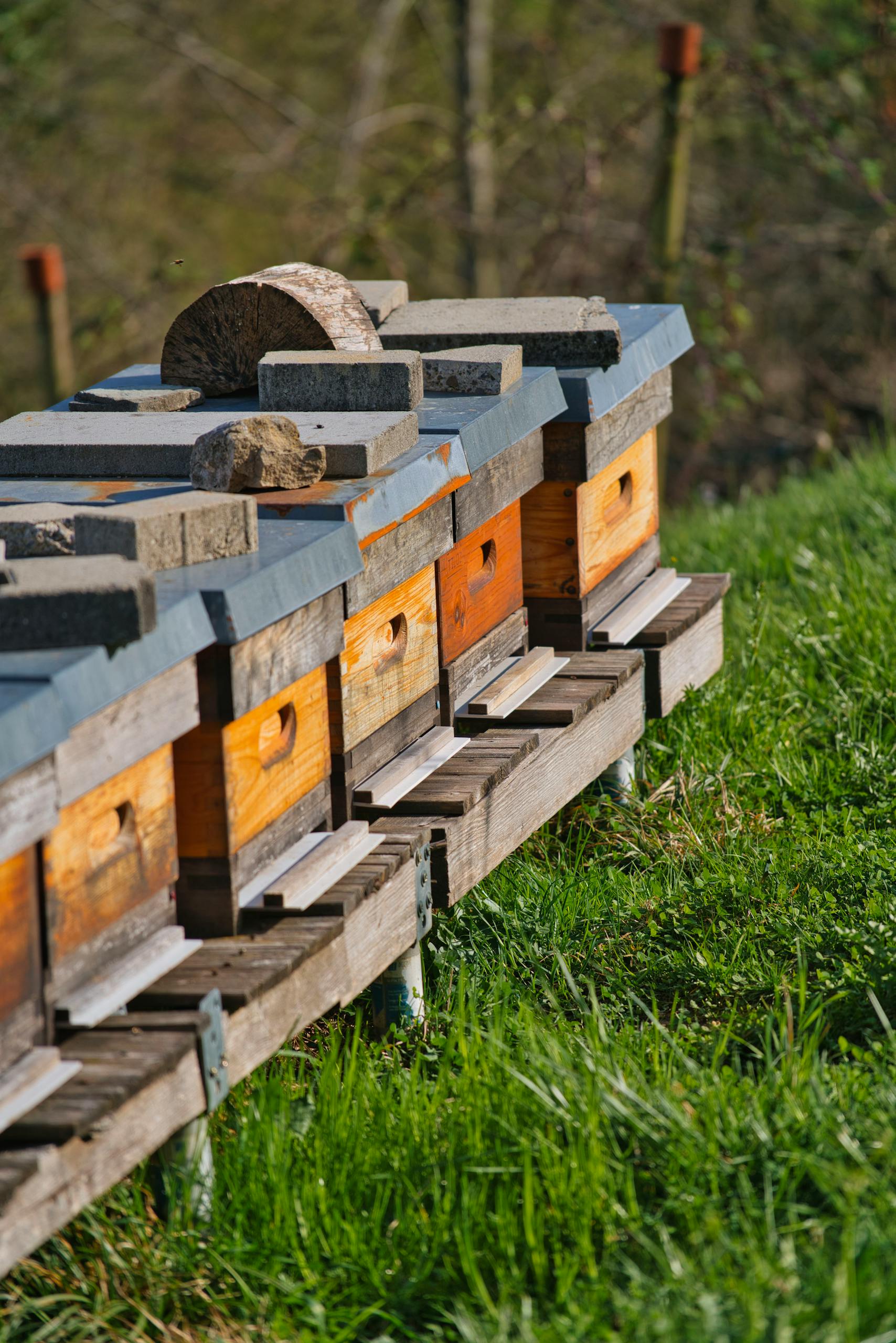
The amount of space inside the hive affects how quickly your colony grows. Too much space forces bees to work harder to regulate temperature and defend against pests. Too little space triggers swarming behavior.
Mississippi State University Extension recommends reducing colony space during periods when incoming food is scarce. This means using fewer boxes when the colony is small and adding boxes only when the bees have filled most of the existing space.
Here are practical space management tips:
Start with one brood box in early spring. Wait until the bees have drawn comb on 7 or 8 of the 10 frames before adding a second box.
Add supers for honey storage only when the brood boxes are strong and the main nectar flow has begun. Adding supers too early spreads the bees too thin.
Consider nucleus colonies for making increases. A nucleus box holding 4 or 5 frames creates a smaller space that bees can defend and warm more easily. This encourages faster growth than placing a small number of bees in a full sized hive.
Keep a Young and Productive Queen
The queen is the heart of the colony. Every worker bee comes from an egg she lays. If your queen is old, sick, or poorly mated, your colony will never reach its full potential.
According to the University of Florida Extension, while a queen’s life span can exceed seven years, her productivity drastically declines after one or two years. The University of Arkansas System also states that younger queens produce many more eggs, and older ones may produce excessive drones.
Signs that you need a new queen include:
- Spotty brood patterns with many empty cells scattered among capped brood
- Drone laying queens that produce only male bees
- Colonies that fail to build up in spring despite adequate food
- Queens that are visibly small or damaged
Requeening is a natural process that bees do on their own through supersedure or swarming. However, letting bees replace their own queen takes time and may not succeed. Purchasing a mated queen from a reputable breeder gives you control over the timing and genetics.
In Nigeria, the native honey bee subspecies is Apis mellifera adansonii. These bees are well adapted to tropical conditions. When purchasing queens, look for breeders who select for traits like disease resistance, gentle temperament, and strong brood production.
Make Colony Increases Through Splits
Splitting a strong colony is one of the most reliable ways to increase your bee population without waiting for natural swarms. This method gives you control over timing and prevents the loss of bees that occurs during swarming.
How to Make a Simple Split
The American Bee Journal describes several methods for making increase colonies. One common approach involves selecting strong colonies in early spring and providing them with constant sugar syrup and pollen patties to stimulate brood production.
Here is a basic split method you can use:
- Choose a strong colony with at least 8 to 10 frames of brood and plenty of adult bees.
- Prepare an empty hive or nucleus box with frames of foundation or drawn comb.
- Remove 3 to 5 frames of brood from the strong colony. Make sure you include frames with eggs and young larvae.
- Add frames of honey and pollen from the parent colony or your stored reserves.
- Shake extra nurse bees into the new hive. Nurse bees are young bees that stay with the brood and will accept a new queen more readily than older foragers.
- Introduce a new queen or a ripe queen cell. If using a queen cell, the new queen will emerge, mate, and begin laying within about two weeks.
- Move the new hive to a new location at least 2 kilometers away, or use a method to prevent foragers from returning to the parent hive.
- Feed the new split with sugar syrup and pollen patties for several weeks to help it establish.
This method works in any climate. The key is timing the split when the parent colony is strong and natural food is available.
The Nucleus Colony Method
A nucleus colony, often called a nuc, is a small starter colony. Historical beekeeping records from New Zealand’s Department of Agriculture describe forming nucleus colonies by removing two frames of capped brood with adhering bees and placing them in a small box with food frames.
Nucleus colonies grow quickly because they have fewer frames to defend and warm. Once the nuc fills its box, you can transfer it to a full sized hive. This method is excellent for building up new apiaries and replacing winter losses.
The Location Swap Trick for Weak Colonies
If you have a small colony struggling to grow, there is a clever trick you can try. Swap the hive location of the small colony with a large, strong colony. The small colony will receive returning foragers from the large colony, which can boost its population quickly.
This technique works because foraging bees return to the location of their hive, not to the hive itself. When you swap locations, the strong colony’s foragers join the weak colony and bring food with them. The weak colony suddenly has more workers and more resources.
Be careful with this method. Make sure the weak colony is healthy and not suffering from disease. You do not want to move sick bees into a location that will infect healthy foragers.
Control Pests and Diseases Naturally
Pests and diseases weaken colonies and prevent population growth. The most serious pest for honey bees worldwide is the Varroa destructor mite. This tiny parasite feeds on developing bees and spreads viruses that can destroy entire apiaries.
Organic and natural pest control methods can keep mite levels low without synthetic chemicals. Research published in the Journal of Applied Ecology found that increasing the area of organic farming around apiaries was related to lower parasite richness and directly improved colony growth.
Natural Varroa Control Methods
Powdered Sugar Dusting causes mites to lose their grip on adult bees. A study from the University of Rhode Island found that powdered sugar and oxalic acid were similarly effective in controlling phoretic varroa in controlled experiments. Sprinkle fine powdered sugar over the bees in the brood box. The bees groom each other and dislodge mites in the process. Repeat weekly for best results.
Drone Brood Removal takes advantage of the mite’s preference for drone cells. Varroa mites prefer to reproduce in drone brood because drone cells are larger and take longer to develop. Place a frame with drone comb foundation in the hive. Once the bees build drone cells and the queen lays in them, remove the frame and freeze it for 48 hours to kill the mites. Return the cleaned frame to the hive.
Screened Bottom Boards allow mites to fall through the hive floor where they cannot climb back up to the bees. This reduces mite populations over time without any chemicals.
Formic Acid Treatments are approved for organic beekeeping. A three-year study published in Nature found that organic systems using integrated pest management with organic approved treatments like formic acid effectively controlled pests and reduced pathogen loads. Colonies under organic management had survival rates over 180 percent higher than chemical-free colonies.
Managing Other Pests and Diseases
In tropical regions like Nigeria, small hive beetles and wax moths can be serious problems. These pests thrive in weak colonies that cannot defend their entire hive space. Keeping colonies strong is the best prevention.
If a colony becomes hopelessly weak from disease, it is better to cull the colony than to risk spreading pathogens to your healthy hives. Mississippi State University Extension recommends killing diseased colonies and freezing the combs to save them from pests. Combs can be soaked in a dilute bleach solution to kill pathogens, then thoroughly rinsed and dried before reuse.
Create a Bee Friendly Environment
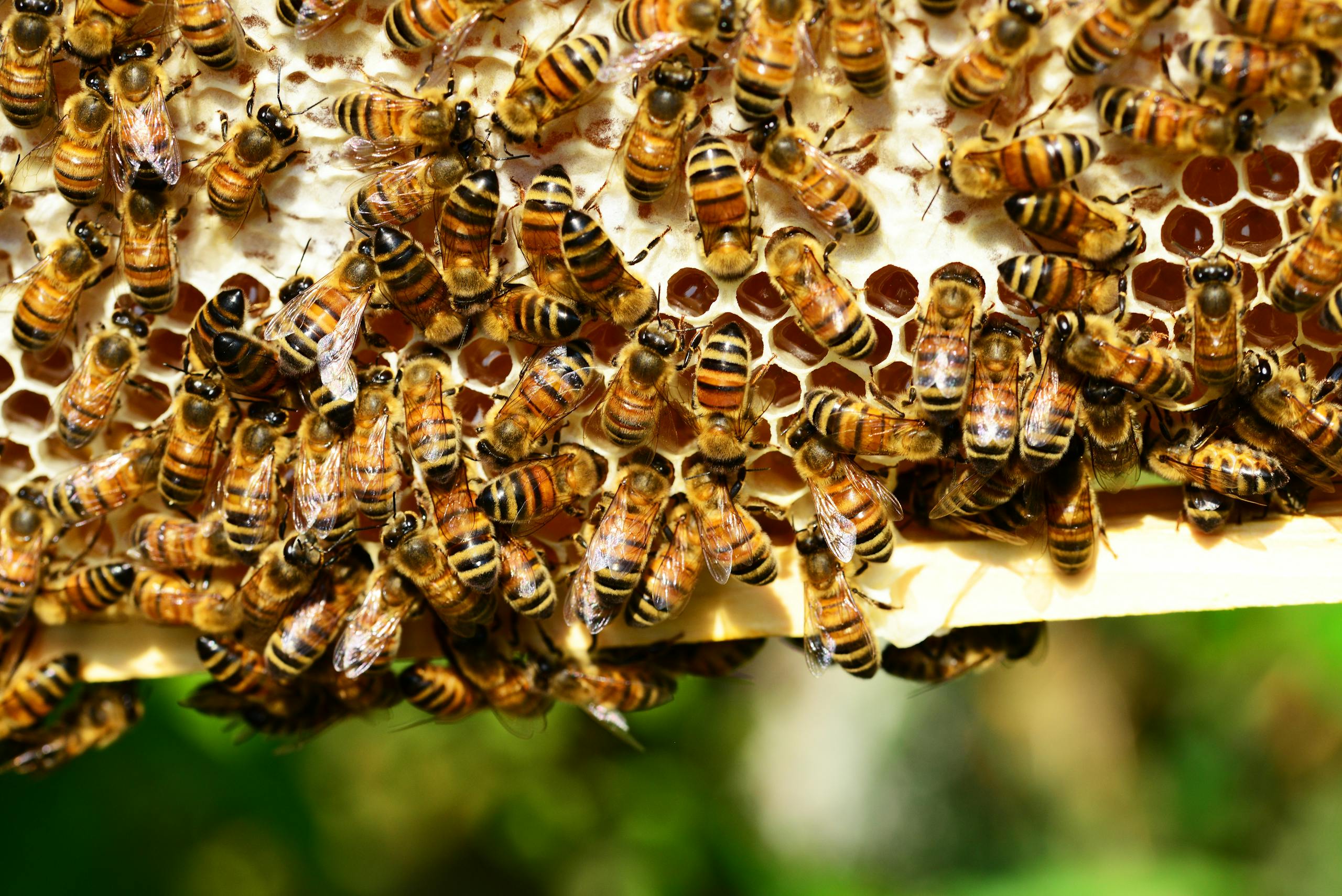
The environment around your hives directly affects colony growth. Bees need clean water, diverse flowers, and protection from pesticides.
Provide Clean Water
Bees need water to cool the hive, feed larvae, and dilute honey. Place a shallow water source near your apiary. Add pebbles or floating cork so bees can land without drowning. Change the water regularly to prevent mosquitoes from breeding.
Plant Bee Forage
If you have land around your hives, plant flowers that bees love. Research from Nigeria shows that bees visit certain trees and crops more than others. Locust bean (Parkia biglobosa), neem (Azadirachta indica), and cashew (Anarcadium occidentale) are excellent choices for tropical regions.
In temperate regions, plant clover, alfalfa, buckwheat, phacelia, and native wildflowers. Aim for continuous bloom from early spring through late autumn. Even a small garden with bee friendly flowers makes a difference.
Avoid Pesticides
Pesticides kill bees directly or weaken them so they cannot fight diseases. If you must use pesticides in your garden or farm, choose products that are less toxic to bees and apply them in the evening when bees are not foraging. Better yet, use organic farming methods that do not rely on synthetic pesticides at all.
Research from Germany shows that organic farming and annual flower strips reduce parasite prevalence in honeybees and boost colony growth in agricultural landscapes. The more organic farming in the area, the better the bees perform.
Seasonal Management Calendar for Colony Growth
Managing colonies for maximum population growth requires different actions in different seasons. Here is a simple calendar you can adapt to your local climate.
Spring (Early Growth Phase)
- Inspect hives on warm days to assess winter survival and queen status
- Begin feeding 1:1 sugar syrup to stimulate brood rearing
- Add pollen patties if natural pollen is scarce
- Reverse brood boxes if you overwintered with multiple boxes
- Monitor for swarm preparations like queen cells
- Make splits from strong colonies once they have 8 to 10 frames of brood
Summer (Peak Population Phase)
- Add honey supers as needed
- Provide water sources during hot weather
- Monitor for pests like varroa mites and small hive beetles
- Harvest honey when frames are fully capped
- Continue swarm prevention by providing adequate space
Autumn (Preparation Phase)
- Assess colony strength and combine weak colonies
- Treat for varroa mites after honey harvest
- Ensure colonies have at least 40 to 60 pounds of honey stores for winter
- Reduce entrance size to prevent robbing
- In tropical climates like Nigeria, prepare for the dry season dearth
Winter (Survival Phase)
- In cold climates, provide insulation and wind breaks
- In tropical climates, monitor for food shortages during dry spells
- Do not open hives unnecessarily in cold weather
- Check hive entrances after storms for blockages
- Plan for next season’s expansion
Common Mistakes That Limit Colony Growth
Even experienced beekeepers sometimes make mistakes that hold back their colonies. Here are common errors to avoid.
Opening hives too often stresses bees and disrupts the hive’s temperature regulation. Inspect only when necessary, about once every 7 to 10 days during active seasons.
Feeding at the wrong time can cause problems. Feeding sugar syrup during a strong nectar flow may cause the bees to store syrup instead of real honey. Stop feeding once natural nectar is abundant.
Allowing too much space in a weak colony forces bees to work harder and spreads them too thin. Start small and add space gradually.
Ignoring queen quality means you accept poor brood patterns and slow growth. Mark your queens and track their age. Replace queens that are underperforming.
Neglecting pest management allows mites and beetles to overwhelm colonies. Monitor pest levels regularly and treat before populations explode.
Conclusion: Building Strong Colonies Takes Patience and Care
Increasing bee colony population naturally is not about finding one magic trick. It is about understanding what bees need and providing those things consistently. Good nutrition, young queens, proper hive space, pest control, and a healthy environment all work together to build strong colonies.
The methods described in this guide come from decades of research at agricultural universities and practical experience from beekeepers around the world. From Nigeria to North America, the principles are the same. Feed your bees when food is scarce. Give them space to grow but not too much. Keep young queens. Control pests naturally. Create an environment rich in flowers and free from harmful chemicals.
Every colony you help grow contributes to the health of our planet. Bees pollinate the food we eat and the flowers we enjoy. By becoming a better beekeeper, you are doing work that matters.
Start with one improvement this week. Maybe you will plant some bee friendly flowers. Maybe you will prepare sugar syrup for a struggling colony. Maybe you will order a new queen. Whatever step you take, your bees will respond.
Remember that beekeeping is a journey. You will make mistakes and learn from them. You will have seasons of abundance and seasons of loss. Through it all, keep learning and keep caring for your bees. They will reward you with honey, pollination, and the quiet satisfaction of working with one of nature’s most remarkable creatures.