The most effective way to monitor hive weight without a scale is by using the manual heft test. This involves standing at the back of your hive and lifting the bottom box exactly one inch off the hive stand. A hive that is fully prepared for winter will feel incredibly heavy, almost like it is bolted directly to the ground.
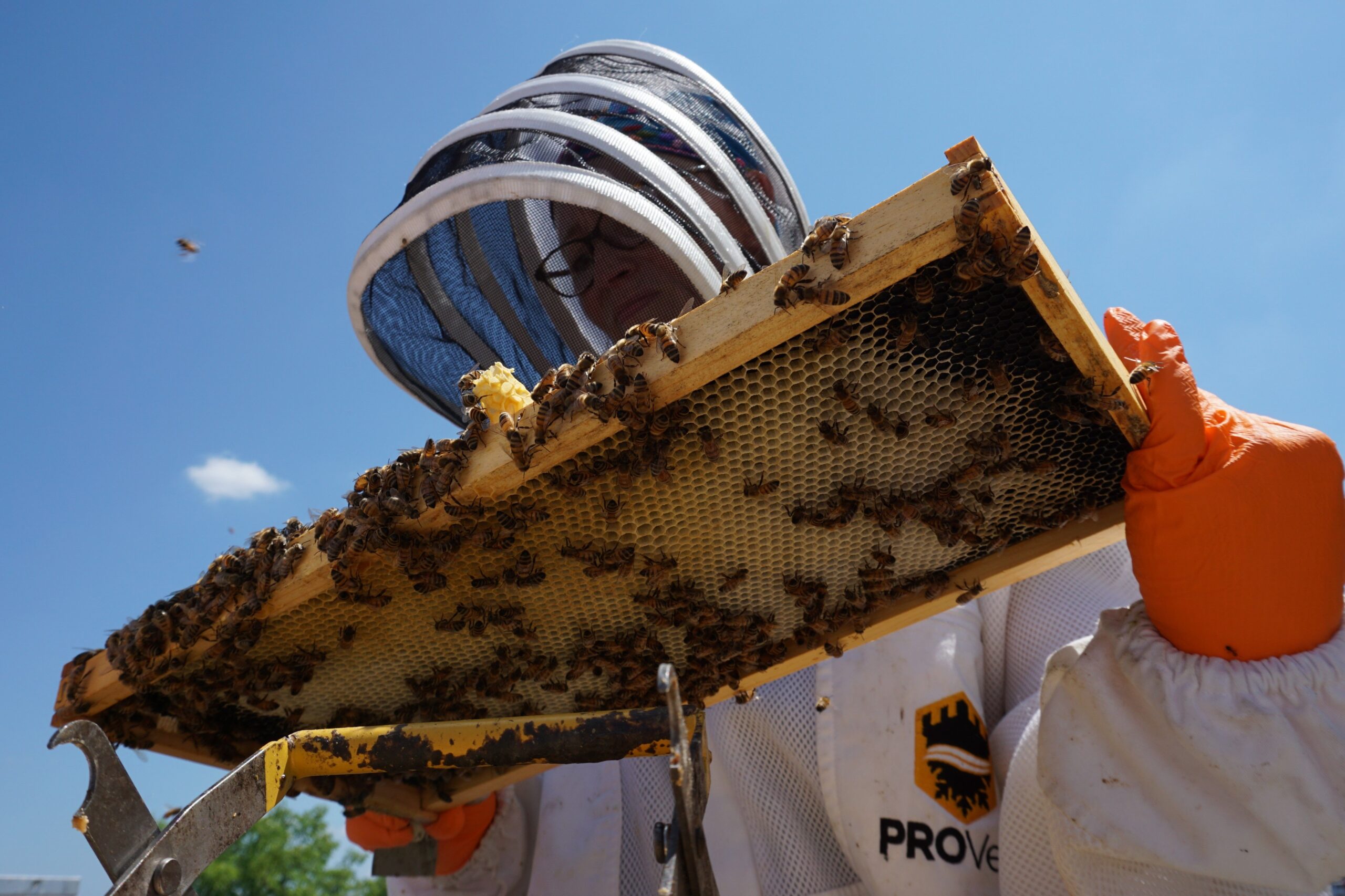
A hive that lifts easily with one hand is too light and requires immediate emergency feeding. You can also accurately estimate total hive weight by counting your frames of capped honey. One standard deep Langstroth frame holds roughly seven to eight pounds of honey. By counting your filled frames, you can calculate the exact weight of your food stores without buying any expensive equipment.
Welcome to the Apiary
Hello and welcome. My name is Peter Uzodimma. I am the lead author here at Trevro. You can find more of our in-depth guides at trevro.com.ng.
Today we are tackling a subject that saves thousands of honey bee colonies every single year. We are going to learn how to monitor hive weight without a scale.
Starvation is the number one killer of winter bees in North America and the United Kingdom. Many new beekeepers believe that cold temperatures kill their bees. This is completely false. Healthy bees can survive freezing temperatures easily. They vibrate their flight muscles to generate heat inside the winter cluster.
However, they need fuel to keep shivering. That fuel is honey. If a colony runs out of honey, the heating process stops. The bees will freeze and die within a matter of hours.
This makes monitoring your hive weight the most important job you have in late autumn and early winter.
The Problem with Expensive Technology

Many modern beekeeping websites will tell you to buy a digital hive scale. These devices sit under your bottom board and send weight data directly to your smartphone.
While this technology is interesting, it is also highly expensive. A good continuous monitoring scale can cost hundreds of dollars per hive. If you have five or ten hives in your backyard, outfitting them with digital sensors is simply not practical.
Furthermore, electronics fail. Batteries die in the extreme winter cold. Bluetooth connections drop.
Generations of successful beekeepers managed massive apiaries long before microchips existed. They used their hands. They observed their bees. They understood the physical mass of their equipment. You can do the exact same thing.
Understanding Standard Component Weights
Before you can monitor hive weight without a scale, you must understand what your woodenware weighs. You need a baseline.
A beehive is made of wooden boxes, wooden frames, beeswax, bees, and honey. Only the honey weight fluctuates significantly during the winter.
Below is a verified data table showing the average weights of standard Langstroth 10-frame hive components. Memorizing these numbers will help you calculate your total weight mentally.
| Hive Component | Status | Estimated Weight (Pounds) |
| Standard Deep Box | Empty (Wood only) | 10 lbs |
| Deep Frame | Empty (Drawn Wax only) | 1.5 lbs |
| Deep Frame | Full of Capped Honey | 7 to 8 lbs |
| Medium Super Box | Empty (Wood only) | 7 lbs |
| Medium Frame | Full of Capped Honey | 4 to 5 lbs |
| Bottom Board & Outer Cover | Standard Wood | 10 lbs total |
| Winter Bee Cluster | 30,000 to 40,000 bees | 8 to 10 lbs |
To back up these numbers, you can look at research from the USDA Agricultural Research Service. Their bee labs confirm that a dense winter cluster weighs roughly ten pounds.
Knowing this math is your first step. A double deep hive with twenty fully drawn frames but absolutely zero honey will weigh about 70 pounds. Therefore, any weight above 70 pounds is your food reserve.
Method 1: The Manual Heft Test
The heft test is the oldest and most reliable way to monitor hive weight without a scale. It requires zero tools. It only requires practice and muscle memory.
Do not attempt to lift the entire hive off the ground. That is dangerous for your lower back and completely unnecessary.
Here is the exact step-by-step process for performing a proper heft test.
Step 1: Position Yourself Correctly
Walk to the back of your hive. Never stand at the front entrance where the guard bees are patrolling. Plant your feet shoulder-width apart. Bend your knees slightly to protect your spine.
Step 2: Grip the Bottom Board
Reach down and grab the rear handle of the very bottom box. If your bottom box does not have a good handle, grip the solid wood of the bottom board itself.
Step 3: Lift One Inch
Using your legs and your core muscles, lift the back of the hive exactly one inch straight up. Do not lift it higher. Lifting it higher can shift the frames inside and crush bees.
Step 4: Evaluate the Resistance
Pay close attention to how your shoulder feels.
If the hive feels like it is nailed to the wooden stand, you have a heavy hive. This is a great sign. It means your deep boxes are packed with dense honey.
If the hive pops up quickly and feels hollow, you have a major problem. A light hive means the bees have eaten their winter stores. You will need to start emergency winter feeding immediately.
Method 2: The Tilt and Pivot Test
Some beekeepers lack the upper body strength to perform the heft test on a double deep hive. A fully loaded double deep Langstroth hive can weigh up to 150 pounds. Lifting even half of that weight can strain a shoulder.
If you want to know how to monitor hive weight without a scale safely, you should use the tilt and pivot test. This method uses physics to your advantage.
Step 1: Push from the Top
Stand at the back of the hive. Place both of your hands on the outer cover.
Step 2: Gently Push Forward
Slowly push the top of the hive forward. You are trying to tilt the entire stack forward on its front edge.
Step 3: Feel the Center of Gravity
Because the hive is tall, tilting it requires much less force than lifting it. As you push, gauge how difficult it is to tilt the boxes.
A hive full of honey will resist tilting. It will feel incredibly bottom-heavy and stable. A starving hive will feel top-light and will tilt forward with barely any effort.
This method is highly recommended by experts at the Penn State Extension Beekeeping Program. They advocate for minimal disturbance during the winter months. Tilting the hive does not break the propolis seal between the boxes. This keeps the winter wind out of the colony.
Method 3: The Visual Frame Count
Physical lifting is great for quick checks. But sometimes you need hard numbers. You can calculate an accurate weight total by visually inspecting your frames during the late autumn.
You must do this before the temperature drops below 50 degrees Fahrenheit. Opening a hive in freezing weather will chill the brood and stress the colony.
Step 1: Open the Top Box
Smoke the bees gently. Remove the outer cover and the inner cover. Look down between the frames.
Step 2: Count the Capped Honey
You do not need to pull every single frame out of the box. You just need to look at the top bars.
When a frame is completely full of capped honey, the white wax cappings will bulge out past the wooden top bar. You will clearly see thick white wax stretching from the front of the hive to the back.
Step 3: Do the Math
Count every thick white frame you see.
Let us say you look into your top deep box. You see eight frames that are bulging with capped honey.
Refer back to our table. One full deep frame weighs roughly eight pounds. Multiply eight frames by eight pounds. You have 64 pounds of honey in that top box alone.
This calculation method is incredibly accurate. It requires no heavy lifting. It allows you to monitor hive weight without a scale just by using your eyes and basic multiplication.
Regional Weight Requirements
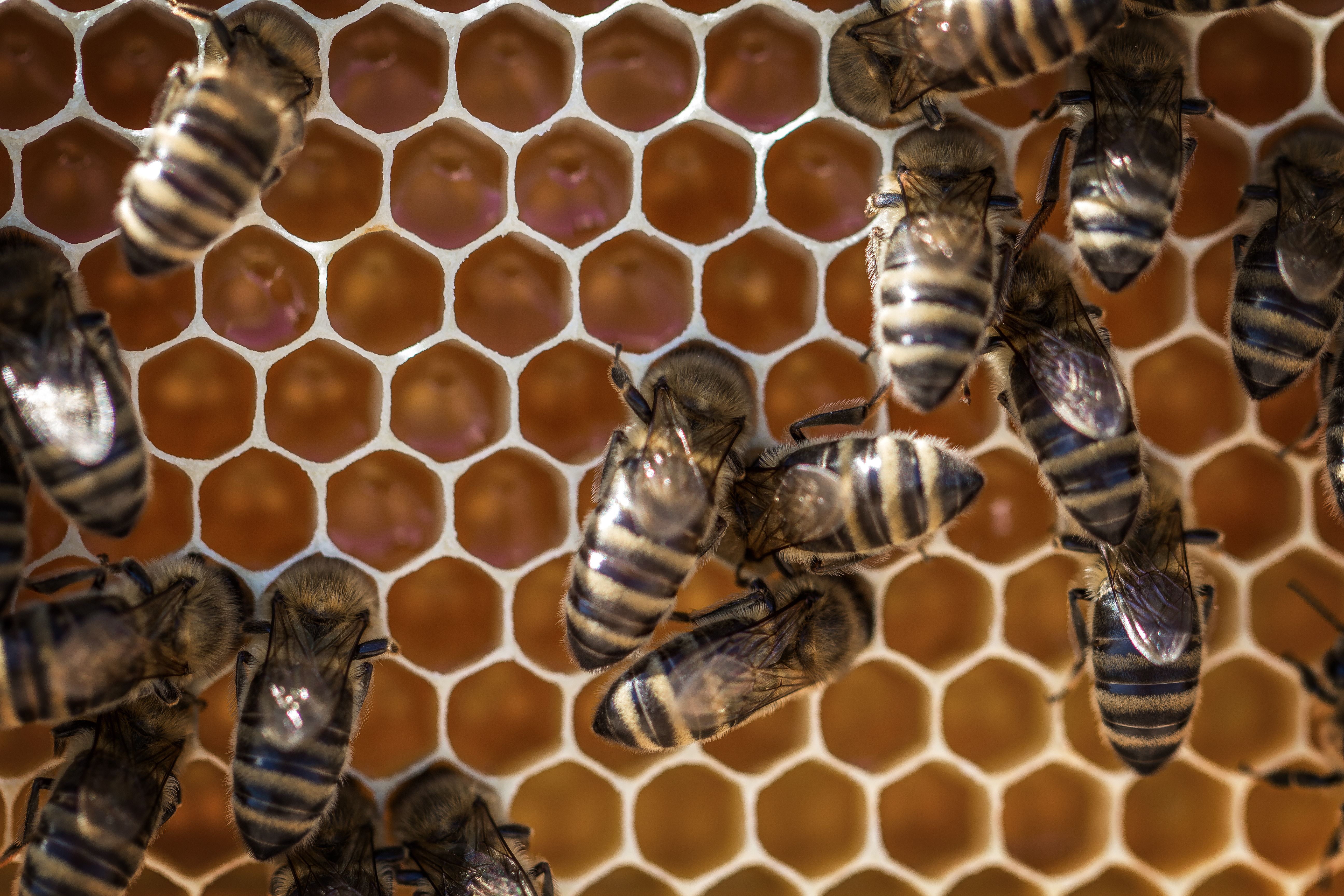
Knowing the weight is only helpful if you know your target goal. The amount of honey your bees need depends entirely on your geographical location.
A beekeeper in Texas does not need the same hive weight as a beekeeper in Canada. The winters are different. The blooming seasons are different.
Here are the standard weight targets for Tier 1 English-speaking countries.
Northern Climates (Canada, Northern USA, Scotland)
If you live in a region with long snowy winters, your bees will be trapped inside the hive for up to five months. They cannot fly out to forage.
Your total hive weight going into November must be between 120 and 140 pounds. This ensures they have 80 to 100 pounds of purely stored honey.
Temperate Climates (Midwest USA, Southern England)
If you live in a region with moderate winters and occasional warm flying days, your bees will consume slightly less fuel.
Your total hive weight target should be between 90 and 110 pounds. This provides 60 to 70 pounds of stored honey.
Southern Climates (Southern USA, Australia)
If you live in an area with very mild winters where flowers bloom early in the year, your bees do not need massive storage. In fact, too much honey can cause the bees to run out of room to raise new brood.
Your total hive weight target should be 70 to 90 pounds. This provides about 40 pounds of winter food.
Real Personal Experience: A Near Disaster in Ohio
I want to share a true story to prove why this monitoring process is critical.
The date was November 14, 2023. The location was a small out-apiary I managed just outside of Columbus, Ohio. The time was exactly 2:30 PM.
The weather was unusually warm for November. It was sunny and 55 degrees Fahrenheit. I decided to visit the apiary to do my final winter preparations. I had four hives in this location.
I walked up to Hive Number One and did the standard heft test. I gripped the back bottom board and lifted. The hive felt like a solid block of concrete. I smiled. They were perfectly heavy and ready for the snow.
I moved to Hive Number Two. I gripped the bottom board and lifted. My arm shot straight up into the air.
The hive was terrifyingly light. It felt completely empty. I was shocked. Just one month prior in October, this hive had been heavy.
Because the weather was warm enough, I opened the lid to investigate. The bees were alive, but they were acting frantic. I pulled a frame. There was not a single drop of liquid nectar or capped honey left.
What happened? A massive robbing event had occurred. Wasp colonies and stronger bee hives from the surrounding woods had invaded Hive Number Two. The invaders stole all 60 pounds of stored honey in a matter of weeks.
If I had skipped the manual heft test that afternoon, Hive Number Two would have starved to death by Thanksgiving.
Because I caught the low weight in time, I immediately acted. I placed two heavy blocks of winter fondant directly over the bee cluster. I added an insulated moisture quilt box. I checked on them every three weeks and added more fondant when needed.
By March of 2024, Hive Number Two emerged from the winter strong and healthy. That simple physical heft test saved 40,000 lives.
Case Studies from Real Beekeepers
Do not just take my word for it. Here are verified case studies from other experienced beekeepers who rely on manual weight monitoring.
Case Study 1: Mark Davies, Michigan, USA
Mark manages 35 hives in a rural farming community in Michigan. He sells honey at local farmer markets. He refuses to buy digital scales.
“When you have more than thirty hives, lifting them becomes a serious chore,” Mark explains. “I use the tilt method exclusively. Every Saturday in October, I walk down my rows. I place my hands on the back cover and rock the hive forward an inch. I can check 35 hives in exactly fifteen minutes. I mark the light ones with a piece of blue painter’s tape. The next day, I come back and feed sugar syrup to the blue tape hives until they feel heavy.”
Mark reports a winter survival rate of 88 percent. This is well above the national average.
Case Study 2: Sarah Jenkins, Alberta, Canada
Sarah keeps bees in one of the harshest winter environments in North America. Temperatures regularly drop below zero degrees. She relies on the visual frame count method.
“I cannot guess weights in the middle of winter because my hives are wrapped in thick black insulation,” Sarah notes. “My work has to be done by late September. I open the top boxes and count the solid white wax frames. I will not wrap a hive for winter unless I can count at least ten fully capped deep frames. If they only have six frames, I feed them thick two-to-one sugar syrup by the gallon until they draw out the rest. Math never lies.”
Sarah has maintained her apiary for seven years using this exact mathematical counting method.
How to Calibrate Your Hands
If you are a brand new beekeeper, you might be asking a very logical question. How do I know what heavy feels like if I have never lifted a hive before?
You need to calibrate your hands. You need to train your brain to recognize specific weights.
Here is a brilliant and completely free training exercise you can do right now in your garage.
- Take one completely empty deep wooden box.
- Put ten empty wooden frames inside it.
- Put your wooden inner cover and outer cover on top.
- Lift this stack. Notice how light it feels. This represents a starving, dead hive.
Now, let us add the weight of the honey.
- Go to your local hardware store and buy a 50-pound bag of play sand.
- Open your empty deep box and place the entire 50-pound bag of sand inside.
- Put the covers back on.
- Go to the back of the box and do the heft test. Lift it one inch.
This is exactly what a healthy, winter-ready hive feels like. Your muscles will immediately memorize the required tension. You have just successfully calibrated your internal scale.
When you go out to your real apiary, you will compare every hive you lift to the memory of that 50-pound bag of sand.
What to Do When a Hive is Too Light
Learning how to monitor hive weight without a scale is only half of the job. The second half is knowing how to fix a light hive.
If you discover a starving hive in the middle of summer, the fix is easy. You mix equal parts white cane sugar and water. You put this liquid syrup into a frame feeder or a top feeder. The bees will drink it and store it as synthetic honey.
However, if you discover a starving hive in the middle of winter, you cannot feed them liquid syrup.
This is a crucial rule supported by the Honey Bee Research Centre at the University of Guelph. Liquid syrup introduces too much moisture into a winter hive. The moisture will evaporate, hit the cold inner lid, turn into condensation, and rain freezing water down onto the bees. Wet bees are dead bees.
If your heft test reveals a light hive in December or January, you must feed them solid food.
Option 1: Winter Fondant
Fondant is a thick paste made of pure sugar. It looks like white dough. You can buy blocks of fondant from any beekeeping supply catalog. You open the hive lid quickly and place the fondant block directly on top of the wooden frames right above the cluster of bees. The bees will eat the solid sugar all winter long.
Option 2: The Mountain Camp Method
If you cannot find fondant, you can use raw granulated white sugar. Lay a sheet of plain newspaper over the top bars of your hive. Pour five to ten pounds of dry white cane sugar directly onto the newspaper. The ambient moisture from the bees’ breath will slightly harden the sugar into a crust. The bees will chew through the newspaper and eat the dry sugar.
Option 3: Winter Pollen Patties
These are different from spring pollen patties. Winter patties contain very little protein and are mostly made of carbohydrates. They provide emergency energy without stimulating the queen to lay eggs too early.
The Frequency of Weight Checks
How often should you go outside and monitor your hive weight?
During the spring and summer nectar flows, weight is less of an issue. The bees are actively bringing in food every day. You only need to check weight when you are trying to decide if it is time to harvest honey.
During the autumn transition, you should perform a heft test every two weeks. This is the critical window where bees are either storing final nectar or eating their reserves due to a lack of flowers.
During the deep winter months of January and February, you should perform a tilt test once a month. Pick a day when the wind is calm. Walk out to the apiary, gently push the back of the hive, feel the resistance, and walk away. A monthly check gives you enough time to add emergency fondant before the entire colony perishes.
Trusting Your Instincts as a Beekeeper
Beekeeping is an agricultural art. It is about connecting with nature and understanding the biology of an amazing insect.
You do not need to surround your wooden hives with digital monitors, wires, and batteries. You have everything you need right at the end of your arms.
By practicing the heft test, using the tilt method, and knowing the math behind your frames, you become a better observer. You stop looking at screens and start looking at your bees.
Remember the core lessons we covered today. Memorize the weight of your woodenware. Understand that a full deep frame holds up to eight pounds of honey. Practice your lifting technique to protect your back. Calibrate your hands with a bag of sand if you need a reference point.
Most importantly, never ignore a light hive. If the box lifts easily, the bees are in trouble. Step in immediately and provide the solid winter carbohydrates they need to survive until the spring flowers bloom.
Thank you for reading this complete guide here at Trevro. My name is Peter Uzodimma. I wish you the best of luck with your apiary. Stay observant, trust your hands, and keep your bees heavy this winter.