
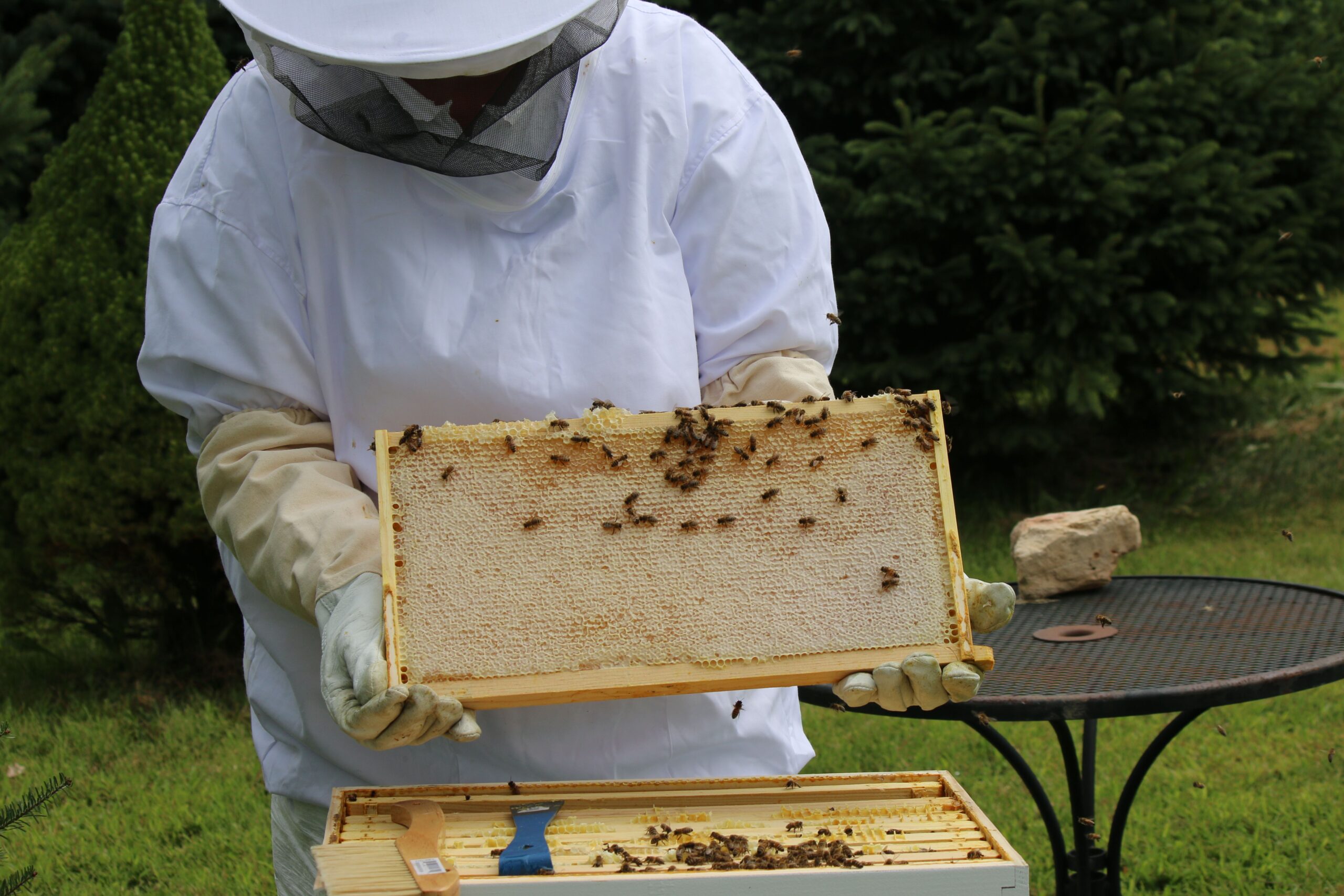
If you are looking for the direct answer, here it is. The most reliable signs of overcrowding inside a beehive include a severe lack of empty wax cells for the queen to lay eggs, worker bees storing nectar in the main brood area, the sudden appearance of peanut shaped swarm cells along the bottom of the frames, excessive bearding at the hive entrance during cool weather, and a solid wall of bees covering every single frame when you remove the hive cover.
Welcome to Trevro. My name is Peter Uzodimma. I have spent years studying, managing, and rescuing honey bee colonies.
Beekeeping is an exact science. It requires deep observation. One of the most critical skills you can develop is knowing when your bees are running out of space.
When a hive gets too crowded, the bees will follow their natural instinct. They will swarm. Swarming means half your workforce flies away to find a new home. You lose your honey makers. You lose your hive population.
You cannot wait until the bees are hanging from the trees to take action. You must learn to read the inside of the box. Today, we are going deep into the real signs of overcrowding inside a beehive.
I am going to share verified data. I will share real case studies. I will also share my personal experiences from the field.
We will avoid the generic advice you find everywhere else online. We are going to look at the biology of the hive. This is the exact information you need to keep your bees healthy, happy, and inside their boxes.
The Biology of Space: Why Bees Need Room
To understand overcrowding, you must understand the math of a beehive. A healthy queen bee is an egg laying machine.
During the peak spring season, a strong queen can lay up to 2,000 eggs in a single day. Think about that number. That is more than her own body weight in eggs every 24 hours.
Those eggs hatch into larvae. They turn into pupae. Then they emerge as adult worker bees about 21 days later. This creates massive exponential growth.
A standard ten frame Langstroth deep box holds about 30,000 to 40,000 bees when completely full. If the queen is laying 2,000 eggs a day, the population explodes very fast.
When the box gets full, a biological trigger happens. The queen produces a special scent called Queen Mandibular Pheromone. Beekeepers call this QMP.
When the hive is spacious, the worker bees spread this scent around perfectly. Every bee knows the queen is there. Every bee feels calm.
When the hive is overcrowded, there are simply too many bodies. The QMP scent gets diluted. The bees at the edges of the hive stop smelling the queen.
When they stop smelling her, they panic. Their biology tells them the queen is failing or the hive is out of space. This triggers the swarm impulse.
This is backed by extensive research. You can read more about honey bee pheromones and swarming behavior from the Penn State Extension, a highly trusted authority on agricultural science.
External Sign 1: Unusual Bearding on Cool Days
You do not always have to open the box to see a problem. Sometimes the bees tell you right on the front porch.
Bearding is when bees gather in a large cluster on the outside of the hive. They look like a giant fuzzy beard hanging from the entrance.
Now, bearding is totally normal on a hot summer day. If it is 95 degrees outside, the bees will leave the box. They do this to lower the temperature inside the hive so the baby bees do not overheat.
However, temperature is the key. You must look at the weather.
If it is a cool spring evening, maybe 60 degrees, and your bees are still hanging all over the outside of the box, you have a problem.
Cool weather bearding is a massive red flag. It means there is literally not enough physical room for all the adult bees to fit inside the wooden boxes. They are forced to sleep outside.
External Sign 2: The Entrance Traffic Jam
Watch the front entrance of your hive for five minutes. Just pull up a chair and watch.
In a healthy hive with plenty of room, foragers zoom in and out. They land, run inside, drop off their nectar, and fly right back out. It looks like a busy airport runway.
In an overcrowded hive, you will see a traffic jam.
Returning foragers will land on the bottom board and just stand there. They will pace back and forth. You might see them bumping into each other.
Why does this happen? Because the interior comb is completely full.
The forager has a stomach full of nectar. She needs to pass that nectar to a receiver bee inside the hive. But all the receiver bees are busy. All the storage cells are full. The entire system is backed up.
If your bees look confused and congested at the front door, you need to look inside immediately.
Internal Sign 1: The Wall of Bees
This is the most obvious sign when you actually open the hive.
When you smoke the entrance and take off the outer cover, you then remove the inner cover. Look straight down at the tops of the wooden frames.
In a hive with adequate space, you will see bees walking around. You will be able to see the wooden tops of the frames clearly. You will see some empty space down between the frames.
In a severely overcrowded hive, you will see a solid, moving carpet of bees.
You will not be able to see the wood of the frames. The bees will boil over the top the second you lift the lid. They will instantly cover your hive tool.
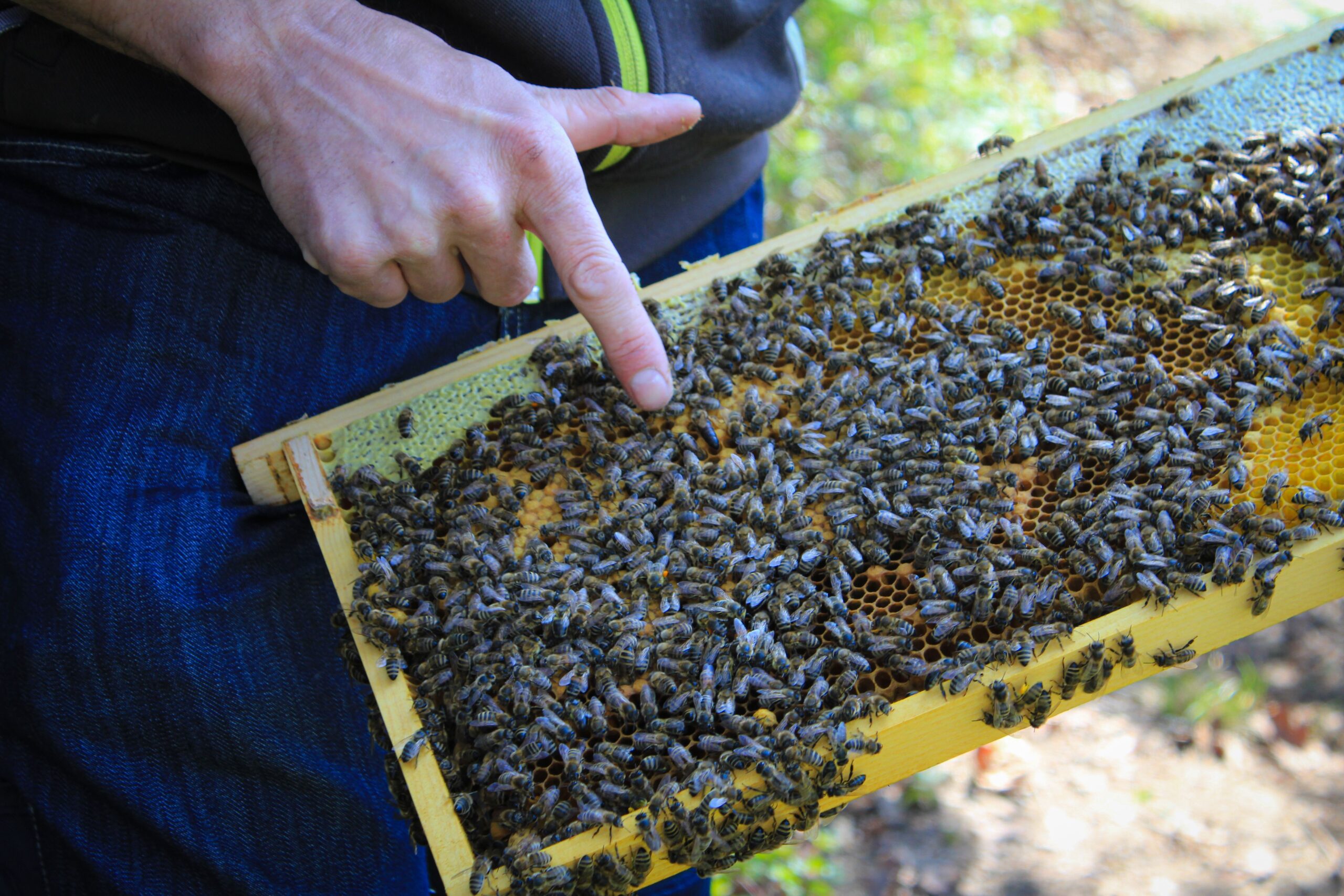
When you pull a single frame out, it will be completely black with bees. There will be multiple layers of bees walking on top of each other.
This is the “wall of bees.” When every single square inch of wax is covered by multiple layers of insects, the hive is critically overcrowded.
Internal Sign 2: Backfilling the Brood Nest
This is a subtle sign. You really need to understand how bees organize their home to catch this one.
A natural beehive has a specific layout. The bottom center is the brood nest. This is where the baby bees are raised. Above and to the outside edges, they store pollen. Above that, they store honey.
The queen needs empty wax cells in the bottom center to lay her eggs.
When a massive nectar flow happens, the worker bees bring in thousands of pounds of flower nectar. If you have not given them enough empty boxes on top, they panic.
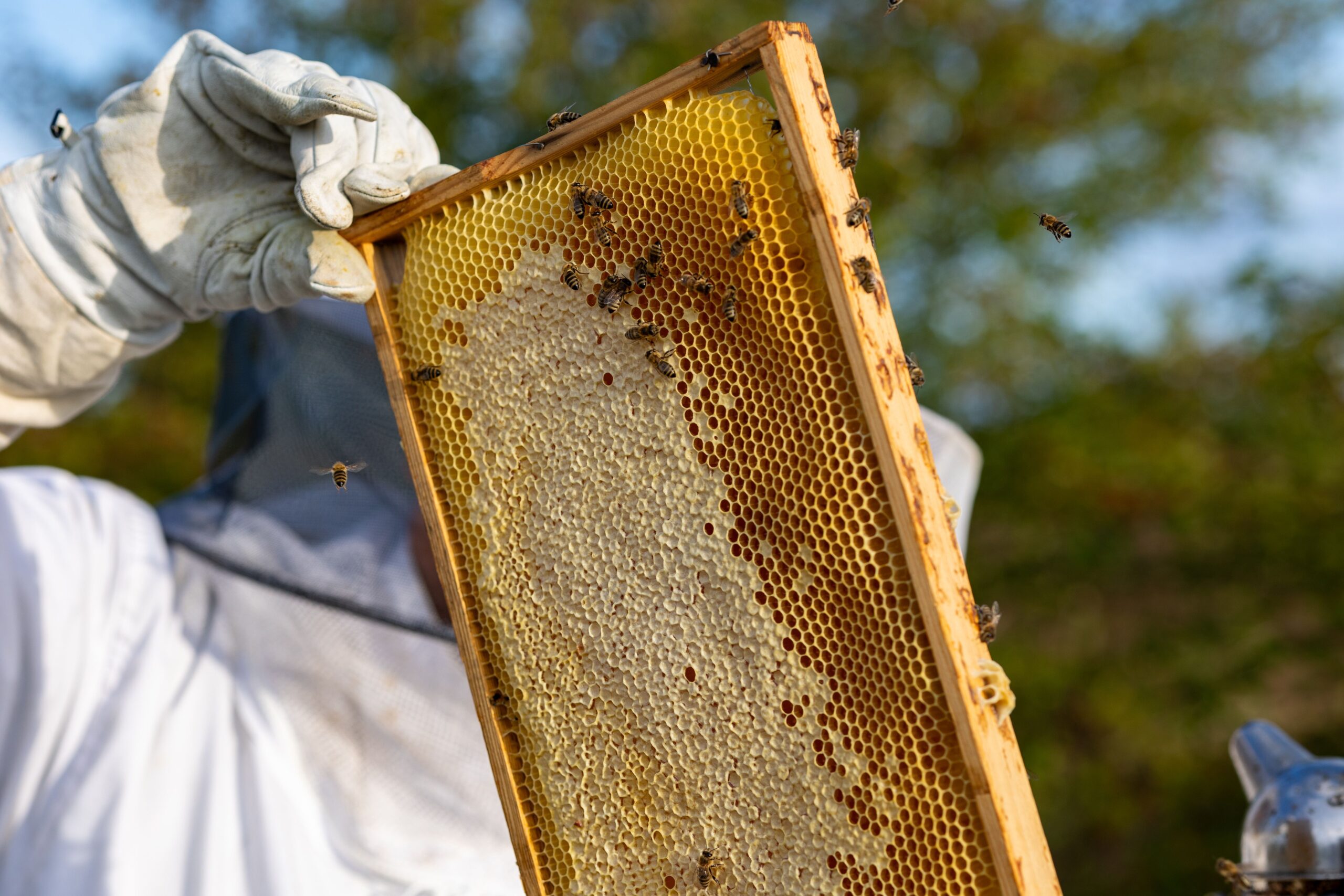
They need to store that nectar right now before it spoils. So, they start putting the wet nectar directly into the empty cells in the brood nest.
This is called backfilling.
When the queen walks around looking for an empty hole to drop an egg, she finds a puddle of nectar instead. She has nowhere to lay. She literally runs out of real estate.
When the queen stops laying eggs because there is no room, the hive is officially honey bound. Swarming is guaranteed at this point.
Internal Sign 3: The Appearance of Swarm Cells
This is the final warning. If you see this, the bees have already made the decision to leave.
As we discussed earlier, when the hive is too full, the queen’s scent gets diluted. The worker bees decide they need a new queen so the old one can leave with a swarm.
They start building special wax cups. These are called queen cups. They look like little acorn caps facing upside down.
Queen cups alone are normal. Bees build them just for practice.
The problem is when you find eggs or white jelly inside those cups. Once an egg is in that cup, it is now an official swarm cell.
The bees will build the wax down to look like a rough peanut shell hanging from the bottom of the frame.
If you see peanut shaped swarm cells on the bottom bars of your frames, your hive is severely overcrowded. The bees are packing their bags. You have less than a week before half the hive flies away.
For more visual guides on identifying different types of queen cells, the University of Florida Honey Bee Research and Extension Lab provides excellent public resources.
Personal Experience: The Georgia Apiary Incident
I want to share a very specific story with you. This happened to me not too long ago, and it perfectly illustrates how fast overcrowding happens.
The date was April 14, 2024. The time was around 11:30 AM. I was visiting a client’s apiary in rural Georgia, United States. The weather was a beautiful 72 degrees with clear blue skies.
This client had two strong Langstroth hives. They had fed their bees heavy sugar syrup all winter. The hives survived the cold and were very robust.
The client told me, “Peter, the bees are doing great. I am going to wait another two weeks before I add the honey supers.”
I looked at the front of Hive A. There was a massive beard of bees covering the entire bottom board. At 72 degrees, this was not heat relief. This was an eviction notice.
I lit my smoker and popped the top lid.
The bees instantly poured out over the edges. It looked like a pot of water boiling over. I pulled the middle frame from the top deep box.
Every single open cell was backfilled with fresh nectar. The queen was literally running across the top bar. She was agitated. She had nowhere to lay a single egg.
I tilted the top box up to look underneath. Hanging from the bottom of the frames were seven fully capped, peanut shaped swarm cells.
We were completely out of time. If I had not visited that day, those bees would have swarmed by Tuesday.
We had to do an emergency split right then and there. We took the old queen and three frames of bees and moved them to a brand new box. This simulated a swarm and satisfied their biological urge.
This taught my client a massive lesson. You cannot manage bees by a calendar. You cannot say “I will add boxes in May.” You must manage bees by reading the signs they give you.
Case Studies from Real Beekeepers
To give you a broader perspective, let us look at two real case studies from beekeepers in different climates. These stories highlight how easily overcrowding is misdiagnosed.
Case Study 1: Sarah from Ohio, United States
Sarah is a second year beekeeper in the Midwest. Spring in Ohio can be unpredictable. You might have snow one week and eighty degree weather the next.
In early May, the dandelions bloomed. This is the first major food source of the year. Sarah noticed her bees bringing in massive amounts of bright yellow pollen.
She opened the top of her single brood box. She saw bees covering about seven of the ten frames. She thought, “They still have three empty frames. They have plenty of room.”
She closed the hive and went away for a ten day work trip.
What Sarah did not understand is exponential population growth. Those seven frames of bees were covering thousands of capped pupae. While she was gone, those pupae hatched.
The population doubled in just four days.
The bees quickly filled the remaining three frames. They ran out of room. They built swarm cells. When Sarah came back from her trip, her hive was mostly empty. She missed the honey flow entirely.
The Lesson: You must look at the brood, not just the adult bees. Capped brood means a population explosion is coming in a matter of days. You must provide space before the babies hatch.
Case Study 2: Mark from Northern California
Mark lives in a climate with a very long, warm spring. He runs two deep boxes for his brood nest.
During an inspection in late April, Mark pulled frames from his bottom box. He saw a great laying pattern. The queen was doing her job.
He then checked the top box. The bees had filled every single frame with capped honey. It looked beautiful. Mark was proud of his heavy hive.
However, Mark failed to recognize the danger of a honey bound hive.
Because the entire top box was a solid wall of honey, the queen could not move up. She was trapped in the bottom box. The worker bees kept bringing in more nectar. They started backfilling the bottom box.
Within two weeks, the queen was completely locked out of empty cells. The hive swarmed despite having two large boxes.
The Lesson: Space is not just about empty boxes. It is about empty drawn wax in the correct location. The brood nest must remain open and clear of heavy honey deposits.
Verified Data: Hive Capacity Metrics
To help you understand exactly when to take action, I have compiled this data table. This shows the rough capacity of standard hive equipment and when you need to act.
| Hive Box Type | Average Frame Count | Maximum Adult Bee Capacity | Warning Sign Limit (Time to Add Space) |
| 10-Frame Deep (Brood) | 10 Deep Frames | ~35,000 Bees | When 7 to 8 frames are fully covered with bees. |
| 8-Frame Deep (Brood) | 8 Deep Frames | ~28,000 Bees | When 6 frames are fully covered with bees. |
| 10-Frame Medium (Honey) | 10 Medium Frames | ~40 lbs of Honey | When 7 frames are drawn out and filled with nectar. |
| 5-Frame Nuc Box | 5 Deep Frames | ~15,000 Bees | When 4 frames are drawn and covered in bees. |
Note: These numbers are estimates based on standard Langstroth equipment used in North America.
The Domino Effect of Ignoring the Signs
What happens if you ignore these signs? It is not just about losing a swarm. There is a severe domino effect that ruins your entire beekeeping season.
First, the primary swarm leaves with your old, proven queen. They take about sixty percent of your worker bees.
Next, the hive is left with several capped swarm cells. When the first virgin queen hatches, her instinct is to kill her sisters.
However, if the hive is still feeling crowded, the worker bees will protect those other cells. The first virgin queen will take another huge group of bees and leave. This is called an afterswarm.
A strong hive can throw three or four afterswarms.
By the time the swarming fever breaks, your originally massive hive is reduced to a tiny handful of confused bees and one virgin queen.
That virgin queen still has to fly out to mate. If a bird eats her on her mating flight, your hive is now hopelessly queenless.
Without a queen to lay new workers, the remaining population ages and dies. The wax moths and small hive beetles invade. The hive collapses completely.
All of this happens simply because you did not add another wooden box in time.
Actionable Solutions: Exactly How to Fix Overcrowding
Identifying the problem is only step one. Now you need to fix it. Here are the exact steps you must take depending on what you see inside the hive.
Solution 1: Supering Ahead of the Flow
The best defense is a good offense. Do not wait for the bees to run out of room.
The rule of thumb is the 7/10 rule. When you inspect a ten frame box, look at the top of the frames. If the bees are actively walking on and using seven of those ten frames, it is time to add another box on top.
Do not wait for them to touch frame eight or nine. Give them the empty space early. This gives them a place to put incoming nectar so they do not backfill the brood nest.
Solution 2: Checkerboarding (Advanced Space Management)
If you see signs of backfilling, you need to break up the honey dome.
Checkerboarding is a technique where you take empty, drawn comb frames and alternate them with full honey frames right above the brood nest.
This breaks the solid wall of honey. It gives the queen a chimney of empty cells to move upward. The bees hate having empty spaces between full honey frames, so they immediately send workers up to organize and fill those cells.
This pulls the congestion out of the bottom box and instantly relieves the pressure.
Solution 3: The Emergency Split
If you find capped swarm cells, adding boxes will no longer work. The biological trigger has been pulled. They are going to swarm.
You must do an artificial swarm, also known as a split.
Find the old queen. Take her, along with three frames of brood and bees, and put them in a completely new hive box in a different location in your yard.
This tricks the old queen into thinking she successfully swarmed.
Back in the original hive, leave two of the best looking swarm cells. Destroy the rest. The bees in the original hive will hatch those cells, raise a new queen, and get back to work.
You have just solved the overcrowding problem and doubled your apiary size.
Summary: Read the Signs, Save the Bees
Beekeeping is an active partnership. The bees do the heavy lifting, but you must provide the architecture.
Remember the 7 clear signs we discussed today:
- A lack of empty cells for the queen.
- Nectar stored in the brood area (backfilling).
- Peanut shaped swarm cells on the bottom bars.
- Cool weather bearding.
- Traffic jams at the entrance.
- The “wall of bees” covering all frames.
- A population boom following capped brood hatching.
If you memorize these signs, you will transition from a reactive beekeeper to a proactive master beekeeper.
At Trevro, my goal is to give you the real, unfiltered facts about apiary management. Beekeeping is hard work, but it is incredibly rewarding when you learn to speak their language.
When was the last time you checked your bottom boxes for swarm cells? Let me know your experiences in the field.
Keep your smokers lit and your hive tools sharp.