If you want a low-cost, proven hive that gives you full control of your colony, the Langstroth hive is the better pick. If you want easy honey harvesting, less mess, and a beginner-friendly setup, the Flow Hive 2+ (widely called the Flow Hive 2 Pro) wins on convenience. Both hives can produce great honey. The right one depends on your budget, your goals, and how hands-on you want to be.
You are thinking about starting beekeeping. Or maybe you already have bees and want to upgrade your setup.
Either way, you have probably come across two popular names: the Langstroth hive and the Flow Hive 2 Pro (also called the Flow Hive 2+).
These two hives look different, work differently, and cost very different amounts. One has been around since 1852. The other became famous after a viral crowdfunding campaign in 2015.
In this guide, I will break down both hives in plain language so you can make a smart decision. I will cover how each hive works, what it costs, who it is good for, and what real beekeepers say about each one.
Let’s get into it.
What Is a Langstroth Hive?
The Langstroth hive was invented in 1851 by Lorenzo Langstroth, a minister and beekeeper from Philadelphia. He figured out something important: bees need a specific amount of space inside a hive. If you get that space right, bees won’t glue everything together with propolis. This idea is called “bee space,” and it changed beekeeping forever.
Today, the Langstroth is the most widely used hive in the world. You will find it in backyards, commercial farms, and research centers on every continent.
The hive is made of stacked boxes called “supers.” The bottom box is the brood box, where the queen lays eggs and the colony grows. The boxes on top hold honey frames that beekeepers remove during harvest.
It is a simple design. The parts are standardized. You can find replacement frames, lids, and boxes from almost any beekeeping supplier.
According to the National Honey Board, the United States alone produces millions of pounds of honey every year, and the Langstroth is the hive behind most of that production.
What Is the Flow Hive 2 Pro (Flow Hive 2+)?
The Flow Hive 2+ is the premium version in the Flow Hive product line, created by Cedar Anderson and his father Stuart Anderson in Australia. The original Flow Hive raised over $12 million on crowdfunding platform Indiegogo in 2015, making it one of the most successful crowdfunding campaigns in history.
The Flow Hive 2+ (which many people call the Flow Hive 2 Pro) is built on the same body measurements as a standard Langstroth hive. The key difference is the super at the top. Instead of regular wooden frames, it uses patented Flow Frames.
These frames are made of BPA-free plastic with a split-cell design. When the bees fill the cells with honey and cap them, the beekeeper inserts a special key into the frame from outside the hive. Turning the key splits the cells, and the honey flows down a channel and directly out through a tube into a jar.
No opening the hive. No removing heavy boxes. No centrifuge machine needed.
The Flow Hive 2+ comes with premium western red cedar wood, observation windows, brass hardware, an adjustable hive stand with ant guards, and a pest management tray. It is available in 6-frame and 7-frame sizes.
You can learn more about how the Flow Frames work directly on the official Flow Hive website.
How Each Hive Harvests Honey
This is the biggest difference between the two hives. Let’s look at each process.
Harvesting from a Langstroth Hive
When honey frames are full and capped in a Langstroth, you have to:
- Open the hive and remove the heavy frames one by one
- Brush or shake bees off the frames
- Carry the frames to a processing area
- Use an uncapping knife to cut off the wax caps
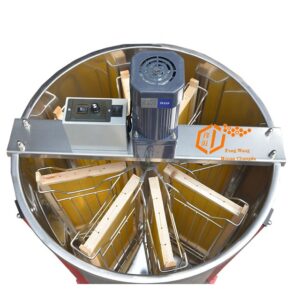
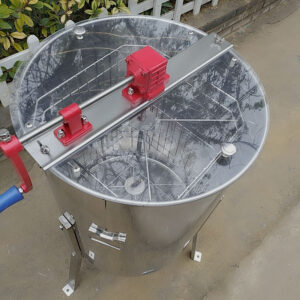
- Put the frames in a centrifugal extractor that spins the honey out
- Filter the honey and bottle it
- Return the empty frames to the hive
This process works very well. It gives you a lot of honey. But it takes time, equipment, and physical effort. A full honey super can weigh 40 to 60 pounds, which is not easy to lift regularly.
Harvesting from the Flow Hive 2+
With the Flow Hive 2+, you:
- Look through the observation window to check if frames are full
- Insert the harvesting key into the frame slot from outside the hive
- Turn the key and watch honey flow into your jar
- Remove the key when done
The bees are barely disturbed. You do not need an extractor. There is no sticky mess to clean up.
A University of Queensland study found that the Flow Frame extraction method produces honey with fresher, cleaner flavors than conventionally extracted honey.
Cost Comparison: Langstroth vs Flow Hive 2+
Cost is one of the first things new beekeepers look at. Here is an honest breakdown.
Langstroth Hive Startup Cost
A basic Langstroth hive setup typically costs between $150 and $400 for the woodenware alone. But that price does not include:
- A centrifugal honey extractor ($150 to $600+)
- Uncapping equipment ($30 to $100+)
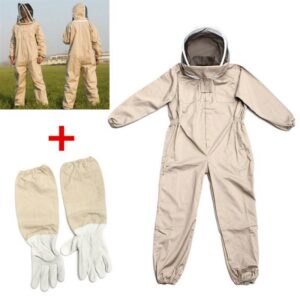
- Protective gear ($50 to $150+)
- Bees and nucleus colony ($150 to $225)
When you add all of that up, a solid first-year Langstroth setup can easily reach $700 to $1,000 or more.
Flow Hive 2+ Startup Cost
The Flow Hive 2+ starts at around $899 for the base model. Complete starter bundles with protective gear, tools, and support can run from about $1,000 to $1,500.
The Flow Hive’s price includes the built-in extraction system, so you do not need to buy a separate extractor.
According to pricing research from The Pricer, when you factor in extraction equipment costs for a Langstroth setup, the total cost difference between the two systems narrows considerably over time.
If you plan to keep just one or two hives as a hobby, the Flow Hive 2+ can be a cost-effective choice in the long run.
If you plan to run 10+ hives commercially, the Langstroth wins because one extractor can serve all your hives.
Bee Management: What Both Hives Require
This is something many beginners miss, so I want to be very clear.
The Flow Hive 2+ makes honey harvesting easier. It does NOT make beekeeping easier overall.
You still have to:
- Open the hive regularly to inspect the brood box
- Check for Varroa mites and treat if needed
- Monitor for diseases like American foulbrood
- Prevent swarming
- Watch the queen’s health
- Feed bees when nectar is scarce
All of this is exactly the same whether you use a Langstroth or a Flow Hive.
The American Beekeeping Federation recommends that all beekeepers, regardless of hive type, perform regular inspections at least every 7 to 14 days during the active season.
Skipping inspections puts your colony at risk. The Flow Hive is not a “set it and forget it” system. No hive is.
Honey Yield: Which Hive Produces More?
Here is the truth: your honey yield depends more on your local environment, your bees, and your management skills than on the type of hive you use.
However, there are some practical differences.
A full Langstroth honey super can hold 20 to 60 pounds of honey depending on the size. Many experienced beekeepers stack multiple supers during a strong nectar flow, which means more honey per season.
The Flow Hive 2+ with 7 frames can hold up to 20 kilograms (about 44 pounds) of honey when full. This is competitive for a single-super setup.
The Langstroth has an edge if you want to scale up production by adding more supers. The Flow Hive 2+ shines if you want to harvest small, fresh batches of honey throughout the season without disrupting the hive each time.
Build Quality and Materials
Both hives can be built from good or poor materials depending on where you buy them.
Langstroth Quality
Standard Langstroth hives are commonly made from pine or fir. Budget options exist at low prices, but cheaper wood warps and rots faster. Higher-end Langstroth setups use thicker wood that lasts longer.
Parts are widely available everywhere. If a box cracks or rots, you can replace it affordably from almost any beekeeping supplier like Mann Lake or Dadant.
Flow Hive 2+ Quality
The Flow Hive 2+ is made from premium western red cedar, which is naturally weather-resistant and known for its durability. The woodwork is laser-cut and assembled with brass hardware.
The observation windows and the gabled roof design are unique to Flow Hive. The pest management tray and ant guards are built-in features you would have to buy separately for most Langstroth setups.
The Flow Frames themselves are made from BPA-free and BPS-free food-safe plastic produced in Australia.
The trade-off is that Flow Frame replacement parts are proprietary. If a Flow Frame breaks, you must order replacements from Flow, unlike Langstroth parts that are widely available everywhere.
Who Should Choose the Langstroth Hive?
The Langstroth hive is the right choice if you:
- Are on a tighter budget to start
- Plan to keep many hives over time
- Want to learn traditional beekeeping from the ground up
- Are interested in commercial or semi-commercial honey production
- Prefer natural beeswax comb over plastic frames
- Want the widest possible access to local replacement parts and community knowledge
The Langstroth is also the best choice if you enjoy the hands-on process of beekeeping. Removing frames, reading comb, and extracting honey manually teaches you a lot about your bees.
Who Should Choose the Flow Hive 2+?
The Flow Hive 2+ is the right choice if you:
- Want the easiest possible honey harvesting experience
- Are a beginner who wants a friendly introduction to beekeeping
- Have physical limitations that make lifting heavy boxes difficult
- Want to keep one or two hives as a hobby
- Enjoy showing off a beautiful, unique hive to friends and family
- Value built-in features like observation windows and pest management trays
- Are comfortable with the higher upfront price
The Flow Hive 2+ is especially popular with urban beekeepers and families who want to involve children in the process without a complicated extraction setup.
What Experienced Beekeepers Say
The beekeeping community has mixed feelings about the Flow Hive. Some experienced beekeepers love it for making honey harvesting simple and gentle. Others argue that it makes it too easy to harvest honey without properly monitoring the hive, which can lead to new beekeepers neglecting colony health.
The Honey Bee Suite, a respected beekeeping resource run by experienced beekeeper Rusty Burlew, points out that new beekeepers sometimes choose the Flow Hive expecting low-maintenance beekeeping, then get surprised by how much management is still required.
This is not a criticism of the Flow Hive itself. It is a reminder that both hives require committed beekeeping. The Flow Hive just takes the heavy lifting out of harvest day.
Scientific Beekeeping’s Randy Oliver, a well-respected figure in the beekeeping world, has written extensively about the importance of Varroa mite management regardless of which hive system you use. Mite control is the most important thing any beekeeper can learn, and it applies equally to both hive types.
Side-by-Side Comparison Table
| Feature | Langstroth Hive | Flow Hive 2+ |
|---|---|---|
| Initial cost | $150 to $400 (woodenware) | $899+ |
| Total first-year cost | $700 to $1,200+ | $1,000 to $1,500+ |
| Honey extraction | Manual (centrifuge required) | Tap-style (no extractor needed) |
| Hive inspection | Required regularly | Required regularly |
| Colony disturbance at harvest | High | Low |
| Beeswax comb | Natural wax | Plastic Flow Frames |
| Replacement parts | Widely available | Proprietary |
| Best for | Hobby to commercial | Hobby and small-scale |
| Learning curve | Moderate | Moderate (harvest is easy, care is not) |
| Physical effort | Higher | Lower |
| Wood quality | Varies | Premium cedar |
| Observation windows | Usually none | Built-in |
Final Verdict
Both the Langstroth hive and the Flow Hive 2+ are excellent beehives when used correctly.
The Langstroth wins on cost, flexibility, and scalability. It is the global standard for good reason. Nearly every professional beekeeper in the world uses it. If you are serious about beekeeping or want to start small and grow, this is where most people should begin.
The Flow Hive 2+ wins on convenience, build quality, and the harvest experience. If your goal is to enjoy honey from your backyard without a complicated extraction process, it is a well-designed product that delivers on its promise.
What neither hive can replace is the knowledge and commitment of the beekeeper behind it. Learn your bees. Inspect your hive regularly. Manage Varroa mites. Do that, and either hive will serve you well.
Frequently Asked Questions
Is the Flow Hive 2+ a Langstroth hive?
Yes, technically. The Flow Hive 2+ is built on the same box dimensions as a standard Langstroth hive. The main difference is the patented Flow Frames in the honey super. The brood box is functionally identical to a standard Langstroth brood box.
Can I add Flow Frames to my existing Langstroth hive?
Yes. Flow sells the super separately. A 6-frame Flow Super fits an 8-frame Langstroth brood box. Keep in mind that Flow Frames are wider than standard frames, so a 10-frame Langstroth box will hold only 7 Flow Frames.
Does the Flow Hive 2+ require less work overall?
Only at harvest time. All other beekeeping tasks, including brood inspections, mite treatments, feeding, and swarm prevention, are exactly the same as with a Langstroth hive.
Is Flow Hive honey better quality?
The University of Queensland study found that Flow Frame honey is fresh and clean. Whether it is “better” depends on what you value. Some beekeepers prefer the hands-on process of traditional extraction, which allows for more quality checks.
What is the difference between the Flow Hive 2 and the Flow Hive 2+?
The Flow Hive 2+ (sometimes called the Flow Hive 2 Pro) is the premium version. It is made from western red cedar instead of Araucaria pine or ThermoGrade Paulownia. It also includes upgraded hardware and more accessories compared to the standard Flow Hive 2.
Peter Uzodimma is a beekeeping writer and contributor at Trevro. He covers practical topics in homesteading, sustainable living, and small-scale farming to help everyday people make confident decisions.
Sources: Flow Hive | National Honey Board | American Beekeeping Federation | Honey Bee Suite | Scientific Beekeeping | Bee Professor | Dadant | Mann Lake