
You should check your beehive every 7 to 10 days during spring and summer.
In fall, drop your inspections to once every 2 to 3 weeks.
In winter, inspect your hive as little as possible — only do a quick external check once a month, or when temperatures go above 50°F (10°C).
That is the baseline rule. But the real answer is a little more specific than that. It depends on your season, your location, your colony strength, and what stage your bees are in.
This guide breaks it all down so you know exactly when to open your hive and when to leave it alone.
Why Checking Your Hive Too Often Is a Real Problem
Most new beekeepers make this mistake: they check their hives too much.
I did the same thing when I started.
In October 2017, I was managing three Langstroth hives in Fresno, California. Every few days, I would pull frames just to “see what was happening.” The bees were calmer than usual, and I thought that meant they were fine with the interruptions. I was wrong.
By late November, two of those colonies had chilled brood from repeated cold-weather inspections. The queen in one hive stopped laying for almost three weeks. I lost a hive that winter.
That experience taught me something that no YouTube video explained clearly: every hive inspection is a disturbance. You are stopping normal colony activity, releasing alarm pheromones, potentially rolling the queen, and allowing heat to escape the brood cluster.
According to research published by Penn State Extension, unnecessary inspections can disrupt foraging patterns, stress the queen, and make colonies significantly more defensive over time.
Checking too little is also dangerous. Swarms, laying workers, queenlessness, and Varroa mite explosions can all destroy a colony within weeks if you are not paying attention.
The goal is finding the right balance.
How Often to Check Your Beehive by Season
This table summarizes the recommended inspection schedule based on the season. These figures align with protocols shared by the American Beekeeping Federation (ABF) and the Bee Informed Partnership, which tracks colony loss data across thousands of hives in the United States.
| Season | Recommended Inspection Frequency | Key Things to Look For |
|---|---|---|
| Early Spring (Mar–Apr) | Every 7 days | Queen activity, stored food, mite levels |
| Late Spring (May–Jun) | Every 7–10 days | Swarm cells, space for expansion, nectar |
| Summer (Jul–Aug) | Every 10 days | Queen health, honey stores, pest pressure |
| Early Fall (Sep–Oct) | Every 14–21 days | Winter food stores, Varroa counts, colony size |
| Late Fall (Nov) | Once a month maximum | Entrance activity, hive weight (external only) |
| Winter (Dec–Feb) | External checks only | Entrance blockages, condensation, mouse guards |
Important: These are baseline guidelines. A new package of bees, a recently requeened colony, or a hive showing signs of disease may require more frequent checks regardless of season.
Spring: Your Most Important Inspection Window
Spring is when beekeeping is won or lost for the entire year.
After winter, your colony is hungry, the queen is ramping up her laying rate, and the population is building fast. This is also when swarming instincts kick in.
The critical spring inspection window runs from late February through June, depending on your region.
During this time, inspect every 7 days. Here is why the 7-day window is so important: it takes exactly 8 days for a capped queen cell to develop and hatch once the cell is capped. If you wait 10 or 14 days between inspections, a swarm cell could hatch and your colony could swarm before you even knew it was preparing.
During your spring inspections, check for:
- Queen cells (both swarm cells and supersedure cells)
- Brood pattern (solid, capped brood is a healthy sign)
- Food stores (starvation is common in early spring before flowers bloom)
- Varroa mite counts (use an alcohol wash or sticky board)
- Space (add supers or boxes before the bees run out of room)
The University of Maryland Extension Bee Lab confirms that proactive swarm control during spring inspections is one of the top factors that separates hobbyists who keep their colonies from those who lose them every spring.
Summer: Maintaining a Healthy, Productive Hive
Once spring swarming season slows down — usually by late June in most of the United States — you can ease off to every 10 days.
In summer, your bees are in full production mode. The nectar flow is strong. The colony is large. Foragers are working hard. Your main concerns shift to:
- Honey production and space (is there enough room in the supers?)
- Queen health (is she still laying well?)
- Small hive beetles (especially in the southeastern US)
- Varroa mite buildup (summer is when mite populations can explode)
I had a conversation with Marcus Thorn, a commercial beekeeper in Yolo County, California, in August 2022 at around 9:00 AM during a field check I sat in on. He runs 200 hives. He told me directly:
“In summer, I do not open hives more than every 10 days unless I have a reason. The bees tell you what they need if you learn to listen at the entrance.”
Marcus is right. The hive entrance gives you a lot of data without ever opening the box. More on that in a moment.
Fall: Preparing for Winter
Fall inspections are about survival planning.
By September, you should shift your focus from honey production to colony preparation. Your bees need enough food stores to last through winter. The queen should be laying a healthy population of winter bees.
According to the Bee Informed Partnership’s 2022–2023 survey, colony losses in the United States averaged around 48% over the winter season. The top preventable cause was insufficient food stores going into winter, which a proper fall inspection would catch.
In fall, inspect every 14 to 21 days.
Here is what to look for:
- Food stores: A Langstroth colony in a cold climate needs at least 60 to 80 pounds of honey to survive winter. Weigh your hive or estimate by hefting the back.
- Brood pattern: The queen should still be laying. If the brood pattern is spotty or absent, investigate.
- Varroa mite counts: Do a final mite wash before the main winter population is raised. Treat if your count is above 2 mites per 100 bees. The Honey Bee Health Coalition’s Varroa management guide provides clear treatment thresholds.
- Colony size: A colony going into winter needs to be the size of a softball or larger. A small cluster often does not survive.
Stop your fall inspections by early to mid-November in most northern states and Canada. After that, the temperatures drop too low to safely open the hive without harming the brood cluster.
Winter: Hands Off the Hive
Winter is the season that tests every beekeeper’s patience.
Your job in winter is simple: leave the bees alone.
Bees form a winter cluster — a tight ball of bees that vibrates to generate heat. They maintain the core of this cluster at around 93°F (34°C) even when it is 10°F outside. Every time you open the hive, you break that cluster and let cold air rush in. A broken winter cluster can mean dead bees.
What you should do instead:
- Heft the hive from the back without opening it. If it feels light, the bees may be low on food. Feed using fondant or candy board on warm days above 50°F.
- Check the entrance visually. Dead bees at the entrance in small amounts are normal. A pile of dead bees blocking the entrance is not.
- Look for moisture damage around the lid. High condensation inside the hive can drip onto the cluster and kill bees.
- Listen. Put your ear to the side of the hive on cold days and tap it lightly. A healthy winter cluster will produce a buzzing sound. Silence may mean trouble.
The USDA Agricultural Research Service recommends that beekeepers in USDA hardiness zones 5 and below avoid full hive inspections from November through February unless the temperature is consistently above 50°F.
The Hive Entrance: Your Free Daily Inspection Tool
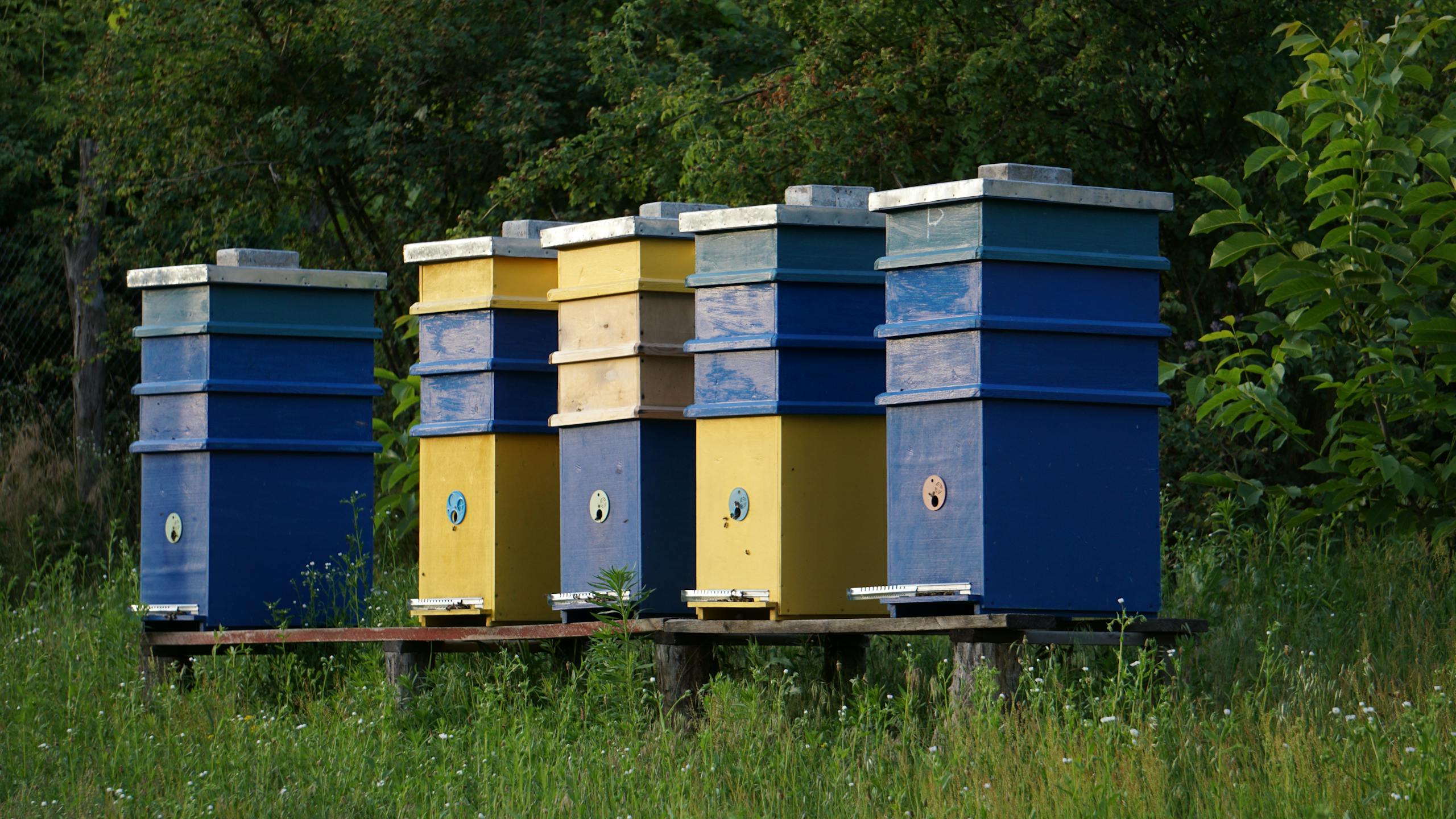
You do not need to open your hive to know what is happening inside.
The entrance tells a story every single day. I teach all of my mentorship students to do a 2-minute entrance observation before every inspection — and even on days when they are not inspecting.
Here is what entrance activity tells you:
| What You See | What It Likely Means |
|---|---|
| Bees flying steadily, returning with pollen | Colony is healthy, queen is likely laying |
| Few bees flying, pollen coming in | Reduced activity — check for queenlessness |
| Lots of bees fanning at entrance | Hive is hot or ventilation is poor |
| Bees fighting at entrance (robbing) | A weaker colony nearby may be under attack |
| Dead bees piling up rapidly | Disease, pesticide exposure, or starvation possible |
| Yellow or brown streaks on the front board | Nosema or dysentery — inspect soon |
| Wax moth larvae or small beetles at entrance | Pest pressure — inspect and treat |
Taking 2 minutes to observe your entrance daily will often tell you whether you need to open the hive before your next scheduled inspection.
New Beekeeper vs. Experienced Beekeeper: Different Rules Apply
Your experience level changes how often you should inspect.
If you are in your first year of beekeeping, inspect every 7 days from March through August without exception. You are still learning what a healthy frame looks like. You need to see brood patterns, queen cells, and population changes often enough that you can recognize problems quickly.
If you have 2 to 5 years of experience, every 10 days is appropriate during peak season. You know what to look for. You can read a frame confidently.
If you have more than 5 years of experience, you can stretch to every 10 to 14 days in summer with confidence, supplementing with daily entrance observations.
Here is a real case study that illustrates why this matters.
Case Study: What Happened When Sarah Over-Inspected Her First Hive
Sarah Okonkwo started beekeeping in April 2021 with a 3-pound package of bees she installed into a 10-frame Langstroth in her backyard in Austin, Texas.
Sarah was enthusiastic. She opened her hive almost every day for the first three weeks.
By week four, she noticed her colony was much smaller than she expected. The bees were defensive — they were head-butting her veil before she even got the lid off.
A local mentor connected through the Texas Beekeepers Association looked at her hive. The diagnosis was clear: the queen had not been able to establish a steady laying pattern because the hive was being opened and disturbed too frequently. The nurse bees were spending energy responding to alarm pheromones instead of tending to brood.
Sarah backed off to weekly inspections. Within three weeks, the colony calmed down. The queen established a solid brood pattern. By August, Sarah had a full double-deep colony heading into fall.
Her takeaway, in her own words: “I thought more checking meant more care. It turns out, sometimes the best thing you can do for your bees is trust them.”
When You Should Inspect More Often — Regardless of the Season
There are specific situations that require you to inspect outside your regular schedule.
Inspect within 24 to 48 hours if you notice any of these:
- The bees are suddenly very aggressive without explanation
- You see bees that look sick, crawling on the ground, or unable to fly
- You suspect a swarm may have left the hive
- You installed a new package or split — follow-up check is needed 5 days later
- You applied a chemical treatment and need to verify effectiveness
- There has been a pesticide exposure event nearby
- A storm knocked your hive over
Never wait for your “scheduled” inspection if something looks clearly wrong. Bees can go from a manageable problem to a full colony collapse in a matter of days.
Varroa Mites and Why They Change Your Inspection Urgency
Varroa destructor is the single biggest threat to honey bee colonies in North America, Europe, and Australia.
According to the National Honey Bee Health Survey conducted by USDA APHIS, Varroa was detected in 86.9% of all managed colonies surveyed across the United States.
This means your inspection schedule must always include a Varroa monitoring plan.
Recommended Varroa monitoring frequency by season:
| Season | Monitoring Method | Acceptable Threshold |
|---|---|---|
| Spring (before treatment) | Alcohol wash or sugar roll | Below 2% (2 mites per 100 bees) |
| Summer (peak mite season) | Alcohol wash every 30 days | Below 2% |
| Late Summer/Early Fall | Alcohol wash before winter bees raised | Below 2% — treat immediately if above |
| Winter | Not possible while clustered | Plan for early spring check |
A 2% threshold means 2 mites per 100 bees. If your count hits 3% or higher, treat immediately.
The Honey Bee Health Coalition offers a free, downloadable Varroa management guide that outlines all approved treatments, timing, and thresholds. It is worth bookmarking.
A Simple Inspection Schedule You Can Actually Follow
Here is a practical, printable inspection schedule for a hobbyist beekeeper managing 1 to 5 hives in the United States, UK, Canada, or Australia.
| Month | Action |
|---|---|
| January | External only: heft, entrance check, listen |
| February | External only (unless above 50°F consistently) |
| March | First full spring inspection; check stores and queen activity |
| April | Every 7 days — swarm season begins |
| May | Every 7 days — peak swarm risk |
| June | Every 7–10 days — add supers as needed |
| July | Every 10 days — Varroa wash this month |
| August | Every 10 days — start fall preparation |
| September | Every 14 days — assess winter stores |
| October | Every 14–21 days — final Varroa treatment if needed |
| November | One final inspection before winter shutdown (if above 50°F) |
| December | External only |
Print this out and put it on your apiary shed wall. Cross-reference it with your local nectar flow calendar, which you can often get from your local beekeeping association.
What to Actually Check During a Hive Inspection
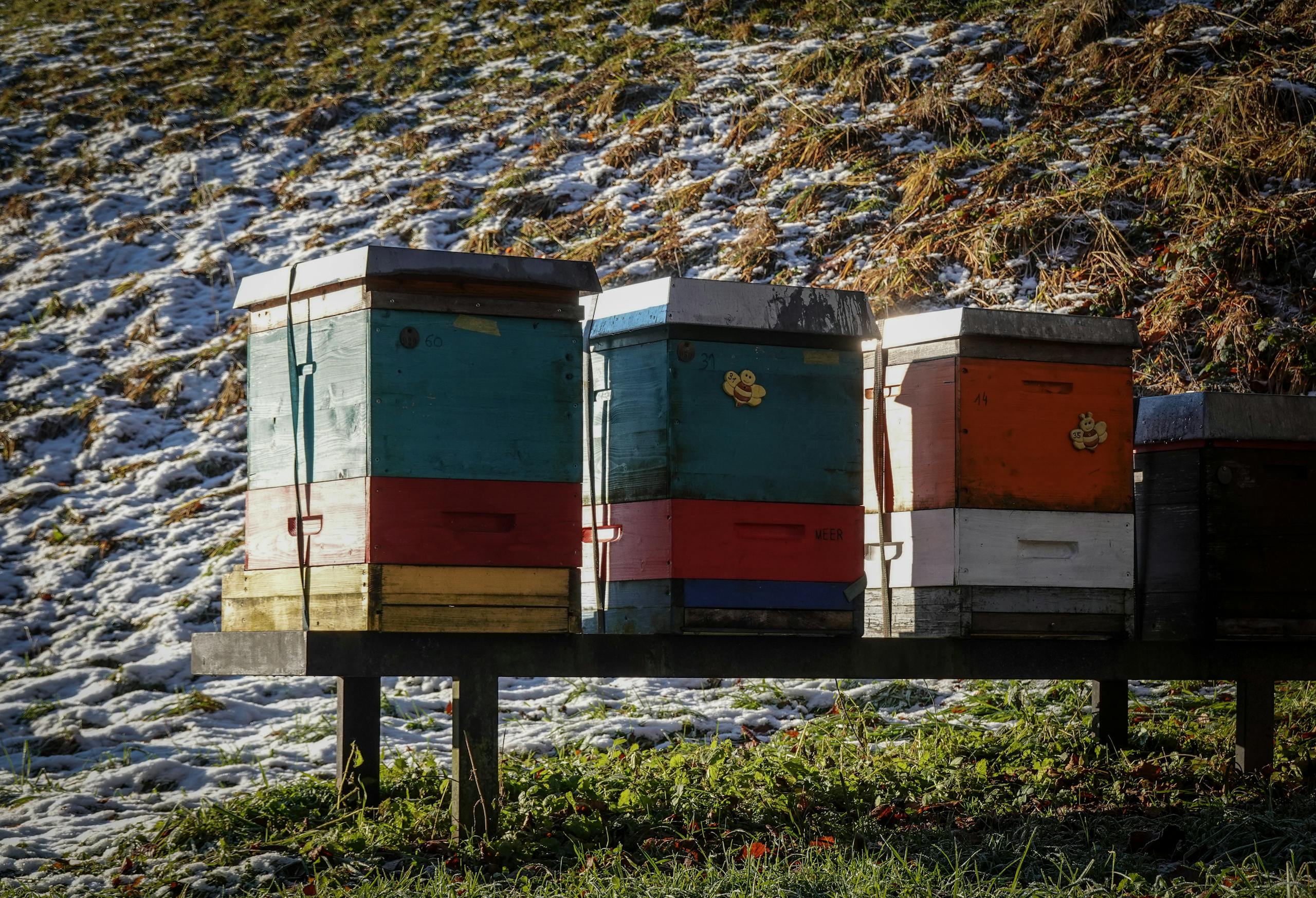
Knowing how often to inspect is only half the answer. You also need to know what to look for each time you open the hive.
Here is a quick checklist for a standard hive inspection:
- Queen presence — Look for eggs (they look like tiny grains of rice standing upright in cells). If you see eggs, the queen was present within the last 3 days.
- Brood pattern — Healthy capped brood should be compact, with few empty cells scattered throughout.
- Population growth or decline — Are there more bees than last time, or fewer?
- Food stores — Is honey stored in the upper frames? Are pollen supplies adequate?
- Disease signs — Look for sunken or perforated cappings (American foulbrood), chalk-white larvae (chalkbrood), or spotty brood patterns.
- Pest pressure — Check for wax moth eggs or webbing, small hive beetle larvae in corners, and Varroa mites on adult bees.
- Space — Is the colony about to run out of room? Add boxes before they are completely full, not after.
- Swarm cells — Located at the bottom of frames or in clusters on frame faces.
Scientific Beekeeping by Randy Oliver is one of the most trusted research-based beekeeping resources online. His work on brood disease identification and Varroa biology is worth spending an afternoon reading if you are serious about your colonies.
My Personal Rule After 10+ Years in the Apiary
After more than a decade managing hives across the United States and internationally through my work with Trevro, I follow one simple principle:
Inspect with a purpose, not out of habit.
Every time I open a hive, I have a question I need answered. “Is the queen healthy?” “Are mite counts within acceptable range?” “Is there enough room in the supers?” “Are swarm cells forming?”
If I do not have a question, I do a 2-minute entrance observation and walk away.
This approach respects the colony, reduces stress on the bees, and keeps my inspections focused and efficient.
Beekeeping is not about how much time you spend inside the hive. It is about how well you use the time you do spend there.
Final Thoughts
Here is a quick summary of everything this guide covered:
- Inspect every 7 days in spring to catch swarm cells in time
- Inspect every 10 days in summer during peak production
- Inspect every 14 to 21 days in fall to prepare for winter
- Do external checks only in winter; open the hive as little as possible
- New beekeepers should inspect weekly throughout their first full season
- Always inspect immediately if you see signs of sickness, extreme aggression, or sudden population drop
- Add monthly Varroa monitoring to every inspection schedule
- Use entrance observation daily as a free, non-invasive monitoring tool
If you found this guide helpful, explore more hive management resources on Trevro. You will find in-depth guides on Varroa treatment, swarm prevention, winterization, and queen rearing — all written from real apiary experience, backed by science.