
You walk toward your beehive for a routine inspection. Usually, the bees hum quietly and go about their business. But today, something feels different. A few bees fly straight at your veil. The buzzing sounds louder and more intense. Your heart starts to beat a little faster.
This scenario is familiar to many beekeepers. One day your hive is calm. The next day, it seems angry. Understanding whether your bees are truly aggressive is a skill that every beekeeper must develop. It protects you from painful stings and helps you become a better manager of your colonies.
In this guide, I will show you the exact warning signs that tell you when a hive is becoming aggressive. I will explain why bees change their behavior and what you can do about it. Whether you keep bees in Nigeria, the United States, the United Kingdom, or anywhere else, these principles apply.
My name is Peter Uzodimma. I have spent over a decade working with farmers and beekeepers across Nigeria. Through Trevro, I help people build successful livestock businesses with simple and practical knowledge. This guide draws from my experience and from trusted scientific research.
Let us begin.
Why Understanding Bee Behavior Matters
Before we dive into the warning signs, we need to understand one important thing. Bees are not naturally aggressive. They are defensive. There is a big difference.
When a bee stings you, it dies. A honey bee loses its stinger and part of its abdomen after stinging. This means stinging is a last resort. Bees only sting when they believe their colony is in danger.
According to the University of Florida IFAS Extension, describing bees as aggressive is a common mistake. Their behavior is actually defensive. They react to what they see as an invasion of their home and defend their nest when necessary.
This defensive behavior exists on a spectrum. Some colonies are very gentle. You can work with them without gloves. Other colonies react strongly to any disturbance. They may chase you far from the hive and sting in large numbers.
Your job as a beekeeper is to read the signs. This helps you know when to proceed with an inspection and when to back away.
Key Warning Signs That a Hive Is Aggressive
Let us look at the specific signs that tell you a colony is becoming defensive or aggressive.
Sign 1: Head Butting or Bumping
This is often the very first warning sign. Before bees sting, they will sometimes fly directly at your face or body and bump into you. This is called head butting.
According to the USDA Forest Service, patrolling guard bees maintain their territory by head butting intruders to drive them away. When butting, individual bees buzz their wings at sound frequencies above those of normal flight and fly directly at the target.
If a bee bumps into your veil or your clothing, pay attention. This is not an accident. The bee is telling you that you are too close and need to move away.
Head butting is an easily recognized characteristic of highly defensive bee colonies. Anyone encountering bees that head butt should quickly retreat.
Sign 2: Guarding a Wider Area Around the Hive
Every honey bee colony has guard bees. Their job is to watch the entrance and challenge anything that comes near. In a calm colony, guards stay close to the entrance. They may investigate you if you stand within a few feet of the hive.
But in an aggressive colony, guards patrol a much larger area. They may fly out to meet you when you are still 20 or 30 feet away from the hive.
Research has shown that Africanized guard bees appear to aggressively patrol and defend territories extending 30 meters or more beyond the nest entrance. While most hives in Nigeria and other regions are not Africanized, any colony can become more defensive and expand its patrol zone.
If bees start flying toward you before you even reach the hive, take this as a serious warning.
Sign 3: Increased Buzzing and Agitation
Sound is another important clue. When you approach a calm hive, the buzzing is steady and low. It sounds like a gentle hum.
When a hive is agitated, the pitch of the buzzing changes. It becomes louder and higher pitched. You may hear a sharp and angry sound rather than a soft hum.
This change happens because defensive bees vibrate their wings differently. They are preparing to defend the colony. If you notice this change in sound, pause and assess the situation before moving closer.
Sign 4: Bees Flying at Your Face
Bees that are about to sting often target the face. This is because the face is where carbon dioxide is exhaled. Bees are sensitive to carbon dioxide and may see it as a threat signal.
If multiple bees are flying directly at your face or buzzing around your head, this is a clear warning. According to the University of Arizona Cooperative Extension, bees may fly at your face or buzz around over your head. These warning signs should be heeded because the bees may be telling you that you have come into their area and are too close to their colony for comfort.
Do not swat at the bees. Swatting makes them more aggressive. Instead, slowly and calmly move away from the hive.
Sign 5: Stinging Without Clear Provocation
In a normal inspection, you might get stung once or twice if you accidentally crush a bee or move too quickly. This is understandable and usually stops after a moment.
But if bees start stinging your suit or gloves repeatedly without you doing anything obviously wrong, something is different. This unprovoked stinging is a sign of a highly defensive colony.
The University of California Davis Bee Biology and Pollination Center notes that common signs of defensive behavior include flying toward or stinging people at a distance and reacting to minimal or no clear provocation.
If this happens during an inspection, close the hive carefully and walk away.
Sign 6: Bees Following You After You Leave
One of the clearest signs of an aggressive hive is what happens after you walk away. Calm bees will stop following you once you move about 50 to 100 feet from the hive. They return to their work and forget about you.
Aggressive bees do not forget. They may follow you for hundreds of feet or even longer. Some highly defensive colonies have been known to pursue people for a quarter mile or more from their hives.
If you notice bees still buzzing around your veil and bumping you long after you have left the hive area, the colony has a strong defensive instinct. This is a hive that requires extra caution in the future.
Sign 7: Fighting at the Entrance
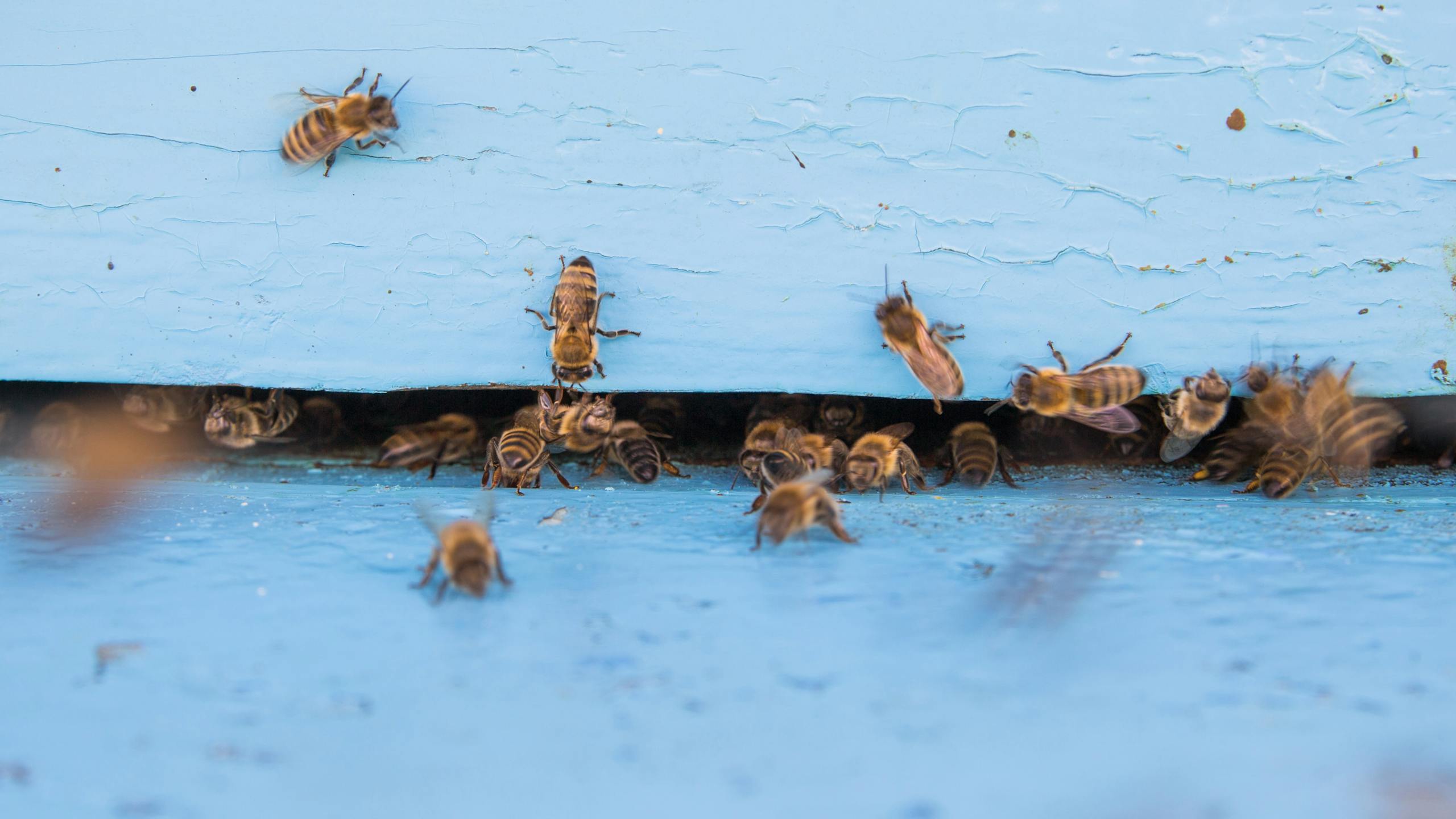
Sometimes aggression is not directed at you. It happens between bees. If you see bees wrestling and fighting at the hive entrance, this could be a sign of robbing.
Robbing occurs when bees from other colonies try to steal honey. During a robbing frenzy, guard bees defend the entrance fiercely. You may see bees locked in combat, tumbling to the ground, and stinging each other.
A hive under robbing attack is extremely defensive. Any disturbance during this time can trigger a massive stinging response. If you notice robbing activity, it is best to postpone your inspection until things calm down.
Sign 8: Larger Number of Guard Bees
In a typical hive, only a small percentage of bees work as guards. But in a defensive colony, more bees take on guard duties.
Research has shown that an Africanized colony guards the nest with up to five times more bees than European hives. Even in non-Africanized colonies, stress can cause the hive to assign more workers to defense.
If you notice many bees lined up at the entrance facing outward and watching for threats, the colony is in a heightened state of alert.
Why Bees Become Aggressive: Common Causes
Now that you know the signs, let us explore why bees become aggressive. Understanding the cause helps you fix the problem.
Cause 1: Genetics and Queen Issues
Some bees are simply born more defensive than others. This is determined by genetics. If your queen mated with drones from a defensive feral colony, her offspring may inherit those traits.
Research published in the scientific journal Insects confirms that honey bee defensiveness varies among bred lines and is influenced by genetics.
If your previously calm hive suddenly becomes aggressive, the colony may have replaced its queen without you knowing. This is called supersedure. The new queen may carry defensive genetics.
Cause 2: Weather Conditions
Weather has a huge effect on bee temperament. Bees tend to be more defensive on hot and humid days. They also become irritable before storms when barometric pressure drops.
The University of California Davis notes that honey bees tend to be more defensive in hot, humid, or stormy conditions and during fall when they are guarding honey stores.
If your bees seem angry on a hot afternoon, wait until a cooler morning to inspect them.
Cause 3: Nectar Dearth and Food Shortages
When flowers stop producing nectar, bees become stressed. They know that food is scarce and they must protect what they have stored.
During a nectar dearth, bees may become more aggressive because they are protecting their limited honey supply. This is especially common during dry seasons in Nigeria when floral resources are limited.
Feeding your bees sugar syrup during these times can help calm them down.
Cause 4: Lack of a Queen
A hive without a queen is an unhappy hive. Worker bees become confused and agitated when there is no queen pheromone to guide them.
According to extension experts, colonies that lose their queen may behave erratically and become more aggressive. If you notice aggressive behavior combined with other signs of queenlessness like no eggs or scattered brood pattern, you need to requeen the hive.
Cause 5: Predator Harassment
Sometimes bees are aggressive because something has been bothering them before you arrived. Skunks, mice, ants, or even curious children may have been poking at the hive.
Check around the hive for scratch marks at the entrance. This could mean that skunks or other animals have been harassing the colony. The bees remain on high alert after such attacks.
Cause 6: Strong Scents and Dark Clothing
Bees are sensitive to smells and colors. Strong perfumes, colognes, sunscreen, and even the smell of bananas can provoke bees. The scent of bananas actually mimics honey bee alarm pheromone.
Dark clothing also triggers defensive behavior. Bees target dark colors because their natural predators like bears and skunks are dark colored.
Always wear light colored and clean clothing when working with bees. Avoid wearing perfume or scented products.
Cause 7: Vibrations and Loud Noises
Bees are extremely sensitive to vibrations. A lawn mower, weed trimmer, or even loud music near the hive can set them off.
According to the USDA, Africanized bees are more sensitive to vibrations than European bees. Care must be used when operating machinery near known colonies. This applies to all bees to some degree.
Cause 8: Colony Size and Season
Large colonies are more defensive than small ones. This makes sense. A big colony has more to protect and more bees available to defend it.
Colonies also become more defensive in late summer and fall. At this time, colony populations are at their maximum and bees are preparing for winter by guarding their honey stores.
How to Tell European Honey Bees from Africanized Honey Bees
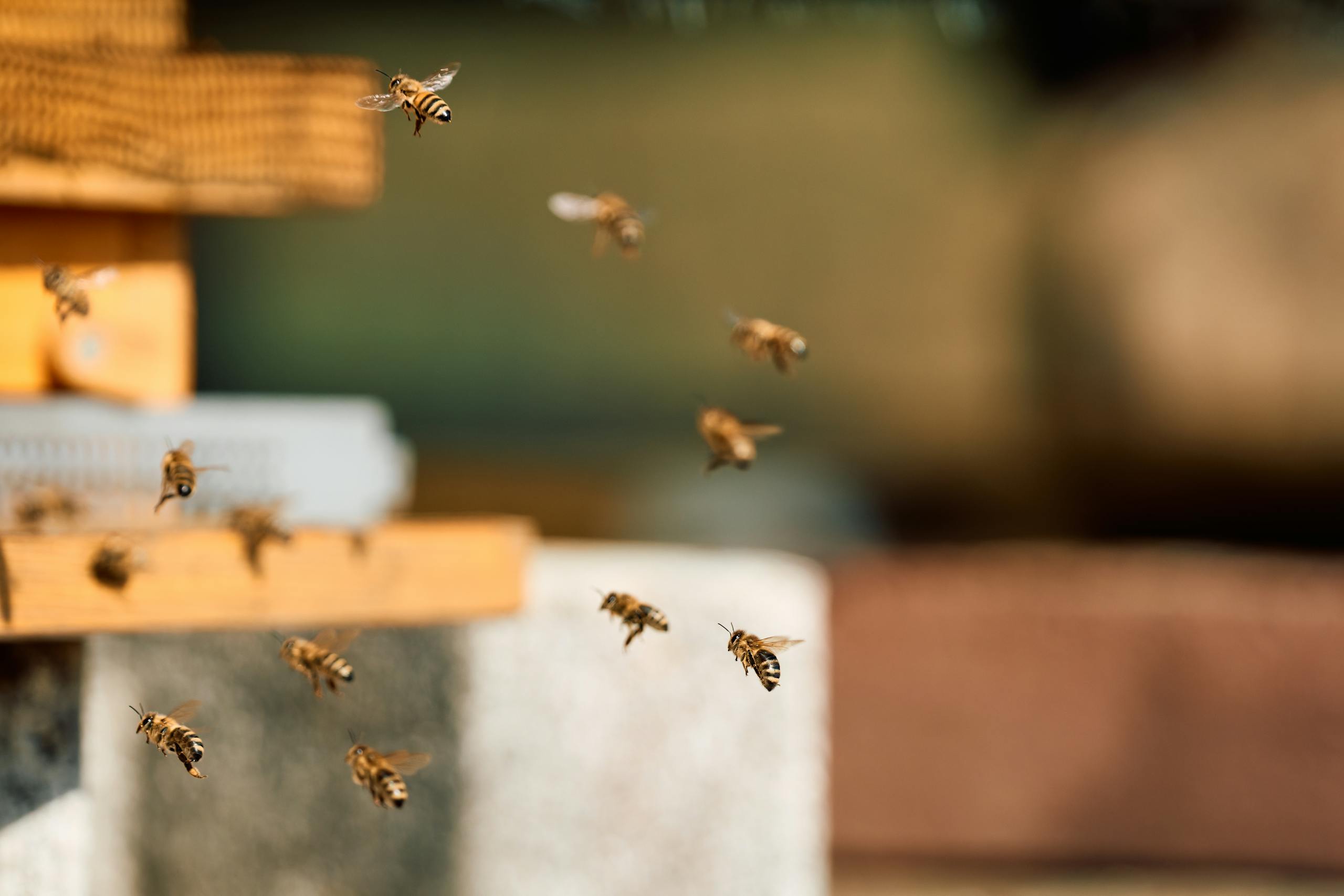
In some parts of the world, particularly the Americas, Africanized honey bees have spread. These bees look almost identical to European honey bees but behave very differently.
Africanized honey bees differ from European honey bees in behavior not appearance. You cannot tell them apart by looking at them. You must observe their behavior.
Here are the key behavioral differences:
First, Africanized bees respond in much greater numbers to a perceived threat. An entire colony may attack rather than just a few guards.
Second, Africanized bees defend a larger area around their hive. They may attack people standing 50 feet or more away from the entrance.
Third, Africanized bees pursue threats for much longer distances. They have been known to chase people for over a mile. European honey bees usually stop after a few hundred feet.
Fourth, Africanized bees are more easily disturbed. A simple vibration from a lawn mower 100 feet away can trigger a massive defensive response.
If you suspect you have Africanized bees, do not attempt to manage them yourself. Contact your local extension office or a professional beekeeper for help.
What to Do When You Encounter Aggressive Bees
Knowing the signs is important. Knowing what to do about them is even more important.
If You Are Already in a Bee Attack
First, do not swat at the bees. Swatting makes them angrier. Crushed bees release alarm pheromone that attracts more attackers.
Second, run away in a straight line. Do not zigzag. Just run as fast as you can toward shelter. A building or vehicle is best.
Third, pull your shirt up over your head to protect your face while you run. This restricts bees’ access to your airways.
Fourth, do not jump into water. Bees will wait for you to surface and sting you when you come up for air.
Fifth, once you reach safety, remove stingers by scraping them out with a fingernail or credit card. Do not use tweezers which squeeze more venom into the skin.
If You Notice Aggression During an Inspection
Close the hive gently and walk away. Do not try to finish the inspection. Your safety comes first.
Wait for a cooler time of day or a different day entirely before trying again. Sometimes just waiting 30 minutes makes a big difference.
Consider requeening the colony. Replacing a defensive queen with a gentle one can transform a hive within a few weeks. The new queen’s offspring will inherit her calm temperament.
How to Prevent Bee Aggression
Prevention is always better than dealing with an angry hive. Here are steps you can take.
Use Smoke Properly
Smoke masks alarm pheromones and calms bees. Use a smoker with cool white smoke before opening the hive. Puff a little smoke at the entrance and under the lid before you open it.
Do not use too much smoke. A few gentle puffs are enough. Too much smoke can actually stress the bees more.
Wear Appropriate Protective Gear
Invest in a good quality bee suit, gloves, and a veil. Light colored suits are best. Make sure all openings are sealed so bees cannot crawl inside your clothing.
Professional protective clothing establishes a robust physical barrier between you and the colony. Do not skip this step even with gentle bees.
Work on Calm and Sunny Days
Choose days when the weather is mild and sunny. Avoid inspecting during rain, high winds, or extreme heat. Bees are always calmer on pleasant days.
Morning hours are often best. Many foragers are out collecting nectar, leaving fewer bees in the hive to defend it.
Move Slowly and Gently
Fast movements alarm bees. Move your hands slowly when opening the hive and lifting frames. Speak softly and avoid sudden jerks.
Think of yourself as a guest in their home. Treat them with respect and they will usually tolerate your presence.
Maintain Strong and Healthy Colonies
Healthy bees are calmer bees. Make sure your colonies have enough food, a good queen, and are free from pests and diseases.
According to the Food and Agriculture Organization, adopting sustainable and efficient livestock management practices is crucial for ensuring long term productivity and animal well being. This applies to bees as much as any other livestock.
Place Hives in Good Locations
The location of your hive matters a great deal. Place hives where they get morning sun, have afternoon shade, and are protected from strong winds.
Keep hives away from busy footpaths, playgrounds, and areas where people gather. A distance of at least 50 feet from human activity reduces conflicts significantly.
For more detailed guidance on hive placement, you can read our complete guide on the best location to place a beehive for beginners on Trevro.
When to Call a Professional
Some situations require expert help. Do not try to handle extremely aggressive hives on your own if you are a beginner.
Call a professional beekeeper or your local agricultural extension office if:
The hive is in a location where people or pets could be harmed.
Bees are attacking without provocation from long distances.
You suspect the colony may be Africanized.
You do not have proper protective equipment.
You have an allergy to bee stings.
In Nigeria, you can contact your state’s agricultural development program or reach out to experienced beekeepers in your area for assistance.
Conclusion
Understanding how to tell if bees are aggressive in a hive is one of the most valuable skills a beekeeper can develop. It keeps you safe and helps you manage your colonies with confidence.
Remember the key warning signs: head butting, guarding a wide area, increased buzzing, bees flying at your face, unprovoked stinging, bees following you far from the hive, fighting at the entrance, and large numbers of guards.
Remember the common causes: genetics, weather, food shortages, queenlessness, predator harassment, strong scents, vibrations, and colony size.
And most importantly, remember that bees are not mean. They are protecting their home and their family. With patience, observation, and respect, you can work with even the most defensive colonies safely.
If you found this guide helpful, explore more of our beekeeping resources on Trevro. We have detailed guides on attracting bees to a new hive naturally, choosing the best beehive for beginners, and avoiding common beekeeping mistakes.
Beekeeping is a journey of learning. Every inspection teaches you something new. Stay curious, stay safe, and enjoy the incredible world of honey bees.
Frequently Asked Questions
How far can aggressive bees chase you?
European honey bees typically chase for about 100 to 300 feet before giving up. Highly defensive colonies like Africanized bees can chase for over a mile. Always run toward shelter and do not stop until you are safely inside a building or vehicle.
Can bee aggression be fixed?
Yes. In many cases, requeening the colony with a gentle queen solves the problem. The defensive workers will die off within a few weeks and be replaced by offspring of the new calm queen.
Are bees more aggressive at certain times of year?
Yes. Bees tend to be more defensive in late summer and fall when colony populations are large and they are guarding winter honey stores. They are also more irritable during hot and humid weather.
What smell makes bees aggressive?
The smell of bananas mimics honey bee alarm pheromone and can trigger defensive behavior. Strong perfumes, colognes, and the smell of sweat can also provoke bees. Always approach hives without wearing scented products.
Do bees warn you before stinging?
Yes. Bees often give warning signs before stinging. They may head butt you, buzz loudly around your face, or fly in an agitated pattern. Pay attention to these warnings and back away calmly.