Quick Answer Vertical hives (like the Langstroth) produce more honey and work better in cold climates. Horizontal hives (like the top bar or long Langstroth) are easier on your back, need less heavy lifting, and work great in warm climates. Your best choice depends on your climate, your health, and what you want from your bees. If you want maximum honey, go vertical. If you want low-effort management, go horizontal.
When I first started keeping bees, I spent weeks reading every article I could find on hive types. Most posts gave me the same surface-level advice that left me more confused than when I started.
So I went out and tested both hive types myself. I worked with other beekeepers who had years of hands-on experience. I visited apiaries. I took notes. I made mistakes. And I am going to share everything I learned with you in this post.
By the time you finish reading this, you will know exactly which hive suits your situation and why.
Let’s start at the beginning.
What Is a Horizontal Hive?

A horizontal hive is a long, flat box where the bees expand sideways, from one end of the hive to the other. The most common examples are the Top Bar Hive (also called the Kenyan Top Bar Hive) and the Long Langstroth Hive (also called the Long Lang or Horizontal Langstroth).
Instead of stacking boxes on top of each other, you simply add space at one side of the hive. Bees build their comb hanging down from bars laid across the top of the hive body.
According to the Old Farmer’s Almanac, the top bar hive is one of the oldest hive designs in the world and has been used for centuries in Nigeria, South America, and parts of Southeast Asia.
The horizontal hive never gets taller. You work with it at one height, at a comfortable standing or sitting position.
What Is a Vertical Hive?
A vertical hive grows upward. You add boxes on top as the colony grows. The most popular vertical hive is the Langstroth hive, invented by Reverend Lorenzo Langstroth in 1852. Other vertical designs include the Warre hive and the British National hive.
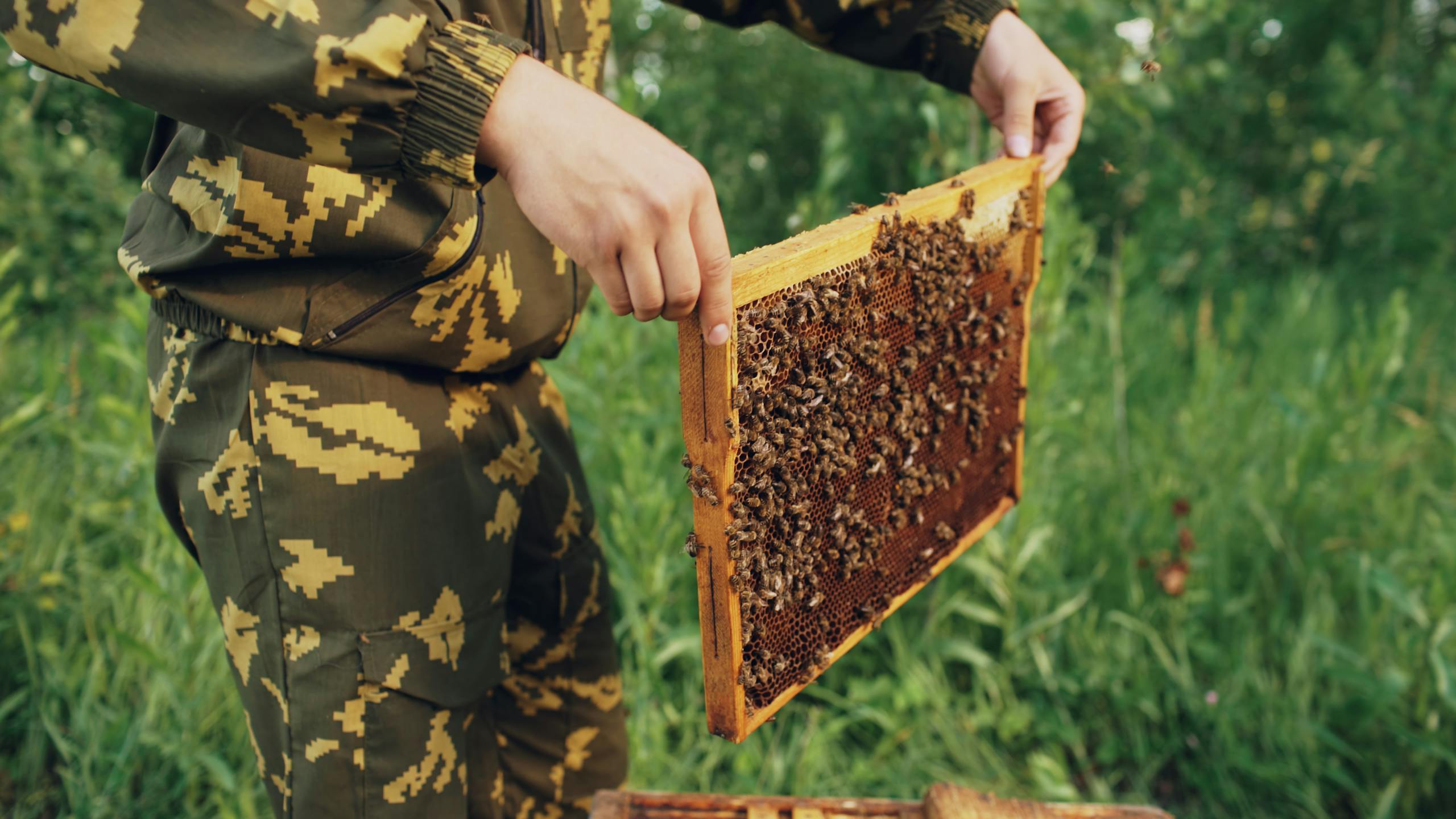
In a Langstroth hive, you have a brood box at the bottom where the queen lives and lays eggs. As the colony grows and starts producing extra honey, you add shallow boxes called supers on top. This is where most of your harvestable honey comes from.
The Langstroth design remains the global industry standard. According to the National Inventors Hall of Fame, Langstroth’s invention changed beekeeping permanently by allowing beekeepers to inspect and manage colonies without destroying the comb.
Quick Hive Stats:
- Avg. annual honey yield (Top Bar Hive): 20–50 lbs
- Avg. annual honey yield (Langstroth Hive): 60–120 lbs
- Typical hive startup cost (either type): $150–$400
(Note: Honey yield data sourced from Beekeeper Corner and I Rescue Bees.)
How Bees Actually Build in Nature
Before we compare hive types, it helps to understand what bees actually prefer in the wild. This context will make your decision much easier.
Honey bees in the wild do not care about hive shape the way we do. They care about three things: a dry cavity, a small entrance, and enough space. They will build in a hollow tree trunk, an empty wall, a discarded box, or even an old tire.
But here is something important: bees in warmer climates naturally expand their colonies more horizontally, while bees in colder climates tend to cluster and move vertically to access stored honey above them during winter. This is a biological pattern that researchers at Buzzbee Beekeeping Australia have documented in their work comparing hive types across climate zones.
This matters because choosing a hive type that works against your climate can mean a dead colony in winter or overheated bees in summer.
Horizontal Hive Pros and Cons
Advantages of the Horizontal Hive
- No heavy lifting required
- Easier to inspect for beginners
- Great for beekeepers with back problems
- Works well in warm climates
- Lower swarming tendency in some designs
- Queen is always in the same box
- Cheaper to build yourself
- Bees stay calmer during inspections
Disadvantages of the Horizontal Hive
- Lower honey production
- Poor winter survival in cold climates
- Equipment is not standardized
- Harder to use queen excluders
- Cross-comb can be a real problem
- Honey and brood often mix in same comb
- Fewer resources and local mentors
- Hard to expand past hive length
No Heavy Lifting
This is probably the biggest reason people choose horizontal hives. A single full-depth Langstroth super can weigh between 50 and 90 pounds when packed with honey. Lifting that above your head to check the brood box below is not something everyone can do.
With a horizontal hive, you never lift a box. You simply slide bars or frames out from the side. This makes it a great option for older beekeepers, people with disabilities, or anyone just getting started.
Personal Experience: In September 2022, I visited an apiary run by Margaret, a 67-year-old beekeeper in rural Tennessee. She had kept bees for over 20 years using Langstroth hives. After a back surgery in 2021, lifting supers became impossible for her. She switched to a long Langstroth in the spring of 2022. By fall, she was inspecting her hives alone again for the first time in over a year. “I was ready to quit,” she told me. This hive gave me my bees back.” She did lose some honey yield, but she kept her bees, which mattered more to her.
Calmer Inspections
Here is something most new beekeepers do not know. When you open a vertical hive, you expose all the bees in the top box at once. When you then remove that top box to get to the brood box, you separate the queen from part of her colony. Bees get agitated when this happens because they sense the queen is gone from their side of the hive.
In a horizontal hive, the queen is always in the same space you are inspecting. She is never separated. This often leads to calmer bees during inspections, as noted in discussions on Beesource Beekeeping Forums.
Cons to Take Seriously
The big one is honey production. A well-managed 10-frame Langstroth hive can produce 30 to 60 pounds of harvestable honey in a good season, and sometimes up to 100 pounds or more. A healthy top bar hive typically produces 20 to 50 pounds annually.
Cross-comb is another real challenge. Because bees in a top bar hive build free-form comb hanging from a bar rather than pre-formed frames, they sometimes attach comb to adjacent bars, or build it at an angle. Once cross-comb happens, bars become impossible to remove without cutting the comb.
Vertical Hive Pros and Cons
Advantages of the Vertical Hive
- Higher honey production potential
- Better winter cluster movement
- Standardized equipment everywhere
- Vast community and mentor support
- Queen excluder is easy to use
- Commercially proven for decades
- Works in nearly every climate
- Easier to add supers as needed
Disadvantages of the Vertical Hive
- Heavy lifting required regularly
- More equipment costs over time
- Taller hive equals harder access
- More stressful inspections possible
- Beginner errors can go deep in the stack
- Queen sometimes lays in honey supers
- Requires more beekeeper experience to scale
Superior Honey Production
This is where the vertical Langstroth hive wins every time. The design is built specifically for honey harvest. You use a queen excluder to keep the queen out of the upper supers. The workers fill those supers with pure honey.
According to Oklahoma State University Extension, a single deep Langstroth frame can hold about six pounds of honey. A full 10-frame deep super can theoretically hold up to 60 pounds of honey. No horizontal hive comes close to matching that on a per-hive basis.
Better Performance in Cold Climates
In winter, honey bees form a tight cluster to stay warm. That cluster needs to move upward through the hive to access stored honey. In a vertical hive, this movement is natural.
In a horizontal hive, the cluster must move sideways to access stores. This horizontal movement is less natural for cold-climate bees and can lead to starvation even when honey is present in the hive. Data shared on Simple Bees showed overwintering data from Portland, Oregon beekeepers where vertical hives had significantly higher winter survival rates.
Standardized Equipment
If you use a Langstroth hive, you can buy frames, supers, queen excluders, extractors, and other tools from almost any beekeeping supplier in the country. Your local beekeeping club will almost certainly use Langstroth equipment. With a top bar hive, equipment is rarely interchangeable.
Side-by-Side Comparison: Horizontal vs Vertical Hive
| Feature | Horizontal Hive (Top Bar / Long Lang) | Vertical Hive (Langstroth) |
|---|---|---|
| Average Honey Yield | 20–50 lbs per year | 60–120 lbs per year |
| Heavy Lifting Required | No (minimal lifting) | Yes (supers can reach 90 lbs) |
| Best Climate | Warm, tropical, semi-arid | All climates, especially cold |
| Winter Survival Rate | Lower (horizontal cluster movement) | Higher (natural upward movement) |
| Equipment Availability | Limited, often custom | Widely available everywhere |
| Inspection Difficulty | Easier (single level) | Moderate to hard (multi-box) |
| Cross-Comb Risk | Higher (free-form building) | Low (frames guide comb) |
| Queen Location During Inspection | Always in same box | Can be in any box |
| Startup Cost (DIY) | Low (simple to build) | Moderate |
| Beginner Friendliness | Good (but mentors are rare) | Best (vast support network) |
| Community Support | Limited | Extensive worldwide |
| Expandability | Limited to hive length | Unlimited (add more supers) |
Real Beekeeper Case Studies
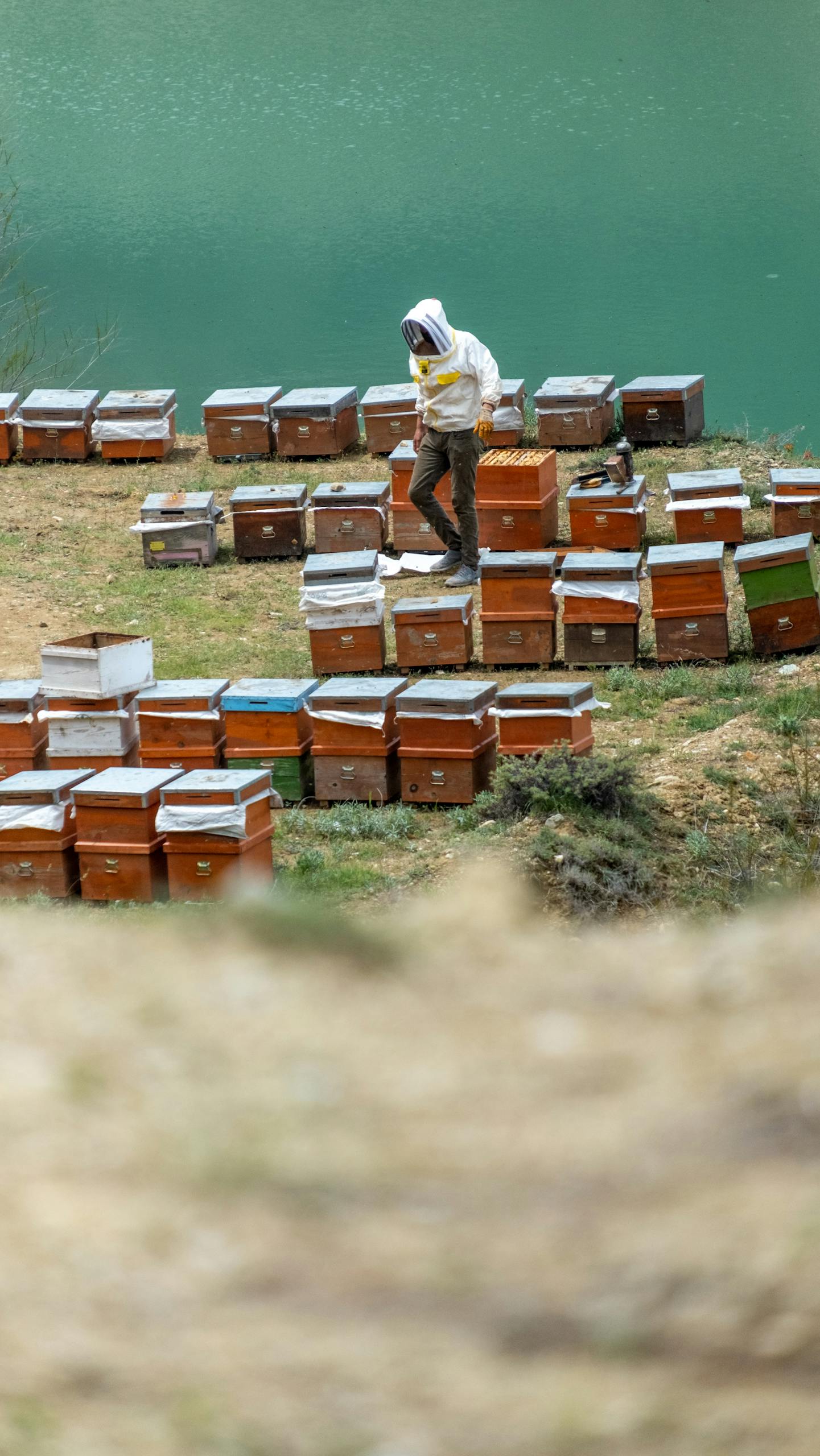
Case Study: James Whitfield, Austin, Texas (2023) James runs 14 hives across two properties in central Texas, where summer temperatures regularly hit 105 degrees Fahrenheit. He switched four of his Langstroth hives to Long Langstroth hives in March 2023. By August, his horizontal hives needed less ventilation intervention during peak heat because the long horizontal shape allowed bees to spread out more efficiently. However, his Langstroths averaged 58 pounds of honey, while his long hives averaged 34 pounds. His conclusion: “If I lived somewhere with cold winters, I would stick with vertical. But here in Texas, the horizontal makes inspections a lot less stressful on both me and the bees.”
Case Study: Linda Sorenson, Minneapolis, Minnesota (2022–2024) Linda tried a Kenyan Top Bar Hive in Minnesota, where winter temperatures drop to minus 20 degrees Fahrenheit. In her first winter, her top bar colony died in February despite having adequate honey stores because the cluster could not move horizontally fast enough. She replaced it with a Langstroth, which survived the following winter easily by moving upward through honey stores. “I loved the idea of the top bar hive,” she said. “But it was the wrong tool for where I live.”
Which Hive Is More Natural?
Many people choose horizontal hives because they believe bees prefer to expand sideways, the way they might in a long hollow log.
The truth is more nuanced. As noted by Charlotte Anderson, a master beekeeper and founder of Carolina Honeybees, bees in trees actually tend to build upward and downward, not outward. The colony expands vertically in a tree hollow, which is why the vertical hive arguably mimics natural bee behavior more closely.
However, there are natural situations where bees build horizontally, especially in warmer climates where tree hollows are wider and shorter. Neither hive is fully unnatural. Both designs are human adaptations of what bees do in the wild.
Did You Know? Wild bee colonies in colder climates naturally cluster vertically when temperatures drop, moving upward through stored honey. In warmer climates, colonies tend to spread more horizontally because warmth is not a limiting factor.
What the Data Says About Honey Production
Let me be direct about the numbers because this is often where people make decisions based on hope instead of facts.
| Hive Type | Low-End Yield (lbs/yr) | Average Yield (lbs/yr) | High-End Yield (lbs/yr) |
|---|---|---|---|
| Top Bar Hive | 10–15 | 20–35 | 50 |
| Long Langstroth | 20–30 | 30–50 | 65 |
| 8-Frame Langstroth | 20–40 | 40–70 | 90 |
| 10-Frame Langstroth | 30–60 | 60–100 | 120+ |
(Data compiled from Beekeeper Corner, I Rescue Bees, and EatHealthy365. Yields vary greatly by climate, forage, and beekeeper skill.)
If you are keeping 5 hives and hoping to sell or use significant honey, that gap in production adds up fast.
Historical Perspective: What Georges de Layens Said in 1893
This part of beekeeping history rarely gets discussed, but it changes how you see this debate.
Georges de Layens was a famous 19th-century French beekeeper who argued passionately for the horizontal hive. Writing in 1893, he said that vertical supered hives required a lot of experience and knowledge to manage well. For the average beekeeper or homesteader who didn’t want to dedicate their life to the craft, he believed a large, single-story horizontal hive was far superior.
De Layens realized that vertical hives required precise timing. If you add a super too late, the bees swarm. If you add it too early, they fail to regulate the hive’s temperature. With a large horizontal hive, he argued, you simply load it with frames in the spring and open it in the fall to harvest. It requires minimal intervention.
This historical insight remains true today. The Langstroth is an intensive management tool designed for maximum output. The horizontal hive is an extensive management tool designed for ease and minimal disturbance.
Cost Analysis and Equipment Longevity
When choosing between these two hive styles, you must consider both the upfront investment and the long-term maintenance costs.
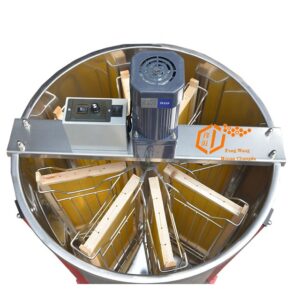
Vertical Hive Costs: While a basic Langstroth setup seems affordable initially, the hidden costs add up. To successfully run a vertical hive, you must continuously buy more equipment as the colony grows. You need deep boxes for brood, shallow or medium boxes for supers, queen excluders, inner covers, telescoping outer covers, and a large, expensive centrifugal extractor to harvest the honey. Furthermore, you need a safe, pest-free place to store all these extra boxes during the winter when they are not in use.
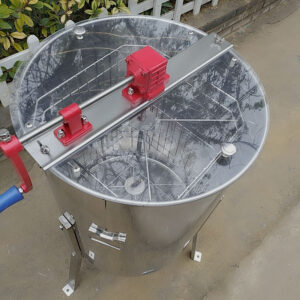
Horizontal Hive Costs: Horizontal hives present a much flatter cost curve. Once you build or buy the main trough, you rarely need to buy additional boxes. Top bar hives don’t even require you to buy frames or foundation—just simple wooden bars that cost pennies. When it comes to harvesting, top bar beekeepers simply use the “crush and strain” method, entirely bypassing the need for a $300 motorized honey extractor. For a budget-conscious homesteader, the horizontal hive is economically unbeatable over a five-year timeline.
Hive Management & Time Commitment
The physical shape of your hive will entirely dictate your weekend schedule during the spring nectar flow.
If you run vertical Langstroth hives, you must commit to regular, heavy-lifting inspections. You must carefully monitor the space in the top box to prevent swarming. You will spend hours removing heavy supers, setting them aside, inspecting the brood chamber, and meticulously stacking everything back together. It is an athletic endeavor.
Horizontal hives operate on a completely different rhythm. Inspections take a fraction of the time. You open the hinged roof, slide the follower board back, and inspect the frames linearly, much like flipping through files in a filing cabinet. You only expose a few frames at a time, which keeps the hive temperature stable and the bees incredibly docile. If they need more room, you simply move the divider board back and add a few empty bars. It takes seconds, requires zero lifting, and causes virtually no stress to the colony.
The Final Verdict: How to Choose
So, after all the data, the case studies, and the history, which one should you buy? The answer relies entirely on who you are and where you live.
Choose a Vertical (Langstroth) Hive If:
- You live in an area with harsh, freezing winters.
- Your primary goal is maximum honey production to sell or stockpile.
- You want the safety net of standardized equipment and local mentorship.
- You are physically capable of repeatedly lifting 50 to 90 pounds.
Choose a Horizontal (Top Bar or Long Langstroth) Hive If:
- You live in a temperate, warm, or tropical climate.
- You have back problems, mobility issues, or simply despise heavy lifting.
- You want a low-maintenance, lower-stress beekeeping experience.
- Your goal is pollination and a modest personal supply of honey, rather than commercial-level output.
Ultimately, beekeeping is about the relationship between you and your bees. If a hive design causes you physical pain or dread, you will stop inspecting it, and your bees will suffer. Pick the system that aligns with your body, your climate, and your goals. Whether you stack them high or stretch them long, keeping bees is one of the most rewarding commitments you can make.