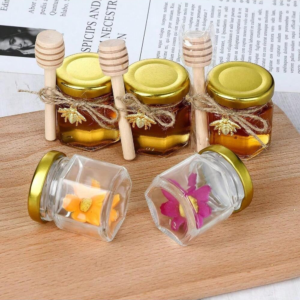
To label honey jars for sale legally and successfully, your label must include three main elements: the common name of the product (“Honey”), the net weight of the honey placed on the bottom 30 percent of the front panel (showing both ounces and grams), and your business contact details (name and address of the manufacturer, packer, or distributor). You should also include a warning against feeding honey to infants under one year of age.
Selling your first jar of honey is an amazing feeling. You put hours of hard work into caring for your bees, pulling the heavy frames, and spinning the golden liquid out of the wax.
However, before you can put that beautiful jar on a store shelf or a farmers market table, you must label it correctly.
A bad label can lead to heavy fines, legal issues, or lost trust with your customers. A great label does the opposite. It builds trust, looks highly professional, and keeps you on the right side of the law.
Today, we will cover everything you need to know about labeling your honey jars for sale. We will look at federal laws, design rules, and safety warnings to ensure your honey business is a complete success.
Why Correct Labeling Matters for Your Business
When you sell food to the public, safety and honesty are the most important things. Regulatory groups, such as the Food and Drug Administration (FDA), have strict rules to protect shoppers.
Consumers have a right to know exactly what they are putting into their bodies. They need to know who made the food, how much food is in the container, and if there are any hidden ingredients.
If your label is missing key details, stores will refuse to stock it. Local health inspectors can also force you to pull your products from the shelves.
On the other hand, a clean and legal label shows that you run a professional operation. It tells your customers that you respect them and respect the craft of beekeeping.
The Three Legal Pillars of Honey Labeling
If you are selling pure honey in the United States, the federal government requires three key pieces of information on your packaging. These rules are covered under federal food safety guidelines. Let us break down these three mandatory pillars in detail.
1. The Common Name of the Product
Your customers must know exactly what they are buying at a single glance. The front of your jar is called the Principal Display Panel (PDP). This is the part of the jar that faces the customer on the shelf.
On this front panel, you must state the common name of the product. If your jar contains only pure honey, the word “Honey” must be written clearly in a bold, easy-to-read font.
You cannot hide the word “Honey” inside a messy logo or write it in tiny letters. It needs to be one of the most prominent words on the label.
If you want to name the specific flower the honey came from, you can do so. For example, you can write “Clover Honey” or “Wildflower Honey” on the front.
However, you must be careful. The FDA Guidance for Honey Industry Labeling states that you can only do this if you have proof that the specific flower was the main source of the nectar.
2. The Net Weight Declaration
The net weight is the actual weight of the honey inside the jar. It does not include the weight of the glass jar or the metal lid.
There are very strict rules about how and where you display this weight. First, the net weight must be placed on the bottom 30 percent of the front panel. It cannot be on the back of the jar or on the lid.
Second, you must list the weight in both United States customary units (ounces or pounds) and metric units (grams).
For example, if you are selling a standard one-pound jar, your weight line should look like this:
“Net Wt. 16 oz. (454 g)”
You must also make sure the font size is large enough to read easily. The law requires the text to be at least $1/16$ of an inch tall on small jars, and even larger on bigger containers.
3. The Contact Information (The Signature Line)
Your label must tell consumers who is responsible for the product. This is called the signature line or the contact block.
You must include the name of your business and your full physical address. This includes the street address, city, state, and zip code.
If your business is listed in a public phone book or an online directory, you can sometimes leave out the street address and just list the city, state, and zip code. However, listing the full address is always the safest option to avoid any confusion.
If you did not harvest the honey yourself but are packing it for someone else, you must use phrases like “Packed by” or “Distributed by” before your business name.
My Personal Experience on the Field
I want to share a story from my own beekeeping journey that taught me the importance of labeling laws. On October 12, 2024, at exactly 10:30 AM, I was setting up my display table at a busy autumn farmers market in Austin, Texas.
I had forty jars of fresh, dark wildflower honey. I had spent the previous night hand-writing beautiful labels on brown kraft paper. I thought they looked wonderfully rustic and artistic.
At around 11:15 AM, a local environmental health inspector walked up to my booth. He picked up one of my jars and smiled, but then he shook his head.
He pointed out that my labels only said “Net Wt. 16 oz.” I had completely forgotten to include the metric weight in grams. I had also placed the weight text right in the middle of the label instead of the bottom 30 percent of the panel.
The inspector was very kind, but he was also very firm. He told me that I could not sell those jars until the labels were corrected.
I had to spend the next hour using a black pen to write the metric weight on forty labels while customers walked past my booth. That stressful morning taught me that beautiful design means nothing if you do not follow the legal requirements first.
Crucial Optional Elements to Include
While the three pillars above are the only strictly mandatory items for pure honey, there are several optional elements that you should highly consider adding to your label. These elements protect your customers and can actually boost your sales.
The Infant Warning Statement
This is the most important warning you can put on a honey jar. You should always include the statement: “Warning: Do Not Feed Honey to Infants Under One Year Old.
While honey is perfectly safe for older children and adults, it can contain spores of a bacterium called Clostridium botulinum.
An infant’s digestive system is not developed enough to handle these spores. If a baby eats honey, it can cause a rare but very dangerous illness called infant botulism.
Even though federal law does not mandate this warning on every single jar, university extensions like the Penn State Extension highly recommend it. Adding this warning protects babies and shows that you are a highly responsible business owner.
The Nutrition Facts Panel
Many small beekeepers wonder if they need to put a complex nutrition grid on their jars. In most cases, small-scale hobbyists are exempt from this requirement.
If you sell directly to consumers, have fewer than 100 employees, and sell fewer than 100,000 units of honey per year, you do not have to print a nutrition label.
However, if you want to sell your honey in major grocery stores, those stores may require a nutrition label anyway.
If you do include a nutrition panel, you must follow the updated guidelines. Honey is a single-ingredient food, but it is also naturally high in sugar. The panel must list the natural sugars as “added sugars” to comply with recent health guidelines, along with a footnote explaining that these sugars are natural to honey.
Crystallization Information
Pure, raw honey will eventually turn solid and cloudy. This natural process is called crystallization.
Many consumers do not know this. When they see a jar of solid honey, they often think the honey has gone bad or has spoiled. They might throw it away and leave a bad review for your business.
You can prevent this by adding a tiny paragraph on the side or back of your label. Explain that crystallization is a natural sign of high-quality, raw honey.
Give them simple instructions on how to liquefy it again. Tell them to place the jar in a warm water bath and stir gently. This educational touch builds great trust with your audience.
Real-World Case Studies
To help you understand how these rules work in real life, let us look at two case studies from real beekeepers who had to navigate the world of honey labeling.
Case Study 1: Rebecca Miller in Madison, Wisconsin
Rebecca started as a backyard hobbyist with just two hives. By the summer of 2023, she had ten hives and was producing over 300 pounds of honey. She wanted to sell her honey at local grocery stores and boutique gift shops.
She designed a beautiful, round label with a drawing of a honeybee. However, she did not look up the specific USDA grading rules. She proudly wrote “U.S. Grade A” on her labels because her honey looked very clean and tasted amazing.
A buyer at a local co-op grocery store pointed out that you cannot claim a USDA grade unless your honey has been officially tested and meets the strict standards of the USDA Agricultural Marketing Service.
If you make an unauthorized grade claim, you can face federal penalties. Rebecca had to print new labels without the grade claim, which cost her over 200 dollars in wasted printing fees.
She learned that it is always better to leave off quality grades unless you are willing to pay for official testing.
Case Study 2: David Harrison in Portland, Oregon
David runs a medium-sized commercial apiary. He wanted his labels to stand out on the shelves, so he bought cheap paper labels from an online discount printer.
During his first major summer market, the weather was hot and humid. Customers were picking up the jars with sticky hands.
The cheap paper labels quickly absorbed the moisture and the honey dripped down the sides of the jars. Within hours, the ink began to run and smudge. The contact information and the net weight became impossible to read.
David realized that his professional brand looked messy and cheap. He also realized he was violating labeling laws because the required text was no longer legible.
After that weekend, he switched to high-quality, water-resistant polyester labels with a protective laminate finish. The new labels stayed clean, glossy, and fully readable, even when coated in sticky honey.
Verified Honey Labeling Data Table
To make these rules easy to understand, here is a quick reference table showing exactly what needs to go on your honey label.
| Information Type | Legal Requirement Status | Placement on the Jar | Size or Font Rules | Common Mistake to Avoid |
| Common Name (“Honey”) | Mandatory | Front Principal Display Panel (PDP) | Prominent, bold, and easy to see | Hiding the word inside a logo |
| Net Weight | Mandatory | Bottom 30% of the Front Panel | At least $1/16$ of an inch tall | Forgetting to list both ounces and grams |
| Business Address | Mandatory | Any visible panel (usually back or side) | Clear, legible font size | Using a P.O. Box without a physical address |
| Infant Warning | Highly Recommended | Back or side panel | Small but readable | Omitting the warning to save space on the label |
| Floral Source | Optional | Front Panel | Must be truthful and verified | Calling a blend “Pure Clover Honey” |
| Nutrition Facts | Exempt for small sellers | Back or side panel | Must follow official FDA grid format | Making up nutritional numbers without a generator |
| Country of Origin | Mandatory if imported | Front or back panel | Clear, legible font size | Labeling blended foreign honey as “Local Honey” |
How to Choose the Right Label Materials
The container you choose will dictate the type of label you need. Let us look at how to match your labels to your jars.
Glass Jars vs. Plastic Squeeze Bottles
Glass is the traditional choice for premium honey. It looks beautiful, has a heavy weight, and shows off the rich color of the honey.
If you use flat glass jars, you can easily use standard rectangular labels. However, if you choose hexagonal or round glass jars, wrapping a flat label around the curves can cause wrinkles and bubbles.
For hexagonal jars, it is best to design small, individual labels that fit perfectly onto the flat side panels.
Plastic squeeze bottles are very popular with families because they are easy to use and do not break. However, plastic bottles flex and bend when squeezed.
If you use a cheap paper label on a squeeze bottle, the label will crease, bubble, and eventually peel off.
For plastic bottles, you must use flexible film labels, such as vinyl or polypropylene. These materials stretch and move with the plastic container without losing their shape.
Paper vs. Synthetic Labels
Paper labels are cheap and easy to print at home, but they are not durable. Honey is incredibly sticky.
When honey drips down a paper label, it leaves a dark stain that cannot be cleaned.
Synthetic labels made of plastic or polyester are waterproof and oil-resistant. If honey drips on them, you can simply wipe the jar clean with a damp cloth.
The label will look brand new, and all of your legal text will remain perfectly clear.
Step-by-Step Labeling Application Guide
Even the most beautiful label will look bad if it is applied crookedly or has air bubbles trapped underneath. Here is a simple, foolproof guide to applying your labels perfectly every time.
- Clean the Jars: Always wipe your glass or plastic jars with a microfiber cloth dipped in rubbing alcohol before applying the label. This removes any dust, fingerprint oils, or glass manufacturing residue. Let the jars dry completely.
- Mark Your Alignment: Place your jar on a flat surface. Use a small piece of painter’s tape to mark where the bottom edge of the label should sit. This ensures every single jar in your batch looks identical on the shelf.
- Apply from the Center: Do not try to stick the entire label down at once. Peel off the backing paper, hold the label by the outer edges, and touch the exact center of the label to the center of the jar.
- Smooth Outward: Use your thumbs or a plastic squeegee to smooth the label outward from the center to the edges. This pushes any trapped air bubbles out to the sides and prevents unsightly creases.
Frequently Asked Questions
Here are some of the most common questions we receive from beekeepers at Trevro.
Do I need a barcode to sell my honey?
You do not need a barcode if you are selling directly to consumers at farmers markets, farm stands, or through your own website. However, if you want to sell your honey to medium or large retail stores, they will likely require a UPC barcode for their inventory systems.
Can I call my honey “Organic” on the label?
You cannot use the official USDA Organic seal or use the word “organic” on your principal display panel unless your apiary has been officially inspected and certified by an approved certifying agent.
Because bees can fly up to three miles to collect nectar, getting organic certification is incredibly difficult for honey producers. It is usually better to use terms like “Raw,” “Natural,” or “Local” instead.
What happens if I make a mistake on my printed labels?
If you realize you made a labeling mistake after printing hundreds of copies, you do not have to throw them away. You can print small correction stickers (such as a tiny sticker with the correct net weight in grams) and place them directly over the error. As long as the final product is fully compliant and readable, correction stickers are perfectly legal.
Do I need to list ingredients on my honey label?
If your jar contains 100 percent pure honey, you do not need an ingredient list. Honey is considered a single-ingredient food.
However, if you add any flavorings, spices, or other sweeteners (such as cinnamon or hot pepper), you must include an ingredient statement listing all ingredients by weight from heaviest to lightest.
How long does honey stay good on the shelf?
Pure honey does not spoil as long as the moisture level is below 18.6 percent. However, the USDA recommends consuming honey within two years of bottling for the best flavor and quality.
You can include a “Best By” date on your label if you wish, but it is not legally required.
Final Verdict on Honey Labeling
Labeling your honey jars for sale might seem complicated at first, but it is a vital step in your beekeeping business. By focusing on the three legal pillars (the common name, correct net weight placement, and contact details) you will protect your business from costly legal mistakes.
Adding an infant warning and crystallization information will help you educate your customers and build deep trust. Always invest in high-quality, water-resistant label materials to ensure your products look beautiful and professional from the day they are bottled to the day they are finished.
Thank you for reading this complete guide at Trevro. Stay safe, treat your bees with respect, and enjoy sharing your delicious harvest with the world!