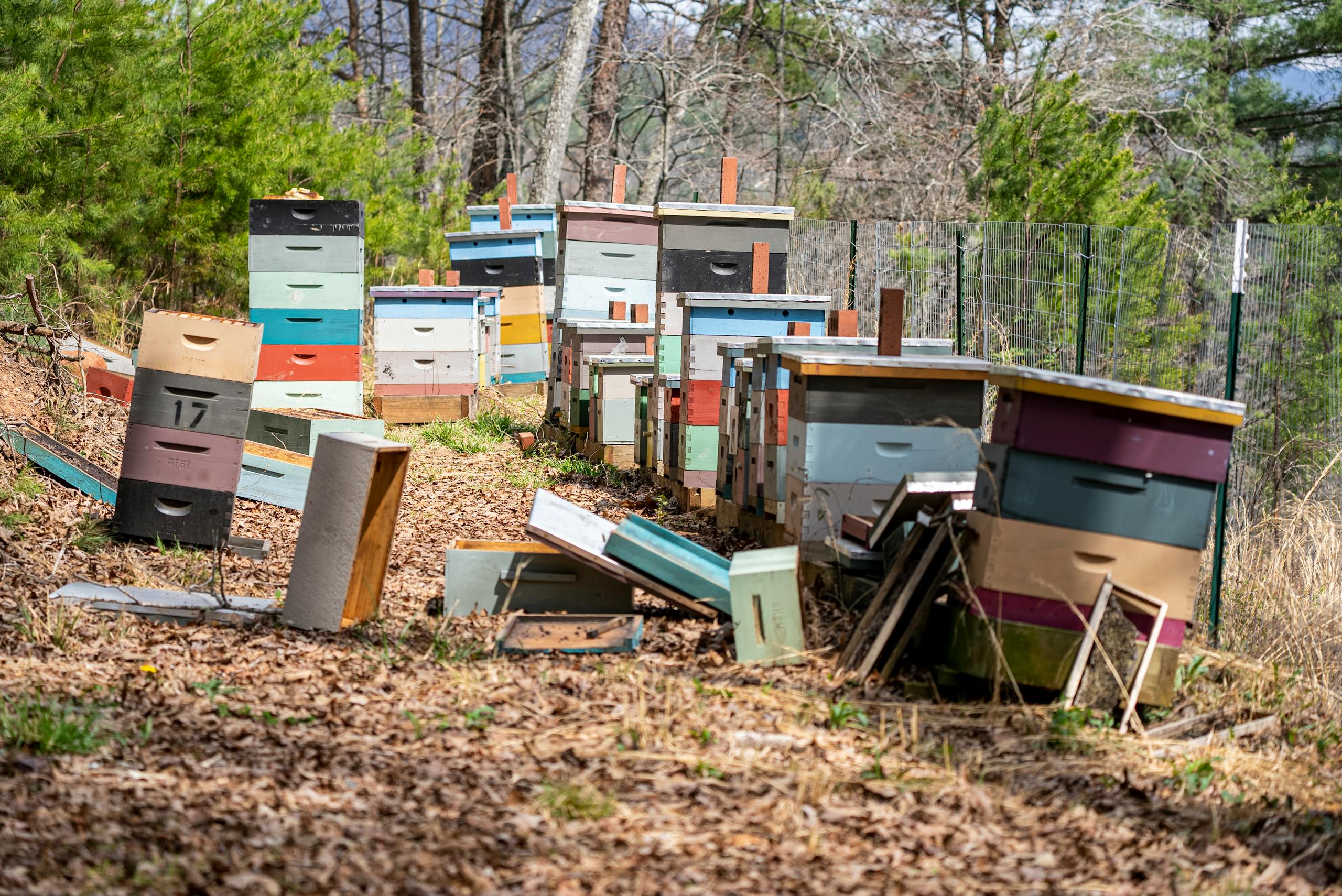
To store a nucleus colony overnight safely, close the entrance securely at dusk when all foragers have returned, place the nuc box in a cool, shaded, and well-ventilated spot with temperatures between 50°F and 70°F (10°C to 21°C), and make sure the colony has enough food. Do not seal the box airtight. Proper ventilation is the single most important factor. Miss it, and you can lose the whole colony in one night.
Why Getting This Right Actually Matters
A nucleus colony, or “nuc,” is not just a box of bees. It is a living, breathing mini-colony with a mated queen, worker bees, brood in various stages, and capped honey stores. The bees inside are constantly generating heat to protect the brood. That heat needs somewhere to go.
When beekeepers transport or store a nuc overnight without thinking this through, the bees overheat. They panic. They cluster too tightly. The queen can die. In worst-case situations, the whole colony collapses before morning.
This is not a rare event. According to data from the USDA Agricultural Research Service, mishandling during transport and temporary storage is one of the underreported contributors to sudden colony loss in managed apiaries.
I have seen this happen firsthand. On the morning of June 14, 2023, at my apiary in Bonadelle Ranchos, California, I opened a nuc box that had been poorly stored by a first-time beekeeper the previous night. The box had been placed in a garden shed with no airflow. The entrance was fully plugged with foam. By 7:00 AM, the colony had bearded so badly outside the box that the queen was buried under a ball of overheated, stressed bees. Three frames of brood were dead. It was a preventable loss.
This guide gives you the exact steps to make sure that never happens to you.
What Is a Nucleus Colony? (A Quick Refresher)
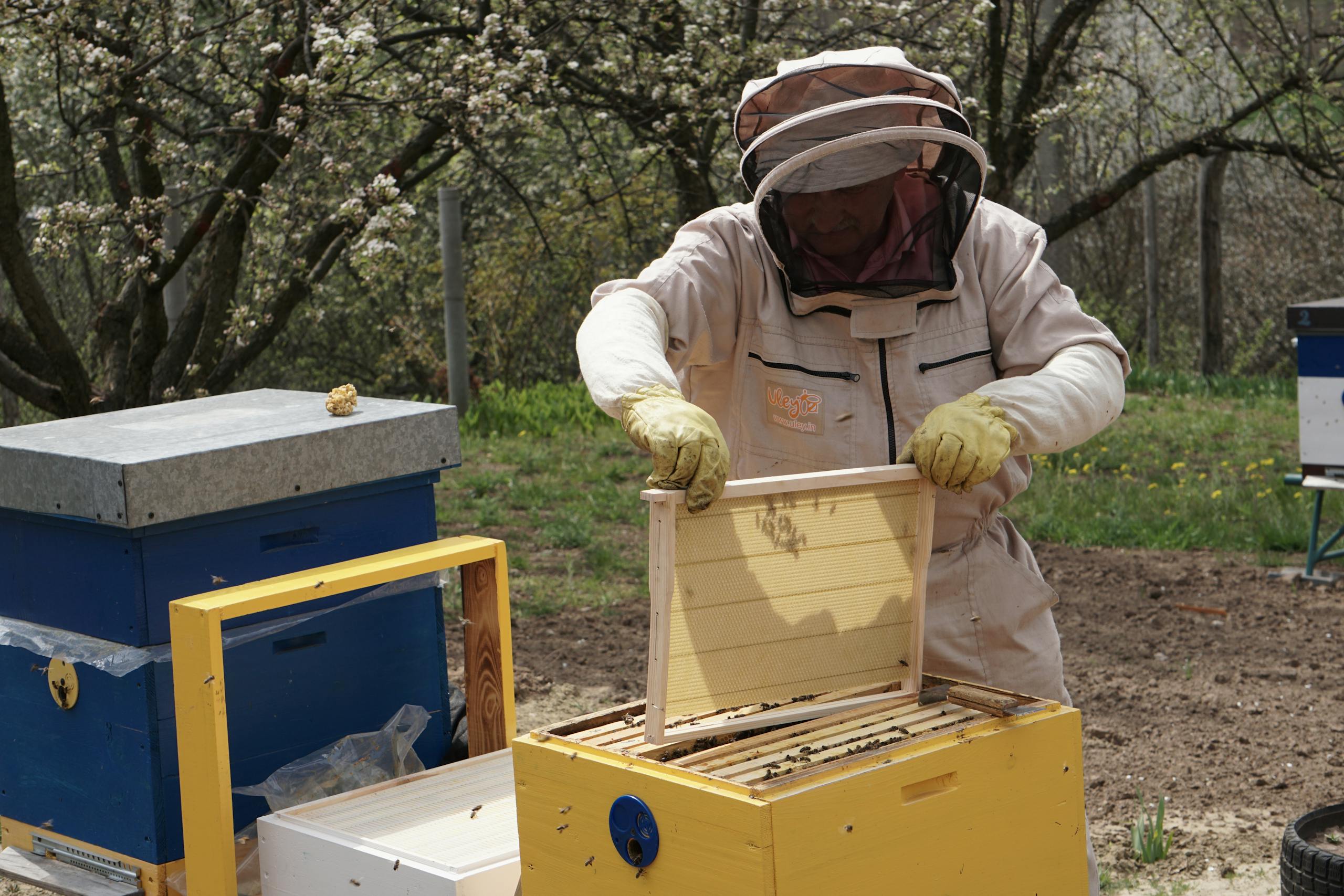
A nucleus colony is a small, functional honey bee colony that usually contains:
- 3 to 5 frames of bees, brood, and honey
- One mated, laying queen
- A population of worker bees to cover those frames
- Some capped honey and pollen stores for food
Nucs are commonly used to start new hives, replace queenless colonies, or carry genetics from one beekeeper to another. They can also be used as a backup colony while you wait to install them into a full-size hive.
The challenge with nucs is their small size. A full colony in a Langstroth hive has more space, more bees, and more thermal mass. A nuc has less of everything, which makes it more sensitive to temperature swings, stress, and poor handling.
The Penn State Extension Beekeeping Program notes that nuc colonies are especially vulnerable during transit and short-term storage because their thermoregulation capacity is limited compared to full-size colonies.
Step-by-Step: How to Store a Nucleus Colony Overnight Safely
Step 1: Close the Entrance at the Right Time
Wait until dusk. This is important.
By dusk, almost all forager bees will have returned to the nuc box. If you close the entrance in the afternoon, you risk leaving foragers behind. Those bees will be lost permanently, and the colony will start the next day weaker than it needs to be.
Use a piece of wire mesh, breathable foam, or a ventilated entrance reducer to close the entrance. Do not use solid foam that blocks all airflow completely. Breathable mesh is the gold standard here because it keeps bees in while still allowing some air exchange at the entrance level.
Step 2: Check That the Colony Has Enough Food
Before storing the nuc overnight, pull the box and quickly check the weight. A well-stocked nuc should feel heavy.
If the nuc feels very light, add a small internal feeder or a frame of capped honey before closing it up. Bees under stress consume honey faster than usual. A colony that runs out of food overnight becomes agitated and difficult to manage the next morning.
A good rule of thumb: a nuc heading into an overnight storage period should have at least one full frame of capped honey stores, or a 1:1 sugar syrup feeder with at least one cup of solution available.
Step 3: Choose the Right Storage Location
This is where most people get it wrong.
You want a location that is:
- Cool but not freezing (50°F to 70°F / 10°C to 21°C is ideal)
- Shaded so the sun does not hit the box in the morning before you can open it
- Well-ventilated with good airflow around the box
- Quiet and away from vibrations, pets, and light sources
Garages work well if they have ventilation. A shaded corner of a barn is fine. Under a large tree in the open air works beautifully. Never put the nuc inside a closed vehicle, a sealed shed, or any enclosed space with no airflow.
What to avoid:
- Full sunlight exposure, especially in the morning when you might not be there to respond
- Rooms that trap heat
- Areas with lots of human or animal foot traffic
- Enclosed plastic storage containers acting as a secondary enclosure around the box
Step 4: Elevate the Box Slightly
Place the nuc box on bricks, wooden blocks, or a pallet. Even two to three inches of clearance underneath the box helps air circulate below it. This matters more than people realize, because heat rises and the underside of the box is a key exit point for excess warmth.
If your nuc box has a screened bottom board, this is even more valuable during overnight storage. Screened bottom boards allow a constant column of air to move through the colony without opening the entrance.
According to research published by Scientific Beekeeping, screened bottom boards improve colony air exchange significantly, which reduces thermal stress during transport and confined periods.
Step 5: Do Not Stack Boxes
If you are storing more than one nuc, never stack them directly on top of each other. Stacking creates a heat trap. The box on the bottom gets heat from its own bees plus the weight and heat of the box on top.
If you need to store multiple nucs in the same spot, space them at least 18 inches apart and arrange them side by side, not stacked.
Step 6: Keep the Environment Dark
Bees respond to light. If you store a nuc near a light source at night, the bees will become active and may try to fly into the light, bruising themselves against the mesh closure and agitating the colony.
A dark, calm environment helps the colony settle into a resting cluster. This lowers their metabolic rate, reduces heat production, and reduces food consumption overnight.
Overnight Nuc Storage: Quick Reference Table
| Factor | Ideal Condition | What to Avoid |
|---|---|---|
| Temperature | 50°F to 70°F (10°C to 21°C) | Above 85°F or below 40°F |
| Ventilation | Mesh entrance closure + airflow around box | Sealed entrance, no airflow |
| Light | Dark and quiet | Artificial lights, direct sunlight |
| Location | Shaded, elevated, open-air or ventilated space | Enclosed garage, car trunk, sealed shed |
| Duration | Up to 24 hours safely | More than 48 hours without inspection |
| Food | At least 1 frame of capped honey or feeder | Empty frames, no stores |
| Handling | Minimal movement after closing | Shaking, dropping, turning upside down |
How Long Can You Store a Nuc Overnight?
Technically, a nuc can be stored for 24 to 48 hours under ideal conditions. Beyond that, you risk brood overheating, food depletion, and queen stress.
For most beekeepers, “overnight storage” means 8 to 14 hours. This is completely manageable if the steps above are followed correctly.
If your situation requires holding the nuc for longer than 24 hours, you should:
- Open the entrance for 2 to 3 hours during the cooler part of the day (early morning or evening)
- Check food stores before re-closing
- Inspect the queen’s status before the 48-hour mark
The Bee Informed Partnership, which tracks colony loss data across the United States, consistently shows that stress during confined periods is a leading cause of preventable queen loss in managed nucs.
Temperature: The Numbers You Need to Know
Honey bees maintain the brood nest at a very precise temperature range. The brood nest must stay between 93°F and 96°F (33.9°C to 35.6°C) for the larvae to develop normally.
When a nuc is in a confined space and the ambient temperature is high, the bees have to work harder to cool the nest. They fan their wings, collect water, and spread water droplets across the comb. In a sealed or poorly ventilated box, this cooling mechanism breaks down.
| Ambient Temperature | Bee Behavior | Risk Level |
|---|---|---|
| Below 40°F (4°C) | Tight cluster, reduced activity | Moderate (chilling of brood) |
| 50°F to 70°F (10°C to 21°C) | Calm, semi-clustered | Low (ideal range) |
| 71°F to 84°F (22°C to 29°C) | Active fanning, increased heat stress | Moderate |
| Above 85°F (29°C) | Heavy fanning, comb wax may soften, comb collapse risk | High |
| Above 95°F (35°C) | Colony panic, queen abandonment, comb meltdown | Critical |
These are the numbers that matter. Print this table and put it on your apiary wall.
A Real Beekeeper’s Story: What Happened to Marcus Webb
Marcus Webb is a beekeeper from Lexington, Kentucky. He has been keeping bees since 2019. In April 2024, he purchased a 5-frame nuc from a reputable local breeder and needed to store it for one night before installing it the next morning.
He placed the nuc inside his pickup truck with the windows cracked about two inches. The overnight low in Lexington that night was 58°F, which sounds safe. But by 7:00 AM, the inside of the truck cab had already climbed to 82°F in the early morning sun.
When Marcus opened the truck at 7:30 AM, the bees were in full defensive mode. The entrance mesh was covered with bees trying to escape. The queen was alive but the colony was severely agitated and took over 40 minutes to calm down after he installed them into the hive.
He told me during a consultation call in May 2024: “I thought cracking the windows was enough. I did not account for morning sun. The bees paid for that mistake.”
The lesson: always plan for morning sun, not just nighttime temperatures.
What About Cold Climates? Storing a Nuc Overnight in Winter
If you are in a cold climate (USDA Hardiness Zones 3 through 5), storing a nuc overnight in winter or early spring requires a different approach.
A small nuc cluster in temperatures below 40°F can struggle to maintain brood nest temperature. At extreme cold, brood in the center may survive, but bees on the outer frames may become chilled and unable to rejoin the cluster.
For cold-climate overnight storage:
- Bring the nuc into an unheated garage or basement where the temperature stays between 45°F and 55°F
- Make sure there is still airflow and the entrance is not sealed airtight
- Wrap the outside of the box in a single layer of breathable insulation (burlap or foam with ventilation holes) to retain heat without trapping moisture
Do not bring the nuc into a heated living space. The warmth will activate the bees and trigger foraging behavior. They will attempt to fly and will exhaust themselves hitting walls and windows.
The University of Minnesota Bee Lab, which leads some of the most respected research on colony overwintering in North America, recommends that even short-term cold storage for nucs maintain a minimum of 45°F to prevent chilling of unsealed brood.
Ventilation vs. Temperature: Which Matters More?
Short answer: ventilation matters more.
Many beekeepers focus on finding the perfect temperature. But a nuc in a cool spot with zero airflow will overheat faster than a nuc in a warm spot with excellent ventilation.
Here is why. A 5-frame nuc with 10,000 bees generates a surprising amount of metabolic heat. When airflow is blocked, that heat has nowhere to go. The internal temperature of the box climbs rapidly, even if the outside temperature is only 68°F.
Think of it like this: a person sleeping under a heavy blanket in a 68°F room will still sweat if the blanket traps all body heat. The bees are no different.
Prioritize ventilation first, temperature management second.
Common Mistakes That Kill Nucleus Colonies Overnight
| Mistake | What Goes Wrong | How to Prevent It |
|---|---|---|
| Sealing the entrance with solid foam | Bees suffocate or overheat | Use breathable mesh closure |
| Storing in a closed vehicle | Heat builds up after sunrise | Use open-air, shaded location |
| Stacking nuc boxes | Shared heat causes overheating | Space boxes 18+ inches apart |
| Forgetting food check | Colony starves under stress | Always check weight before closing |
| Closing before dusk | Foragers are locked out | Always close at or after sunset |
| Storing near a light source | Bees become active and agitated | Choose a dark, quiet location |
| Storing on concrete in summer | Heat radiates up from ground | Elevate box on wood or bricks |
The 48-Hour Rule for Extended Holding
Most beekeepers only need to store a nuc overnight. But some situations, like a delayed installation, weather problems, or a transportation delay, require holding the nuc for up to 48 hours.
If you reach the 24-hour mark and need to continue holding the nuc:
- Open the entrance for 2 to 3 hours during the coolest part of the day. Dusk works better than dawn here, because morning sun can heat things up quickly before you get outside.
- Add a light syrup feeding. A simple 1:1 sugar-to-water solution in a small entrance feeder works well.
- Check the cluster. Pop the lid open for 30 seconds and look at the frames. If the bees look calm and the cluster is intact, close it back up. If the bees are running all over the walls of the box and not on frames, that is a stress signal.
- Never go past 48 hours without a full inspection.
My Personal Storage Protocol: What I Actually Do
I have transported and stored hundreds of nucleus colonies over the past 10 years across California, the UK, and various parts of West Nigeria. Here is the exact protocol I follow.
I close the nuc entrance at dusk using a tightly rolled piece of #8 wire mesh secured with two rubber bands. I check the weight by lifting from the back. If it feels light, I slip a small cup feeder inside before closing the lid.
I place the closed nuc box on two concrete blocks in the corner of my storage shed in Bonadelle Ranchos, CA. That shed has two open vent panels near the roof for airflow. I leave the shed door open a few inches. The temperature in that area typically drops to around 60°F to 65°F overnight in late spring and early summer.
By 6:00 AM, before the sun hits the shed wall, I open the nuc entrance back up. This timing is key. The 6:00 AM opening prevents any early morning heat buildup and lets the foragers get out before they become agitated.
I have not lost a nuc to overnight storage using this protocol in over four years.
When to Call It an Emergency
There are situations where you should act immediately, even at 2:00 AM:
- You can hear a loud, high-pitched roaring sound from inside the box (this is heat distress, not the usual hum)
- You see liquid honey seeping out from the seams of the box (comb is melting)
- The box feels extremely hot to the touch from the outside
- Bees are emerging or dying at the entrance closure
In any of these cases, immediately move the box to a cooler, well-ventilated location. Open the entrance right away. If it is nighttime, it is fine to open the entrance in the dark. The bees will not fly in total darkness, but the airflow will save the colony.
Summary: The Core Rules at a Glance
- Close the entrance only after all foragers return at dusk.
- Use breathable mesh, not solid foam, for the entrance closure.
- Store in a cool (50°F to 70°F), shaded, well-ventilated spot.
- Elevate the box at least 2 to 3 inches off the ground.
- Never stack nuc boxes directly on top of each other.
- Keep the storage area dark and quiet.
- Check food stores before you close up.
- Open the entrance again before 6:00 AM or before morning sun hits the box.
- Do not go past 48 hours without a full inspection and re-feeding.
- Listen for distress sounds. Act immediately if you hear them.
Final Thoughts from Peter Uzodimma
Storing a nucleus colony overnight is something every beekeeper will do at some point. It is one of those tasks that looks simple until it goes wrong.
The bees in that nuc box are doing their job. They are clustering around the brood, maintaining heat, and waiting for you to get them into a permanent home. Your job is to give them 8 to 14 hours of calm, cool, ventilated conditions so they arrive at installation day in full health.
Get the ventilation right. Check the food. Close at the right time. Open before morning sun arrives. That is genuinely all it takes.
If you want to go deeper into colony management, queen rearing, and hive health protocols, explore the full range of guides and training programs at Trevro. Whether you are managing one backyard hive or scaling a commercial operation, the field-tested methods on the platform are built to help your colonies survive and thrive.