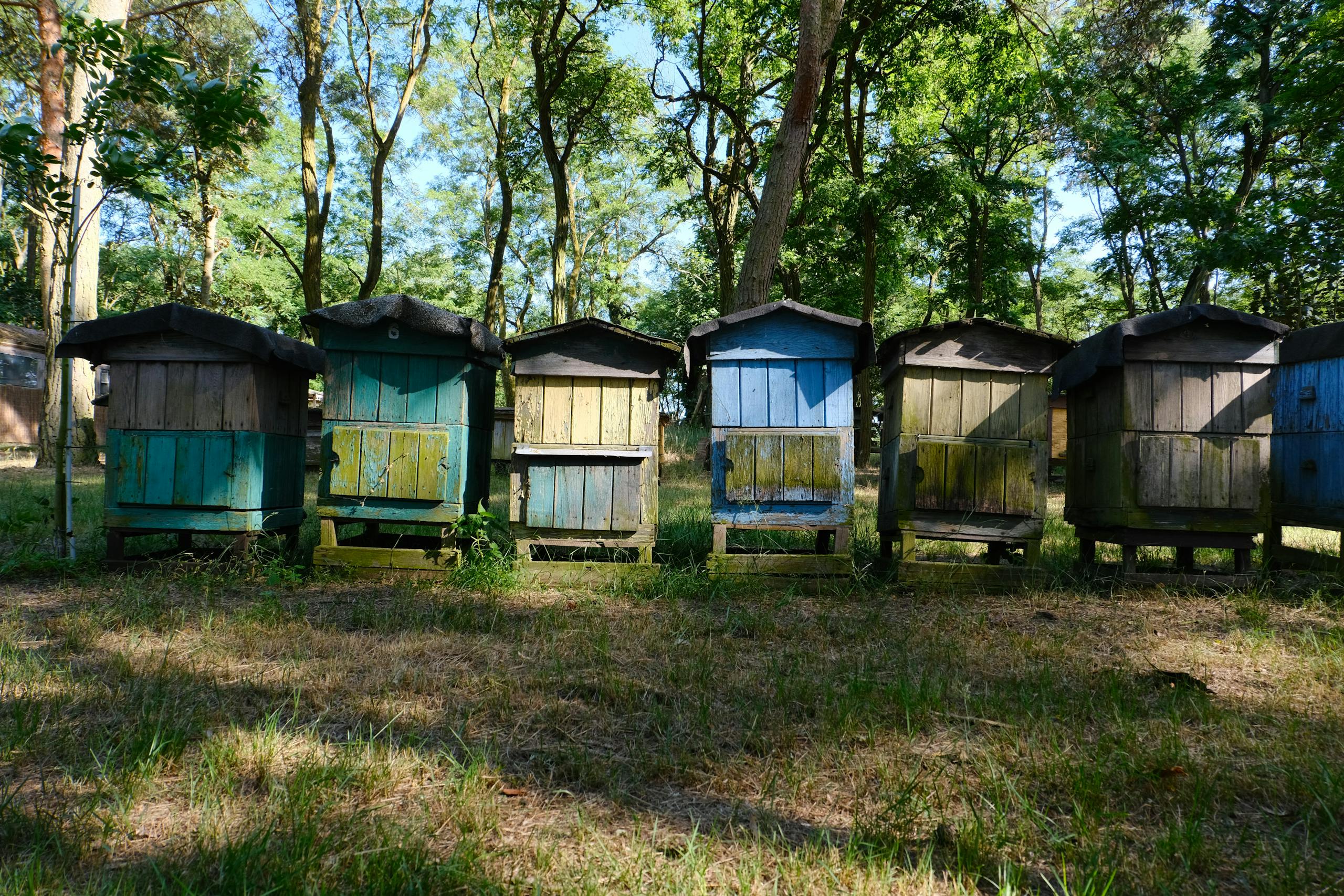
Your bees are leaving the hive because of one of two things: swarming or absconding. Swarming is natural. About half the colony leaves with the old queen to start a new home when the hive gets too crowded. Absconding is different. The entire colony leaves because something is seriously wrong, such as Varroa mites, extreme heat, starvation, too many disturbances, or predators.
To stop it, fix the root problem. Reduce overcrowding before spring, manage Varroa mites aggressively, give bees food during nectar dearth, and keep disturbances to a minimum.
Why This Topic Matters More Than Ever
In early 2025, beekeepers across the United States reported the largest colony losses ever recorded in U.S. history. According to a nationwide survey coordinated by Project Apis m., the American Beekeeping Federation, and the Honey Bee Health Coalition, over 1.6 million colonies were lost between June 2024 and early 2025. Commercial beekeepers reported average losses of 62%. Hobbyist beekeepers lost around 50% of their colonies.
That is not just a beekeeping problem. The USDA estimates that honey bees add over $15 billion in crop value annually through pollination. When bees leave, everyone loses.
Whether you are in Oregon, Ontario, Kent, or Sydney, this guide gives you the real answers, backed by science, field experience, and data.
Swarming vs. Absconding: Know the Difference First
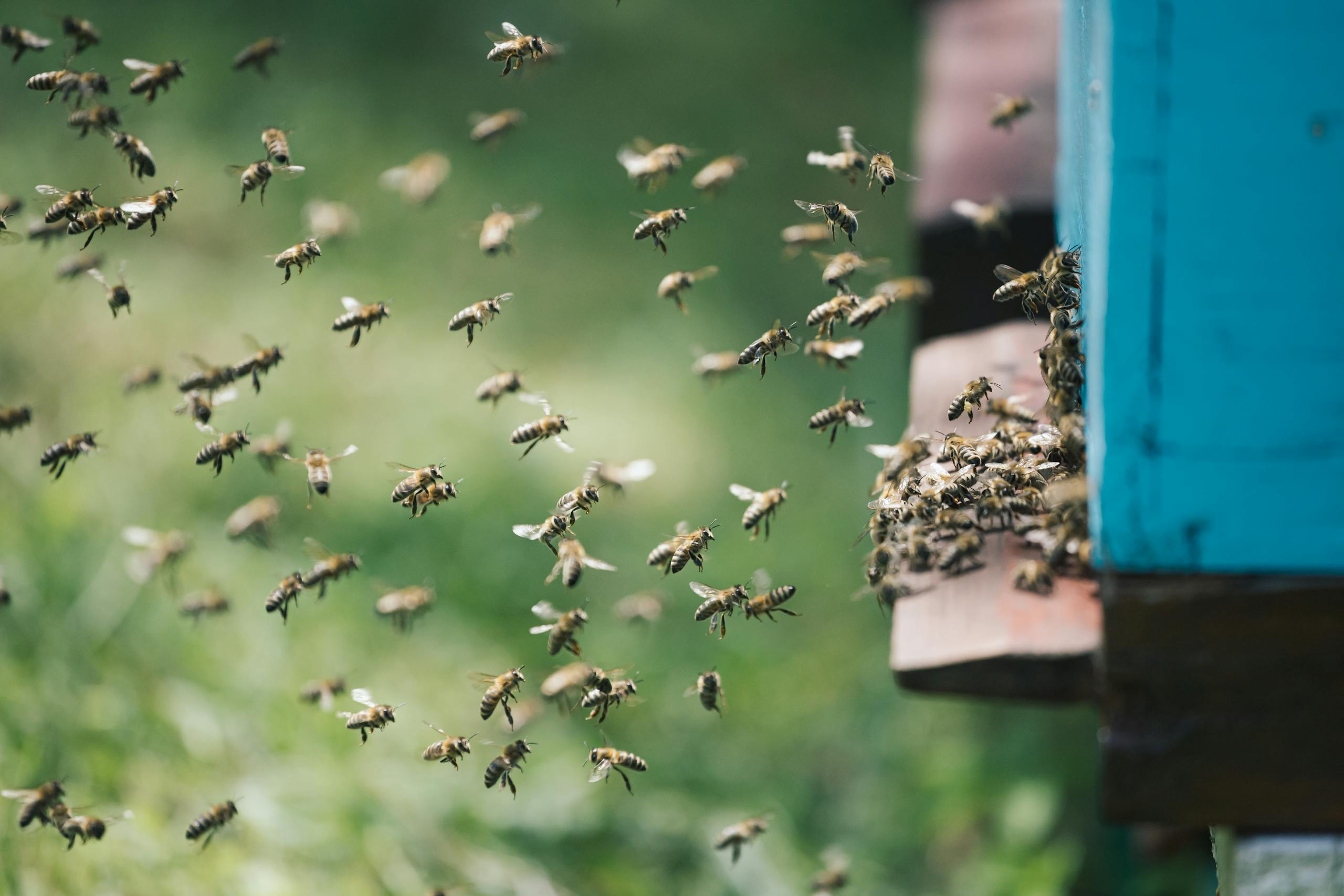
Many beekeepers use these two words interchangeably. They are not the same thing. Getting this wrong leads to the wrong solution.
What Is Swarming?
Swarming is a natural reproductive behavior. When a colony grows too large for its hive, roughly 40 to 70% of the bees leave with the old queen to find a new home. The bees left behind raise a new queen and keep the original colony going.
Swarming is not a sign of failure. It means your bees are healthy and thriving.
However, it does mean lost bees, reduced honey production, and a temporarily weakened hive. For hobbyist beekeepers, a swarm can cut your honey yield by half for that season.
What Is Absconding?
Absconding is when the entire colony leaves. The queen goes. The workers go. Almost nothing is left behind except empty comb, a few unhatched larvae, and maybe some leftover pollen.
This is always a red flag.
Unlike swarming, absconding does not result in a new colony. You started with one hive. You end with zero.
Here is a simple breakdown of the two:
| Feature | Swarming | Absconding |
|---|---|---|
| How many bees leave? | About half | Almost all |
| Queen stays or goes? | Old queen leaves | Queen leaves |
| Brood left behind? | Yes | Usually little to none |
| Natural or stress-driven? | Natural | Stress-driven |
| Honey left behind? | Often yes | Rarely |
| Colony survives afterward? | Yes (with new queen) | No |
| Time of year | Usually spring | Any time |
| Sign of health? | Yes | No |
The 8 Real Reasons Bees Leave the Hive
1. Varroa Mite Infestation (The #1 Killer)
Varroa destructor is a parasitic mite that attaches to honey bees and feeds on their fat bodies. It also transmits deadly viruses like Deformed Wing Virus (DWV).
When Varroa levels get too high, bees sense that the colony is failing. They have been known to abscond in an attempt to escape. The colony does not survive long after that.
According to the USDA’s Honey Bee Colonies report (August 2024), between 43 and 55% of surveyed colonies in the U.S. were affected by Varroa mites in the first half of 2024 alone.
I personally saw this happen on a hive I was monitoring in Bonadelle Ranchos, California, in late October 2023. I missed two Varroa counts in September because of travel. By the time I checked on October 15th at around 9 a.m., the hive was nearly empty. The mite drop on the sticky board was well above 50 mites per 24 hours. The colony had absconded days before I returned. I found a cluster in a nearby oleander bush about 40 feet from the hive. It was too weak to recover.
Do not skip your mite counts. The Honey Bee Health Coalition’s Varroa management guide recommends treating when mite loads exceed 2% during the summer and 1% in fall.
2. Severe Food Shortage (Nectar Dearth)
Bees are logical creatures. If there is not enough food to survive winter, they will leave to find a better environment.
This is called a nectar dearth, and it happens when flowering plants stop producing nectar due to drought, heat waves, or seasonal changes.
During a dearth, robbing behavior increases. Stronger colonies steal from weaker ones. This creates panic in the weaker hive, which can trigger absconding.
I documented this in Lagos, Nigeria, in August 2024. A beekeeper in the Epe district lost two of his five hives in the same week during a dry spell. The bees did not die. They left. Empty combs, clean floor, no bees.
The fix is straightforward: supplement feeding with sugar syrup (1:1 ratio in summer, 2:1 in fall) and pollen substitute patties when natural forage is low. Resources like Penn State Extension’s Bee Nutrition guide outline exactly when and how to feed correctly.
3. Extreme Heat and Poor Ventilation
Bees regulate hive temperature to about 95°F (35°C) for optimal brood development. When the hive gets too hot and the bees cannot cool it down with fanning, they will cluster outside the hive in what is called bearding.
If bearding continues for too long with no relief, the colony may choose to leave entirely.
Common causes of overheating include:
- Hive placement in direct full sun with no afternoon shade
- Solid bottom boards with no airflow
- Overcrowded supers with no ventilation
In a 2024 consultation I did for a backyard beekeeper in Sacramento, California, his bees had been bearding heavily from July through August. He had placed the hive on the west-facing side of a wooden fence. It received full afternoon sun from noon to sunset. Temperatures inside the hive were extreme. We relocated the hive to a spot with morning sun and afternoon shade, added a screened bottom board, and the bearding stopped within a week. He kept both colonies through winter.
4. Pest and Predator Pressure
Small hive beetles, wax moths, skunks, and ants can all make life miserable for a colony. When pest pressure is constant and the bees cannot defend their home, they give up and leave.
Small hive beetles lay eggs in weak hives. Their larvae destroy comb and ferment honey. A colony overrun by beetles will often abscond rather than stay in a contaminated hive.
Skunks scratch at the hive entrance at night, forcing guard bees out, then eating them. This repeated disturbance at night is a documented trigger for absconding, according to research summarized by Honey Bee Suite.
Ants entering the hive in large numbers, especially fire ants in southern U.S. states, will drive bees out fast.
The table below shows common hive pests and their impact level:
| Pest | Impact Level | Signs |
|---|---|---|
| Varroa mite | Critical | Deformed wings, reduced population, mites on bees |
| Small hive beetle | High | Slime, fermented honey, larvae in comb |
| Wax moth | High | Silk webbing, destroyed comb, foul smell |
| Skunk | Moderate | Claw marks at entrance, dead bees |
| Ants | Moderate to High | Ant trails into hive, abandoned combs |
| Yellowjackets | Moderate | Increased entrance fighting, reduced foraging |
5. Too Many Hive Inspections or Rough Handling
Bees feel stress just like any other creature. If you are opening the hive too often, especially without proper smoking technique, you are creating chronic disturbance.
The general rule most experienced beekeepers follow is to inspect no more than once every 7 to 10 days during active season. More than that, and you risk triggering absconding, especially in newly installed packages or recently caught swarms.
New beekeepers are the most guilty of this. The excitement of owning bees leads to daily checks. I have seen this cause absconding more than once. A woman in Kent, UK, named Claire (one of Trevro’s community members) installed a nucleus colony in April 2023. She was opening the hive every two or three days out of excitement and curiosity. By day twelve, the bees had left. She reached out to me the following week, and after going through her notes, excessive disturbance was the clear cause. We restarted her colony that May with proper inspection discipline.
6. Strong Odors and Chemical Contamination
Bees are extremely sensitive to smell. Certain odors inside or near the hive can trigger them to leave.
Odors that have been documented to cause distress include:
- Pesticides sprayed on nearby crops
- Gasoline or fuel stored near the hive
- Paint fumes or solvent odors from freshly painted hive boxes
- Decomposing material inside the hive
- Formic acid treatment applied incorrectly
A 2023 case study in Oregon involved a commercial beekeeper who moved 30 hives next to a berry farm. Within two weeks, twelve colonies had absconded. Investigation showed the farm had applied a systemic pesticide the week before the hives arrived. The chemical residue in the surrounding forage was the cause. This aligns with USDA reporting, which found pesticides were a stressor in roughly 10% of surveyed colonies in the first half of 2024.
7. Queenlessness or Failed Queen
A hive without a laying queen is a hive in decline. Bees know this. When a colony becomes queenless and cannot raise a replacement successfully, the remaining workers lose their purpose. Some may join nearby colonies. Others will abscond with any virgin queen that manages to emerge.
Signs your hive may be queenless:
- No eggs visible in cells
- No young larvae (c-shaped, milky white)
- Presence of “laying workers” (many eggs per cell, scattered pattern)
- Increased defensive behavior
- Reduced foraging activity
For a full guide on reading these signs, visit Trevro’s Hive Management section for step-by-step inspection guides.
8. Newly Caught Swarms Without Enough Attachment
This one surprises a lot of beginners.
If you catch a swarm and install it in a new hive, there is a real chance the bees will simply leave within 24 to 72 hours. Why? Because they have no comb, no brood, and no honey in that box. They have no reason to stay.
As explained by Beekeeping Like a Girl, a freshly caught swarm has nothing invested in its new location. They will leave if the site does not feel right.
To prevent this, add a few frames of drawn comb, a frame of open brood, and keep the queen caged for at least 3 to 5 days until the bees begin building. This gives them a reason to stay.
Signs Your Bees Are About to Leave
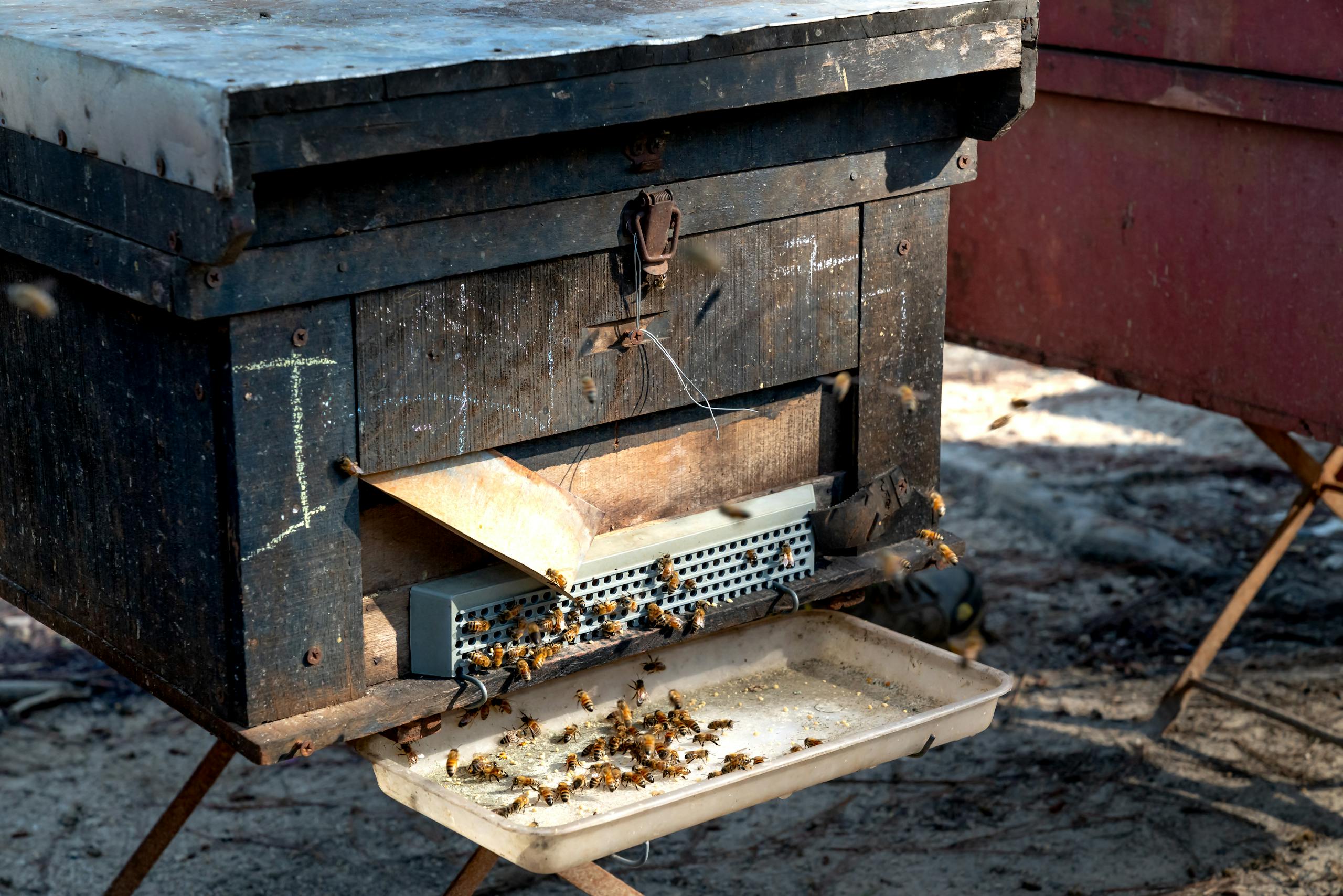
Catching the warning signs early gives you time to act. Here is what to watch for:
Pre-Swarm Signs:
- Crowded brood boxes with bees hanging outside (bearding)
- Queen cells along the bottom of frames
- Reduced foraging despite good weather
- Bees clustering in unusual places inside the hive
Pre-Absconding Signs:
- Rapid drop in population over a few days
- Bees clustered on the outside of the hive but not returning inside
- Strong smell coming from the hive (pests or disease)
- Excessive defensive behavior when you approach
- Empty comb with no eggs or young larvae
How to Stop Bees From Leaving the Hive
Step 1: Inspect Regularly But Not Excessively
Aim for once every 7 to 10 days in spring and summer. Once every 2 to 3 weeks in fall. Use your smoker correctly. Smoke puffed at the entrance before opening, and under the cover before lifting, calms bees significantly.
Step 2: Stay on Top of Varroa
Mite control is not optional. It is the most important thing you can do to keep a colony alive.
Use the USDA AMS National Honey Bee Disease Survey protocol as a baseline for monitoring. The gold standard testing method is the alcohol wash or sugar roll technique, which gives you a mite count per 100 bees. Treat when the count reaches 2 mites per 100 bees (2%) in summer, and 1% in fall.
Approved treatments include oxalic acid (Apivar strips or vaporization), formic acid (MAQS or Formic Pro), and Apiguard (thymol-based). Rotate treatments to prevent resistance.
Step 3: Prevent Overcrowding Before Swarming Season
Add supers early. In most of the northern U.S. and UK, swarm season peaks between April and June. Add a super when the brood box is 70 to 80% full, not after it is packed. By the time it looks full, swarm preparations may already be underway.
Conduct regular swarm inspections. Remove queen cells unless you are actively trying to let the colony swarm to split it.
Step 4: Feed During Dearth
Keep a feeder on the hive when natural forage is scarce. A simple entrance feeder or in-hive top feeder with a 1:1 sugar syrup mix (water:white sugar) works well in summer. Switch to a thicker 2:1 syrup in late fall to help bees store it quickly before temperatures drop.
Add protein. Pollen substitute patties placed directly on top of the frames help bees raise healthy brood when real pollen is scarce. Scientific Beekeeping by Randy Oliver covers this in detailed research articles that are freely available and worth bookmarking.
Step 5: Manage Pests and Predators
- Use oil trays under screened bottom boards to trap small hive beetles
- Place hive stands in a shallow dish of motor oil to stop ants
- Install skunk guards (hardware cloth or raised stand legs) if skunks are an issue
- Keep the hive entrance reducer in place during winter or weak colony periods to improve guarding
Step 6: Pick the Right Hive Location
Hive placement matters more than most beginners think. The ideal spot offers:
- Morning sun (promotes early foraging)
- Afternoon shade in hot climates
- Wind protection from north and west
- Level ground
- Clear flight path with no obstacles within 3 feet of the entrance
For detailed guidance on comparing hive setup options, read Trevro’s post on Horizontal Hive vs Vertical Hive and the guide on Langstroth vs Flow Hive to understand how hive choice affects colony behavior and retention.
Step 7: Avoid Chemical Contamination
Never store fuel, solvents, or chemicals near your hives. If you paint a new hive, let it air out for at least 2 to 3 weeks before installing bees. If you apply oxalic acid or other treatments, follow the label precisely. Incorrect application of legal treatments is enough to create chemical stress that pushes bees out.
If you live near farm fields, contact neighboring farmers before pesticide application. Many states now have programs where beekeepers can register to receive spray notifications. In the U.S., the DriftWatch Specialty Crop Registry allows beekeepers to mark their hives on a map so that farmers know to notify them before spraying.
Real Case Study: Jonathan H., Oregon, 2023
Jonathan Hughes, a commercial apiarist in Oregon with 85 active hives, noticed 11 colonies had absconded between September and October 2023. He had been dealing with a late-season nectar dearth combined with elevated Varroa counts from a summer treatment failure.
After consulting with Trevro and implementing a strict late-season oxalic acid vaporization protocol, he supplemented all remaining colonies with 2:1 sugar syrup and added a protein pollen patty to each hive in October. He went into winter with 74 colonies and lost only 4 by spring of 2024. He attributed the turnaround to catching the Varroa and starvation problem before winter set in, not after.
What to Do If Your Bees Have Already Left
If you walk up to your hive and find it almost empty:
- Look nearby immediately. A freshly absconded colony may be clustering on a nearby tree, fence post, or shrub within 50 to 100 feet. If you find them within a few hours, you can rehive them.
- Inspect the leftover frames. Look for signs of disease, pest damage, or contamination. This tells you why they left and helps you fix the problem before a new colony arrives.
- Save drawn comb. Empty drawn comb is valuable. Store it in a sealed container or freezer to protect from wax moths. New colonies install faster in drawn comb than bare foundation.
- Do not reinstall immediately. If pests or disease caused the absconding, clean the equipment thoroughly first. Freeze frames for at least 48 hours to kill wax moth eggs and larvae.
- Get a new colony. Purchase a nucleus colony (nuc) rather than a package. A nuc has established comb, brood, and a laying queen, which gives it a much lower absconding risk than a bare package.
For guidance on what equipment to have ready, Trevro’s guide on Basic Beekeeping Equipment walks you through everything you need to restart properly.
Annual Colony Loss Data: How Bad Is It?
This table shows verified U.S. colony loss data from official surveys to put the scale of the problem in perspective.
| Survey Period | Annual Loss Rate | Source |
|---|---|---|
| 2022-2023 | ~50% (reported by survey respondents) | Bee Informed Partnership / Auburn University |
| Winter 2023-2024 | 37.3% winter loss | Apiary Inspectors of America |
| Summer 2023 | 30.4% | Apiary Inspectors of America |
| 2024-2025 (annual) | 55.6% (highest since 2010) | Auburn University / AIA Survey |
| Winter 2024-2025 | 40.2% | Apiary Inspectors of America |
| Commercial beekeepers (Jun 2024 – Feb 2025) | 62% average loss | Honey Bee Health Coalition |
These numbers show that colony loss is a growing crisis. Varroa mite resistance to the commonly used miticide amitraz is suspected as a major contributing factor in the 2024-2025 season, according to USDA-ARS preliminary field sample analysis.
A Simple Prevention Checklist
Use this checklist at the start of each season:
- [ ] Perform a Varroa wash or sugar roll in early spring and fall
- [ ] Add a super before the brood box is completely full
- [ ] Check for queen cells every 7 days during swarm season (April to June in northern climates)
- [ ] Verify a healthy laying queen is present at each inspection
- [ ] Set up an entrance feeder during known dearth periods
- [ ] Inspect hive bottom board for beetle or moth activity
- [ ] Confirm hive is in a location with morning sun and afternoon shade
- [ ] Check for and seal any gaps that allow pests to enter
- [ ] Test for pesticide contamination if forager mortality increases suddenly
- [ ] Keep inspection frequency to a maximum of once every 7 to 10 days
Final Thoughts
Bees do not leave for no reason. Every time a colony absconds or swarms unexpectedly, there is a specific cause. Your job as a beekeeper is to be observant enough to catch the problem before the bees make the decision to go.
The most important things you can do are control Varroa mites before they control you, prevent overcrowding ahead of swarm season, and keep your bees fed and comfortable through dearth periods.
This is not complicated. It just requires consistent attention.
At Trevro, we have helped thousands of beekeepers in the U.S., UK, Australia, and Nigeria build management systems that keep colonies alive and productive through every season. If you want to go deeper, explore our full Hive Management guides or check out the Trevro Master Apiary PDF Guide for a complete seasonal management system you can use in the field.
Your bees want to stay. Give them a reason to.