
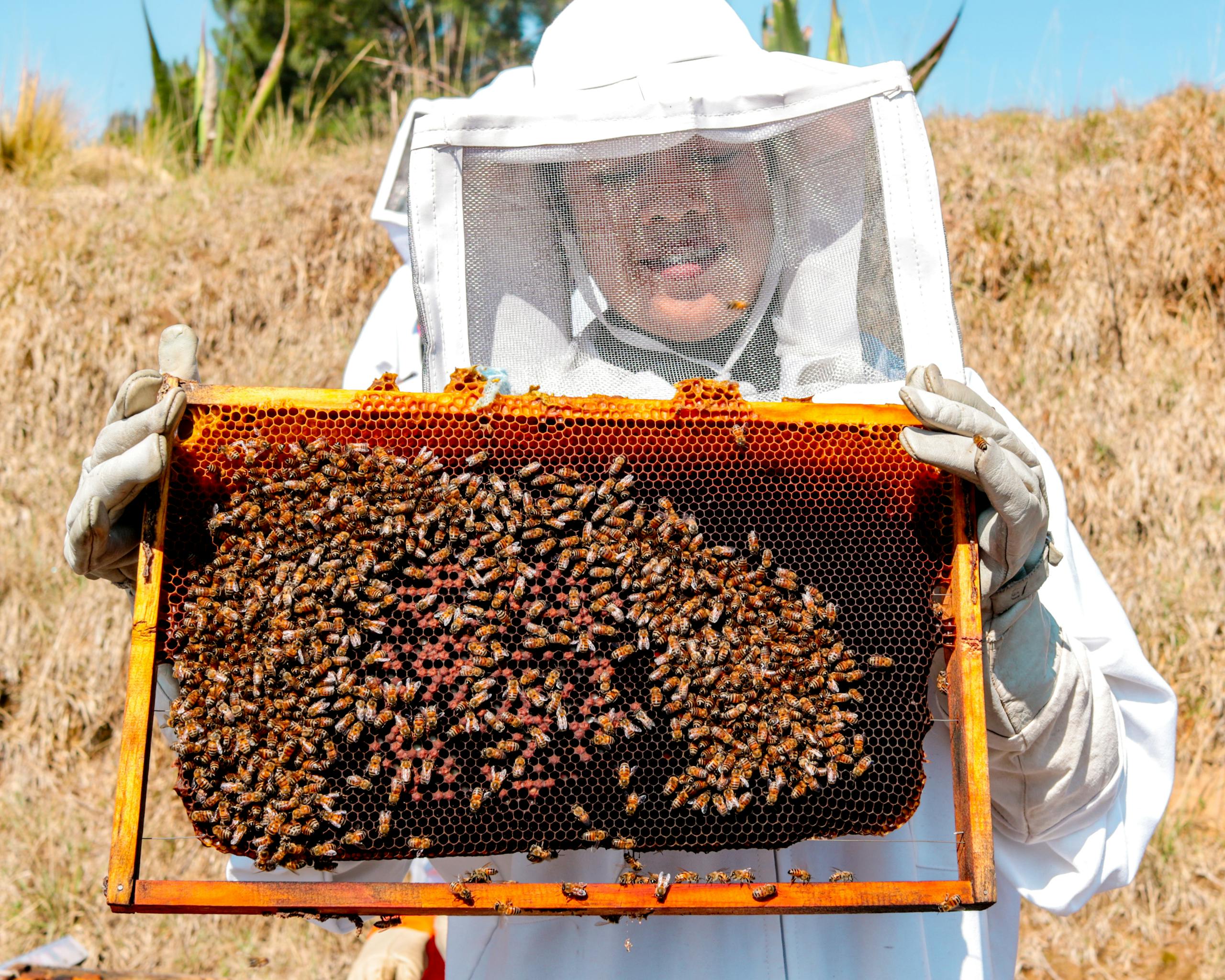
The best way to deal with wax moth destruction in Nigerian bee farms is to keep your colonies strong and populous at all times. A strong colony will defend itself. Beyond that, you combine regular hive inspections, proper storage of drawn combs, and targeted biological controls like Bacillus thuringiensis to stop infestations before they cause serious damage.
This is not a guess. This is what years of working with bee colonies across Nigeria and other tropical climates has shown, and it is backed by peer-reviewed science.
Why Nigerian Beekeepers Face a Bigger Wax Moth Problem Than Most
If you keep bees in Nigeria, you are already dealing with one of the worst climates in the world for wax moth activity.
The greater wax moth (Galleria mellonella) develops fastest between 29°C and 33°C (84°F to 91°F). That is exactly the average temperature range across most of Nigeria’s farming zones, from the humid south to the northern savannas.
Nigeria does not get a “cold season” that naturally kills off moth larvae the way cooler climates do. In Canada or the UK, winter temperatures slow down or halt the wax moth life cycle. In Nigeria, the wax moth breeds all year long.
This is not a small problem. A peer-reviewed study published in MDPI’s Insects journal confirms that the damage caused by G. mellonella larvae is most severe in tropical and sub-tropical regions, and is considered one of the contributing factors to the decline of wild and managed honeybee populations across Africa.
In plain terms: Nigeria’s climate gives wax moths a perfect home. Your job as a beekeeper is to make your hive a bad home for them.
What Exactly Is the Wax Moth? A Simple Breakdown
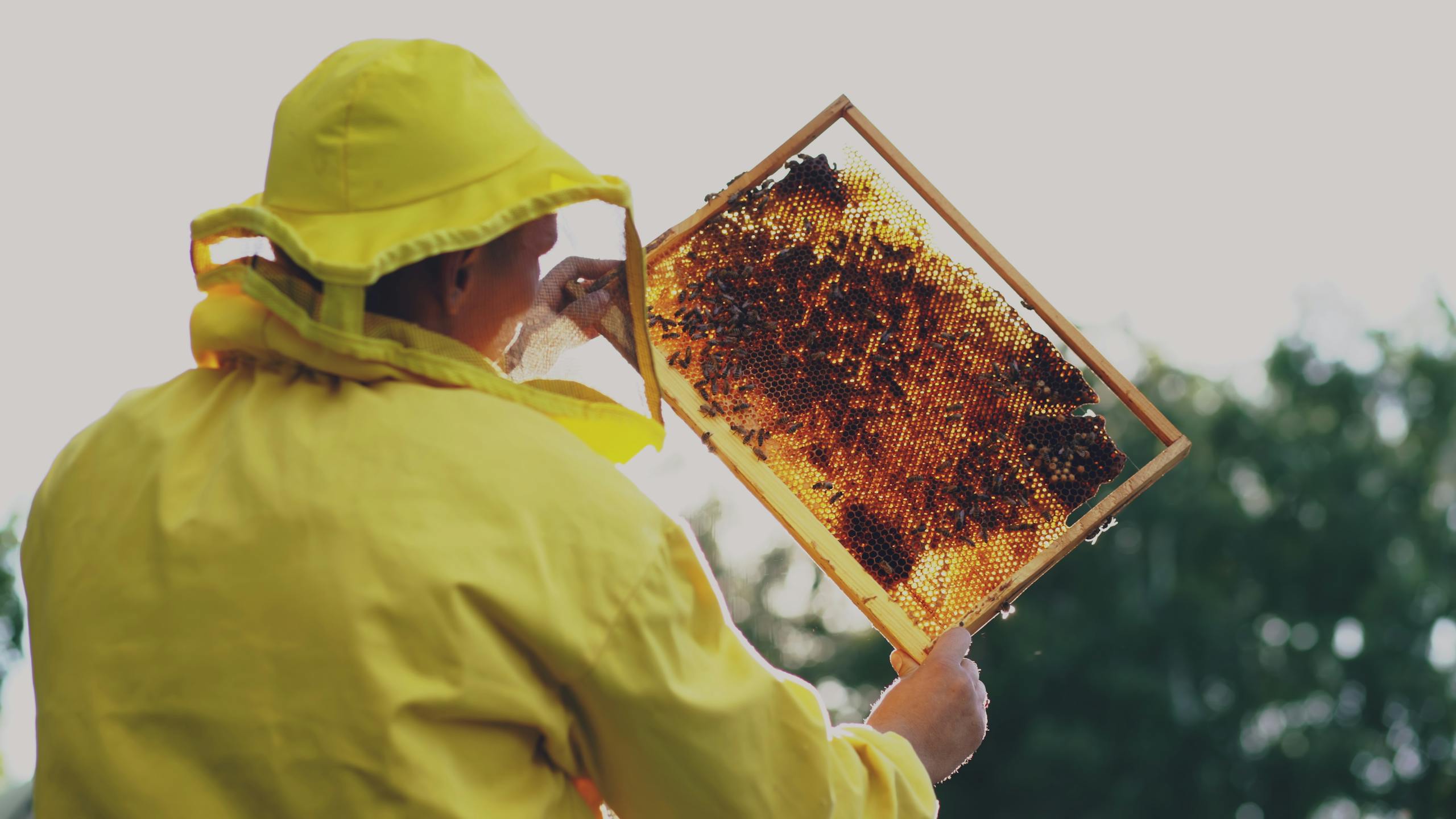
The wax moth is a nocturnal insect. The adult moth itself causes no direct damage to your hive. The problem is the larvae.
Here is how the life cycle works:
- An adult female moth slips into your hive at night through small gaps in the wood.
- She lays her eggs in dark crevices inside the hive. A single female can lay between 300 and 600 eggs in batches over just 3 to 5 days.
- The eggs hatch. The larvae immediately start burrowing through your combs.
- While tunneling, the larvae spin silk webs lined with their waste. This is what destroys your frames.
- When the tunnels become thick with webbing, nurse bees can no longer clean the cells. Emerging bee pupae get tangled in the silk and die. This condition is called galleriasis.
- If the colony is not strong enough to fight back, the bees will eventually abandon the hive entirely. This is called absconding.
According to Britannica’s entry on the greater wax moth, the larvae are particularly destructive to old or unguarded colonies. They can begin destroying combs long before all the bees have left.
That detail matters a lot in Nigeria. Unguarded or weakened hives left after harvesting, or during dry season dearth, are sitting targets.
What Wax Moth Damage Looks Like in Your Hive
Many Nigerian beekeepers first notice wax moth damage too late because they do not know the early warning signs. Here is a simple guide to spotting trouble early.
Early Signs (Act Now)
- Small, silvery or white eggs tucked in the wood joints of your hive body or frames.
- White larvae, resembling tiny caterpillars, crawling inside the hive floor.
- A few scattered silk threads running across the comb surface.
- Bald brood — uncapped cells running in a straight line or small patch across an otherwise capped comb. This happens because nurse bees uncap cells to chase larvae tunneling just beneath.
Mid-Stage Signs (Serious Trouble)
- Visible silk webbing and frass (brown, pellet-like droppings) covering portions of the comb.
- Damaged frames with tunnels bored through the wood where larvae have gone to pupate.
- Reduced bee population as workers spend more energy fighting the infestation than foraging.
Late-Stage Signs (Critical Damage)
- Complete comb destruction. Frames that were once full of healthy brood now look like a pile of wax debris, webbing, and waste.
- Colony absconding. You open the hive and the bees are gone.
- Structural damage to wooden hive bodies and frames from larval boring.
A Real Case from Okuku, Nigeria
This is not a made-up scenario. A documented beekeeping study from Okuku, Osun State, Nigeria reported a firsthand account that every Nigerian beekeeper should read.
In August 2003, Galleria mellonella destroyed the entire comb of one colony at the Okuku apiary site. The larvae fed on the stored honey, bored through every cell, and produced so much webbing that the entire comb became unusable. The bees absconded. The hive was lost.
This was in the middle of the Nigerian rainy season, a time when beekeepers often assume conditions are favorable and reduce their inspection frequency. The warm, humid conditions of August in southwest Nigeria made that colony a perfect target.
The lesson: regular inspection cannot stop during or after the rainy season. That is exactly when the moths are most active.
Why Weak Colonies Are the Real Root Problem
Before we go into treatment methods, you need to understand this core principle.
A healthy, strong colony is its own best defense against wax moths.
Worker bees actively patrol the hive. They find wax moth larvae and remove them. They pursue adult moths that enter the hive and sting them or drive them out. They seal small cracks with propolis, reducing entry points.
A weak colony cannot do this. If your colony has lost its queen, suffered from pesticide poisoning, or is struggling through a nectar dearth, the bees cannot keep up with a wax moth invasion.
Research published by Flow Hive confirms this: wax moths are a particular problem in the tropics, and the single most important control method is maintaining strong, healthy colonies.
In Nigeria, colonies become weak for several reasons:
- Queen loss
- Pesticide exposure from nearby farms
- Nectar dearth during the dry season (November to March in most of Nigeria)
- Poor hive management that leaves too much empty comb space
- Heavy loads of other pests like hive beetles and ants
Solving the wax moth problem means solving these colony health problems first.
My Experience: What I Saw at an Epe Apiary in January 2024
I visited an apiary near Epe, Lagos State, on the morning of January 11, 2024, around 8:00 a.m. The beekeeper had 14 hives and was struggling badly.
Seven of those hives had significant wax moth damage. Two had already been abandoned by the bees.
When I opened the worst hive, the frame was a complete disaster. The comb had collapsed under the weight of silk webbing. Brown frass covered the hive floor. The smell was sharp and unpleasant.
Here is what had gone wrong:
- The beekeeper had harvested honey in late November 2023 and left the supers on the hive with very few bees to cover the frames.
- He did not inspect again until January.
- In those six weeks, the wax moth had taken over.
After that visit, we restructured the management schedule. Hive inspections went to every 10 days. All frames with fewer than 80% bee coverage were removed or consolidated. Three months later, those same hives were healthy and producing again.
The point is simple: the damage was preventable with consistent inspection.
Step-by-Step Control Methods That Work in Nigeria
1. Keep Your Colony Strong and the Right Size
Never leave empty comb space that bees cannot cover and defend. If you have a small colony, reduce the hive space. Remove unused supers. Push the bees into a smaller area they can fully patrol.
The general rule: if bees cannot cover every frame edge to edge, you have too much space for the colony size.
2. Inspect Every 10 to 14 Days
In Nigeria’s climate, a wax moth infestation can go from a few eggs to full comb destruction in as little as three weeks. Regular inspection is the only way to catch it early.
During each inspection, check:
- The bottom board for larvae or frass
- The wooden joints and corners of frames for eggs
- Any frame showing bald brood (a classic early sign)
3. Remove and Destroy Heavily Infested Frames
If you find a frame that is more than 30% covered in webbing or frass, remove it immediately. Do not try to save it by shaking off the larvae. The silk webbing carries bacteria, and the contaminated wax is not worth keeping.
Burn or bury the frame far from the apiary. Do not leave it near other hives.
4. Use the Freezing Method for Stored Combs
If you have drawn combs that are not in active use, store them properly. Wax moths are most dangerous on stored combs because there are no bees to guard them.
Research confirms that placing comb in a freezer at below -7°C (19°F) for a minimum of 72 hours kills all life stages of the wax moth, including eggs, larvae, and pupae.
In Nigeria, a chest freezer is a practical investment for any beekeeper with more than 5 hives. After freezing, store the combs in sealed plastic bags or airtight containers to prevent reinfestation.
5. Store Drawn Combs with Light and Airflow
If a freezer is not available, store empty supers and frames in a location with maximum light and airflow.
As confirmed by Agriculture Institute’s guide on wax moth management, wax moths avoid well-lit, well-ventilated spaces. Stack supers at right angles to each other to allow airflow through the frames. Avoid dark, enclosed storage sheds.
6. Use Bacillus Thuringiensis (Bt) as a Biological Control
For stored combs or severe infestations, a biological solution called Bacillus thuringiensis (Bt) is one of the most effective tools available.
Bt is a naturally occurring soil bacterium. When wax moth larvae ingest it, the bacterium produces proteins that destroy the larval gut, killing the larvae. It is completely safe for honey bees, humans, and other non-target species.
A peer-reviewed study published in Nature Communications in November 2023 found that a novel Bt strain showed strong insecticidal activity against wax moth larvae, with low toxicity levels to adult bees and larvae.
The commercial Bt product most commonly used for wax moth control is B402 (also known as Certan), distributed globally by Vita Bee Health. It is diluted in water to 5% concentration and sprayed directly onto the comb surface before storage. One application provides protection through the following season.
For Nigerian beekeepers: if you cannot source Vita’s B402 locally, check with agricultural input suppliers for any product containing Bacillus thuringiensis subsp. aizawai. This is the specific subspecies effective against wax moths.
7. Reduce Hive Entry Points
Adult moths enter hives at night. They are small enough to squeeze through any gap wider than 3mm.
Use an entrance reducer during weak colony periods, especially during the dry season dearth. Seal any cracks in your hive body with wood glue or propolis paste. This makes it harder for the moths to gain entry in the first place.
8. Position Hives in Sunlight
Wax moths prefer dark, shaded areas. Hives placed in full or partial direct sunlight are less attractive to adult moths looking for a place to lay eggs.
In Nigerian farms where trees provide shade, try to position hives on the forest edge where they receive morning sunlight from at least 6:00 a.m. to 11:00 a.m.
Wax Moth vs. Strong Colony: Quick Reference Table
| Condition | Wax Moth Risk | Action Needed |
|---|---|---|
| Full colony, queen present, frames 100% covered | Low | Routine inspection every 14 days |
| Colony just after honey harvest, 60-70% frame coverage | Medium | Reduce hive space, inspect every 10 days |
| Colony after queen loss, less than 50% coverage | High | Requeen immediately, reduce hive space, inspect every 7 days |
| Stored empty combs, no bees | Critical | Freeze combs or apply Bt spray before storage |
| Weak colony during dry season dearth | Very High | Supplement feed, reduce space, inspect every 7 days |
Wax Moth Life Cycle in Nigeria’s Climate: Key Facts
| Life Stage | Duration in Nigeria (Warm Season) | Duration in Cool Climate |
|---|---|---|
| Egg | 5 to 8 days | Up to 35 days |
| Larva | 20 to 30 days | Up to 6 months |
| Pupa | 8 to 10 days | Up to 2 months |
| Adult moth lifespan | 7 to 12 days | 7 to 12 days |
| Total cycle (egg to egg) | As short as 40 days | Up to 8+ months |
This data matters. In Nigeria, you can go from a newly laid moth egg to a colony-destroying infestation in under six weeks. In Scotland or Canada, the same process might take months. This is why Nigerian beekeepers need a much tighter inspection schedule than beekeepers in temperate countries.
What About Chemical Treatments?
Many Nigerian beekeepers reach for chemical fumigants when they see wax moth damage. Some use naphthalene (mothballs) or paradichlorobenzene (PDCB) crystals.
This is a mistake you should avoid.
According to Wikipedia’s scientific entry on Galleria mellonella, the only chemical fumigant currently approved for treating infested colonies is carbon dioxide (CO2), because other chemicals leave residues in the wax and honey and pose real health risks to the handler and the bees.
Naphthalene and PDCB crystals are toxic to bees. Using them incorrectly can harm or kill your colony. They also contaminate your wax, which reduces its market value.
Stick to the methods listed above. They are safer, more effective, and do not compromise your honey or wax quality.
Case Study: Emmanuel O., Commercial Beekeeper, Ogun State, March 2025
Emmanuel runs a 30-hive operation in Sagamu, Ogun State. In early 2025, he reached out after losing five colonies in a single month.
When I reviewed his management records with him, the pattern was clear. He had not adjusted his hive space after a poor December 2024 honey flow. Several colonies had shrunk to small clusters, but he had left full supers on top. The exposed, unguarded combs became moth nurseries.
We did the following:
- Removed all frames that bees could not cover.
- Consolidated weak colonies into nucleus boxes (5-frame setups) to match hive space to colony size.
- Froze all removed drawn combs for 96 hours before returning them to storage.
- Set up a 10-day inspection routine with a simple paper log.
By June 2025, he had not lost a single additional colony to wax moths. His honey output for that season was actually higher, because the colonies were stronger and better managed.
This case shows that the solution is not complicated. It is consistency.
Prevention Checklist for Nigerian Beekeepers
Use this list before and after every honey harvest:
- [ ] Reduce hive space to match colony population
- [ ] Check every frame for bald brood or silk webbing
- [ ] Remove any frame with visible wax moth larvae
- [ ] Freeze all drawn combs not in active use (72 hours minimum)
- [ ] Apply Bt spray to combs going into long-term storage
- [ ] Seal all gaps and cracks in hive bodies
- [ ] Position hives to receive morning sunlight
- [ ] Keep a written inspection log with dates
Frequently Asked Questions
Can wax moths spread diseases to my bees? Yes. Research published in Nature Communications notes that wax moths can transmit viral pathogens like Israeli Acute Paralysis Virus (IAPV) and Black Queen Cell Virus (BQCV) to bee larvae. This is one more reason to control the population aggressively.
Is wax moth damage covered under any agricultural insurance in Nigeria? Agricultural micro-insurance for beekeepers is still developing in Nigeria. Check with the National Agricultural Insurance Corporation (NAIC) for current products. Most standard crop insurance does not cover apiary losses.
How do I know if my colony will survive a wax moth attack? If the bees are still present, the infestation is not too far gone, and the queen is alive, the colony can recover with your help. Remove damaged frames, reduce hive space, and feed the colony with 1:1 sugar syrup to rebuild comb quickly.
Should I re-use frames that were damaged by wax moths? Lightly damaged frames can be cleaned and re-used. Scrape off all webbing and frass, wash with warm water, and allow to dry completely in sunlight. Heavily damaged frames where the wood is bored through should be replaced.
Summary: The Four Pillars of Wax Moth Control in Nigeria
- Strong colonies first. No treatment works better than a healthy, populous colony that can defend itself.
- Regular inspection. Every 10 to 14 days, without exception, especially after harvest.
- Proper comb storage. Freeze or spray with Bt before long-term storage.
- Hive design hygiene. Reduce entry points, reduce empty space, position in sunlight.
These four steps, applied consistently, will protect your Nigerian bee farm from the kind of damage that forces beekeepers out of business.
Wax moths are not going away. Nigeria’s climate will always give them an advantage. But with the right knowledge and routine, you can keep them from winning.
Have a question about your hive or a wax moth situation you are dealing with right now? Contact Peter directly through Trevro.